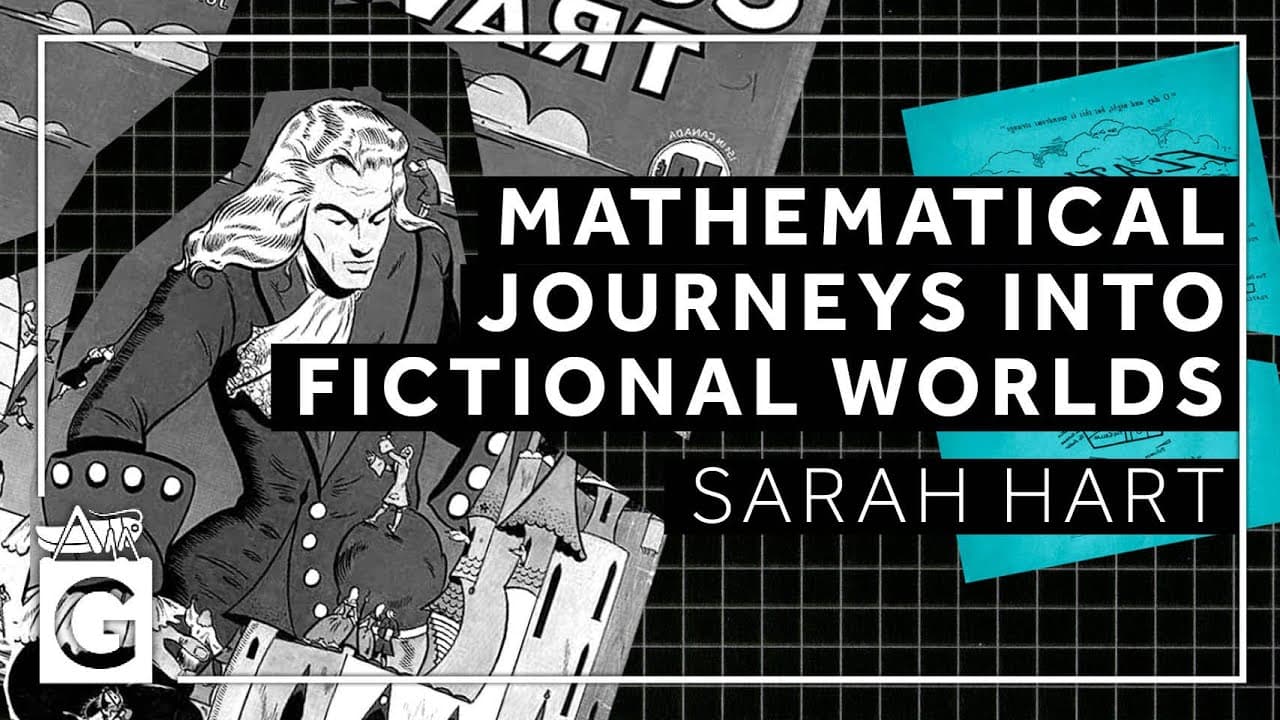
Mathematical Journeys into Fictional Worlds
TL;DR
Understanding mathematical principles such as the square-cube law and higher dimensions can provide insight into the realism and possibilities in fiction.
Transcript
- In this lecture, we explore some of the ways that mathematical ideas appear in fiction. We'll go with Gulliver to Brobdingnag and Lilliput, we'll visit the giant spiders of Hogwarts. We'll chat with the King of Lineland, and we'll even drop in on Captain Ahab. But we'll begin with Lilliput and Brobdingnag. One of the ways we can understand whethe... Read More
Key Insights
- ☠️ The square-cube law can be used to analyze the feasibility of giants and tiny people in fiction, particularly in terms of bone strength and energy requirements.
- ❓ Understanding the effects of gravity is crucial in examining the physical possibilities of giants in fiction.
- 💭 "Flatland" provides a thought-provoking exploration of the limitations and possibilities of a two-dimensional universe and the challenges of perceiving higher dimensions.
Install to Summarize YouTube Videos and Get Transcripts
Explore YouTube Video Summarizer or Get YouTube Transcript Extractor
Questions & Answers
Q: How does the square-cube law determine the feasibility of giants and tiny people in fiction?
The square-cube law states that when scaling shapes by a factor of k, the areas increase by a factor of k squared and the volumes by a factor of k cubed. This principle is used to analyze the pressure on bones and the energy requirements of giants and tiny people, showing that they would face physical challenges.
Q: Why couldn't Micromega exist on Earth or his own planet?
The scaling factor between Micromega's size and that of an average person is so large that the gravitational force on his own planet would be significantly greater, making it impossible for him to exist there without extreme conditions. The issue of gravity is satirized in Voltaire's work.
Q: What challenges would Lilliputians face due to their small size?
Lilliputians would need significantly more food due to their scaled-down size, and their tiny food portions would contain proportionally less energy. Falling would not pose a danger to them because their terminal velocity is significantly slower, but they would face challenges in rain due to the impact of raindrops on their small bodies.
Q: How does "Flatland" explore the concept of dimensions?
"Flatland" explores the limitations and possibilities of a two-dimensional universe through the experiences of its protagonist, A Square. It considers the challenges of perceiving higher dimensions and the societal structures and behaviors that arise in a two-dimensional world.
Summary & Key Takeaways
-
Mathematical principles such as the square-cube law can be used to analyze the possibility of giants and tiny people in fiction.
-
Micromega, a giant from Sirius in Voltaire's "Micromegas," could not exist on Earth or his own planet due to the effects of gravity.
-
In Jonathan Swift's "Gulliver's Travels," the Lilliputians would need significantly more food and face challenges such as fall damage and limitations in rain due to their small size.
-
Edwin Abbott's "Flatland" explores the limitations and possibilities of a two-dimensional universe and how understanding higher dimensions can be difficult.
Read in Other Languages (beta)
Share This Summary 📚
Summarize YouTube Videos and Get Video Transcripts with 1-Click
Try YouTube Summary with ChatGPT & Claude or YouTube Transcript Generator
Explore More Summaries from Gresham College 📚

Summarize YouTube Videos and Get Video Transcripts with 1-Click
Try YouTube Summary with ChatGPT & Claude or YouTube Transcript Generator