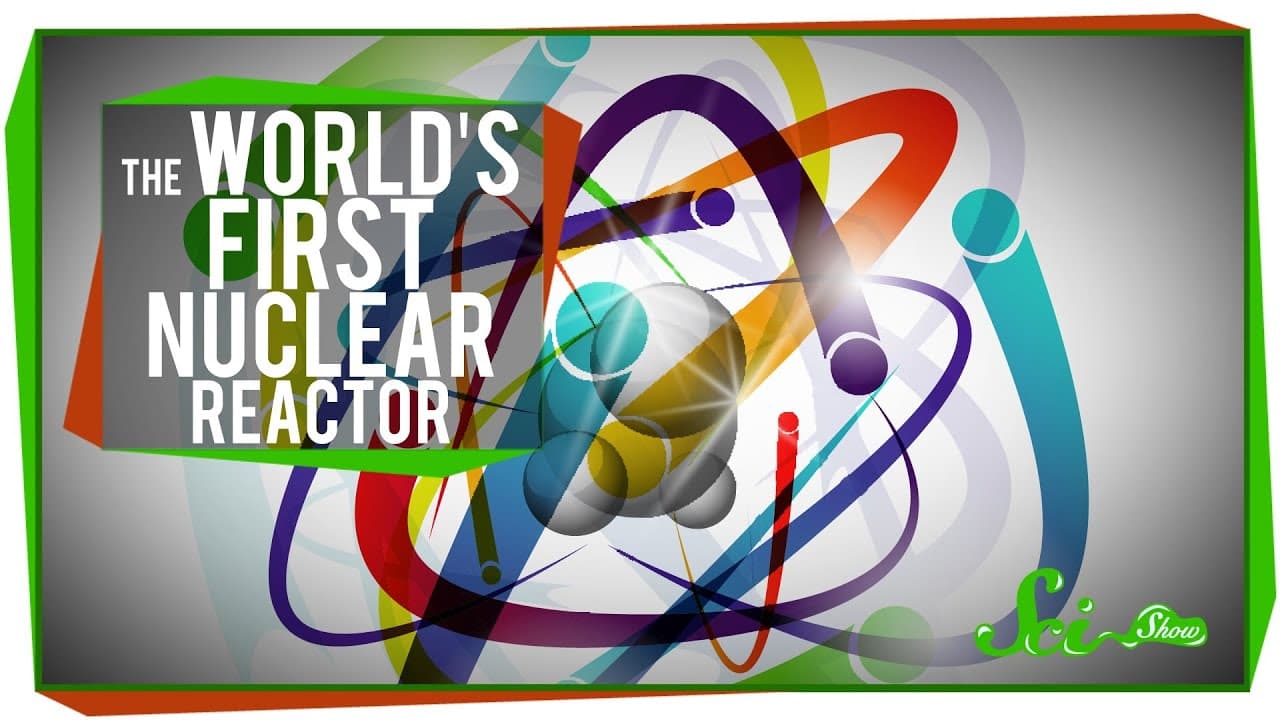
The World's First Human-Made Nuclear Reactor
TL;DR
In December 1942, a team of scientists led by Enrico Fermi achieved the world's first self-sustaining nuclear chain reaction in a converted squash court beneath the football stands of Stag Field at the University of Chicago.
Transcript
The world's first self-sustaining nuclear reaction did not take place in a laboratory nor did it occur in some remote desert, though that might make sense if you're about to attempt to control a power that no one has ever attempted to control before! Instead, on December 2nd, 1942, a team of forty-nine scientists and students, led by Enrico Fermi, ... Read More
Key Insights
- 🤳 The world's first self-sustaining nuclear chain reaction took place in a converted squash court in Chicago in 1942.
- 😤 Enrico Fermi and his team built "Chicago Pile 1," a simple reactor consisting of uranium and graphite.
- 👻 Cadmium rods were used to control the chain reaction, allowing for adjustments in energy output.
- 💨 The self-sustaining reaction in Chicago paved the way for further developments in nuclear energy and atomic weapons.
- 💀 Contrary to rumors, the reactor did not pose significant dangers, and there were no reported cases of early death from cancer among the participants.
- 🖐️ The achievement in Chicago laid the foundation for the establishment of the Argonne National Laboratory.
- 💋 The self-sustaining nuclear reaction marked a significant milestone in human understanding and control of nuclear power.
Install to Summarize YouTube Videos and Get Transcripts
Explore YouTube Video Summarizer or Get YouTube Transcript Extractor
Questions & Answers
Q: How did Enrico Fermi and his team achieve the world's first self-sustaining nuclear reaction?
Enrico Fermi's team built "Chicago Pile 1," consisting of alternating layers of uranium pellets and graphite. The uranium emitted neutrons that would strike other uranium nuclei, initiating a chain reaction. Graphite acted as a moderator, slowing down the neutrons to promote further reactions.
Q: What role did the cadmium rods play in controlling the chain reaction?
Cadmium rods were used to start, stop, and regulate the nuclear chain reaction. These rods could naturally absorb neutrons during the fission process. Adjusting the position of the cadmium rods allowed Fermi's team to control the energy output of the reactor effectively.
Q: Were there any dangers associated with the self-sustaining nuclear reaction in Chicago?
The risks associated with the self-sustaining nuclear reaction were minimal. The worst-case scenario involved a fire or a small-scale meltdown but posed no significant danger. The reactor had such a small amount of fuel that the consequences were not catastrophic.
Q: What is the significance of the world's first self-sustaining nuclear reaction in Chicago?
The world's first self-sustaining nuclear reaction in Chicago marked a major breakthrough in harnessing nuclear power. It demonstrated the feasibility of controlled nuclear reactions, leading to advancements in both peaceful applications of nuclear energy and the development of atomic weapons.
Summary & Key Takeaways
-
On December 2nd, 1942, Enrico Fermi and his team activated "Chicago Pile 1" in a converted squash court, marking the world's first self-sustaining nuclear chain reaction.
-
The pile consisted of alternating layers of uranium pellets and graphite, with uranium fueling the reaction and graphite moderating the neutrons.
-
Cadmium rods were used to start, stop, and regulate the chain reaction.
Read in Other Languages (beta)
Share This Summary 📚
Summarize YouTube Videos and Get Video Transcripts with 1-Click
Try YouTube Summary with ChatGPT & Claude or YouTube Transcript Generator
Explore More Summaries from SciShow 📚
Summarize YouTube Videos and Get Video Transcripts with 1-Click
Try YouTube Summary with ChatGPT & Claude or YouTube Transcript Generator