The Plankton Paradox
TL;DR
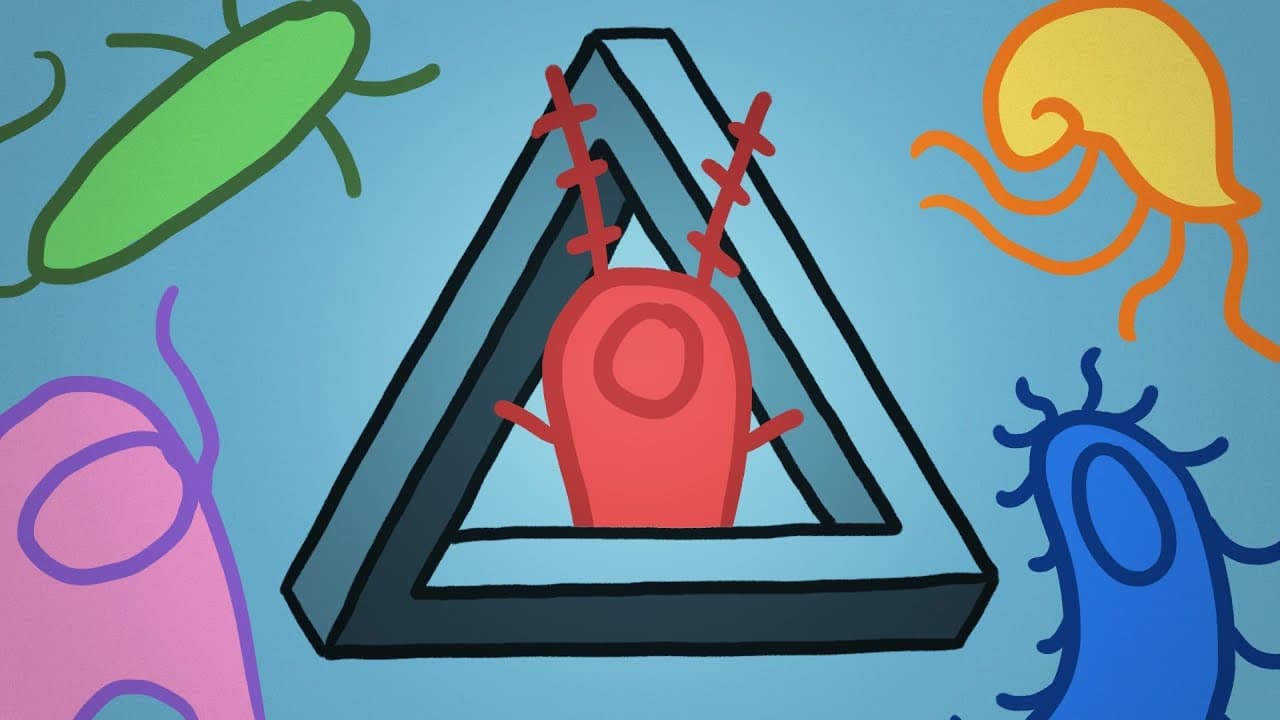
Plankton species coexist despite competing for the same resources, and the reasons for this remain a mystery.
Transcript
One of the biggest mysteries in biology centers
- perhaps surprisingly - around one of its smallest organisms - single-celled ocean-dwelling plankton: specifically, why are there so many different species? Welcome to MinuteEarth. In most instances, when similar species live in the exact same place and compete for the exact same resources, only one ... Read More
Key Insights
- 🌊 Similar species in the same environment usually have one dominant species, but plankton species coexist in the ocean.
- ❓ Plankton may not follow the traditional competition model due to unpredictable environmental conditions.
- 😒 The use of plankton nets for sampling may result in a mixture of species from different micro-environments.
- 🔁 Chaotic loops in the competition model could explain the coexistence of plankton species.
- 👨🔬 Understanding the coexistence of plankton requires further research and exploration.
- 😀 Fabulous is a self-care app that helps develop and stick to good habits.
- 👏 The app uses behavioral science research to turn small tasks into lasting habits.
Install to Summarize YouTube Videos and Get Transcripts
Explore YouTube Video Summarizer or Get YouTube Transcript Extractor
Questions & Answers
Q: Why do similar species typically compete for resources, resulting in one species dominating?
Similar species competing for the same resources usually have slight advantages that allow one species to outcompete the others consistently.
Q: Why don't plankton species follow the same pattern of competition and dominance?
Plankton species may not follow the winner-take-all rule due to unpredictable conditions in their environment, which reset competition regularly and prevent one species from dominating.
Q: How might sampling methods influence our understanding of plankton coexistence?
The use of plankton nets to collect samples may result in the observation of different micro-environments, each with dominant species specialized for a specific resource combination.
Q: Is it possible that the coexistence of plankton species is the result of chaotic loops in the competition model?
Yes, when modeling multiple species competing for resources, a chaotic loop can occur, preventing the emergence of a clear winner. This could explain the coexistence of thousands of plankton species.
Summary & Key Takeaways
-
Similar species living in the same environment typically compete for resources, leading to one species dominating and others dying off.
-
However, thousands of similar plankton species coexist peacefully in the ocean's surface layer.
-
Possible explanations include unpredictable environmental conditions, sampling different micro-environments, or chaotic loops in the competition model.
Read in Other Languages (beta)
Share This Summary 📚
Summarize YouTube Videos and Get Video Transcripts with 1-Click
Try YouTube Summary with ChatGPT & Claude or YouTube Transcript Generator
Explore More Summaries from MinuteEarth 📚






Summarize YouTube Videos and Get Video Transcripts with 1-Click
Try YouTube Summary with ChatGPT & Claude or YouTube Transcript Generator