The heroism and tragedy of World War I | Saagar Enjeti and Lex Fridman
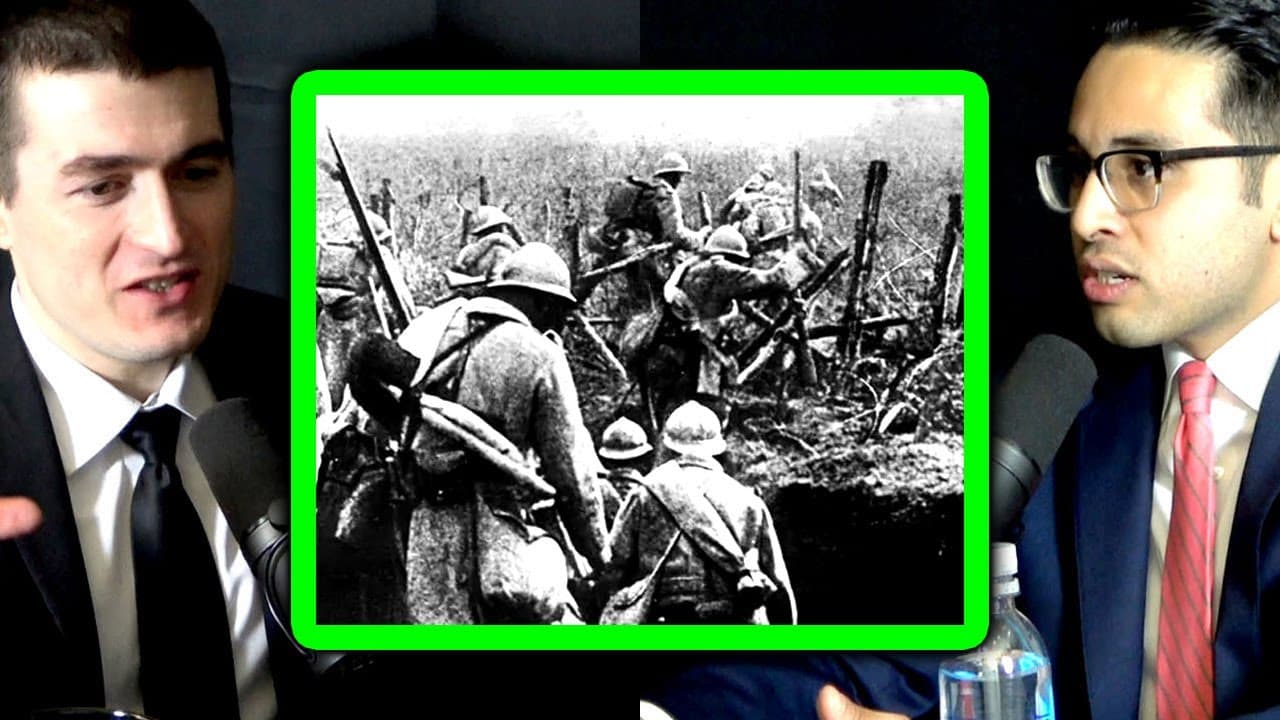
TL;DR
World War One was a complex and unresolved conflict that led to the fall of monarchies, the rise of Hitler, and the roots of many current global issues.
Transcript
we gotta get you into world war one we gotta get you more into world war one because i think that's a rabbit hole which i know you're a dan carlin fan so blueprint for armageddon yeah guaranteed but but there's fewer evil people there yes but well but that's what actually there's a banality of that evil of the kaiser and of the uh austro-hungarians... Read More
Key Insights
- 🌸 World War One resulted in the loss of 50 million lives and its unresolved nature continues to impact global affairs.
- 🥺 The war was characterized by a sense of duty and sacrifice for one's country, leading to voluntary participation and immense suffering.
- 🧑🌾 The Treaty of Versailles had far-reaching consequences on various regions and fueled future conflicts.
Install to Summarize YouTube Videos and Get Transcripts
Explore YouTube Video Summarizer or Get YouTube Transcript Extractor
Questions & Answers
Q: Why is World War One considered an unresolved conflict?
World War One is considered unresolved because the root causes and consequences of the war continue to shape global politics and conflicts to this day. The issues stemming from the war, such as territorial disputes and the fall of monarchies, were not fully addressed and have had long-lasting effects.
Q: How did World War One contribute to the rise of Hitler and World War Two?
World War One created the conditions that allowed Hitler to rise to power. The harsh penalties imposed on Germany through the Treaty of Versailles created economic and political instability, which Hitler capitalized on. The desire to correct the perceived injustices of the first war played a significant role in the outbreak of World War Two.
Q: How did World War One impact the American perspective on global conflicts?
World War One led to a significant shift in American public opinion towards isolationism. The horrific experiences of the war, combined with a belief that European problems were not America's concern, contributed to a reluctance to engage in foreign conflicts, as seen in the case of Neville Chamberlain and the outbreak of World War Two.
Q: How did World War One shape the Middle East?
The Treaty of Versailles divided the Middle East, creating artificial borders and states that have contributed to ongoing conflicts. The penalties imposed on Germany by the treaty also indirectly affected the Middle East, as the prolonged economic instability in Europe allowed for the rise of anti-colonial sentiment and movements.
Summary & Key Takeaways
-
World War One was a devastating conflict in which 50 million people were killed, with horrific methods of death such as drowning in mud.
-
The war was characterized by a sense of duty and patriotism, as people willingly sacrificed themselves for their countries and kings.
-
The Treaty of Versailles, which ended the war, had far-reaching consequences on various aspects, including the Middle East and the reluctance for war in the future.
Read in Other Languages (beta)
Share This Summary 📚
Summarize YouTube Videos and Get Video Transcripts with 1-Click
Try YouTube Summary with ChatGPT & Claude or YouTube Transcript Generator
Explore More Summaries from Lex Clips 📚




Summarize YouTube Videos and Get Video Transcripts with 1-Click
Try YouTube Summary with ChatGPT & Claude or YouTube Transcript Generator