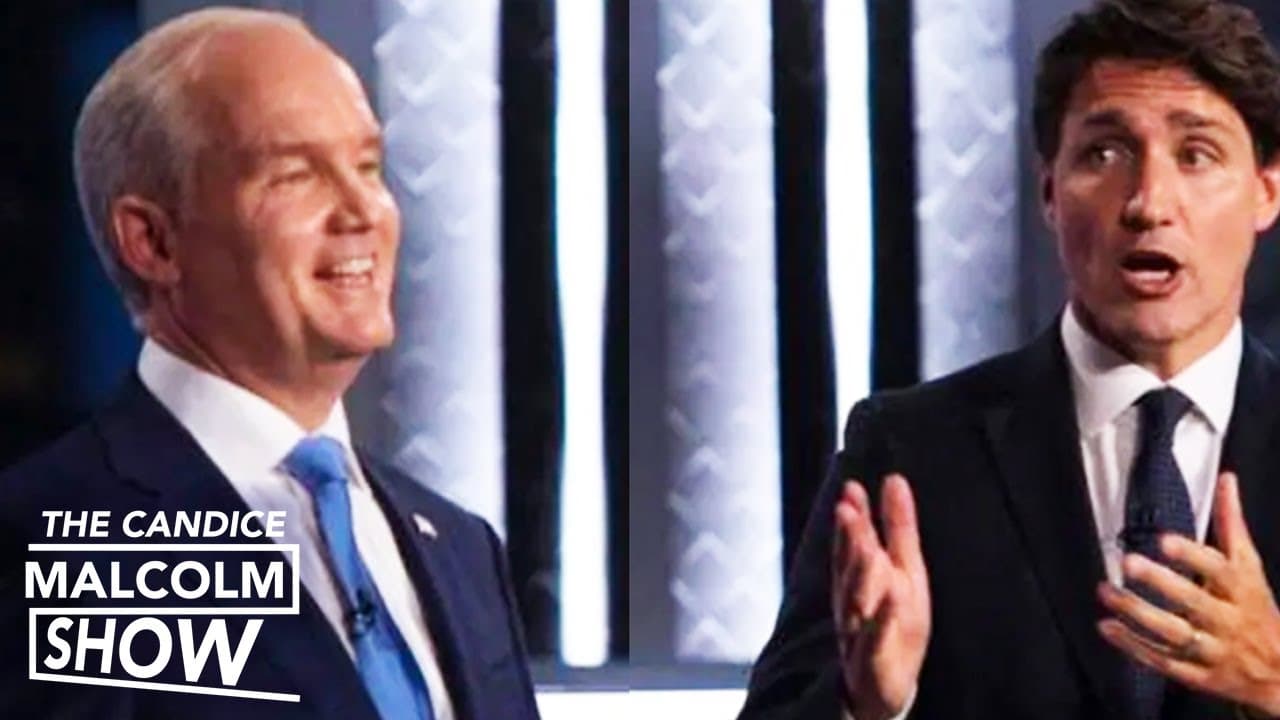
O’Toole blames Trudeau’s divisive campaign for CPC loss
TL;DR
Aaron O'Toole retains Conservative leadership but fails to accept full accountability for the election loss.
Transcript
aaron o'toole survives as leader of the conservative party but he doubles down on a losing strategy and blames everyone but himself for the loss i'm candice malcolm and this is the candace malcolm show hi everyone thank you so much for tuning in i probably saw the news that aaron o'toole survived the caucus meeting yesterday it was the first caucus... Read More
Key Insights
- 🥹 A cautious Conservative caucus chose not to hold a leadership review for O'Toole, preferring stability over uncertainty.
- 🤳 O'Toole's acknowledgment of the election loss requires self-reflection, but his tendency to shift blame may undermine his credibility.
- 🥳 The party's internal divisions are evident, with some members advocating for a return to defining conservative principles rather than adopting progressive stances.
- 😮 MP support for O'Toole is mixed, with many wanting to avoid disruption while others seek a more robust conservative identity.
- ▶️ Public and media perceptions of leadership effectiveness play significant roles in shaping party dynamics and strategies moving forward.
- 😜 O'Toole's focus on post-election analysis must translate into actual change; otherwise, discontent may grow within the party ranks.
- 👀 Potential leadership challengers are closely watched, with their platforms indicating differing approaches to Conservative policy and strategy.
Install to Summarize YouTube Videos and Get Transcripts
Explore YouTube Video Summarizer or Get YouTube Transcript Extractor
Questions & Answers
Q: Why did Aaron O'Toole not face a leadership review after the election results?
The Conservative Party members appear to be cautious about initiating a leadership review. There is a consensus among MPs that another leadership race could create further divisions within the party. Many insiders believe it is wiser to stick with O'Toole, who they know, rather than risk the uncertainty of a new leadership election.
Q: What criticisms did O'Toole receive regarding his campaign strategy?
O'Toole faced criticism for mirroring Justin Trudeau's platform too closely, which led to a lack of differentiation between the two parties. Many conservatives felt that his attempt to appeal to left-leaning voters compromised core conservative principles, ultimately confusing the electorate and contributing to the party's loss in the election.
Q: How did O'Toole's supporters react during the caucus meeting?
Most MPs expressed support for O'Toole during the caucus meeting, conveying a sense of unity. However, some outliers voiced their concerns and dissatisfaction, pointing out that losing conservative voters was a significant issue that needed addressed. Overall, the support for O'Toole was more about avoiding instability within the party than wholehearted endorsement of his leadership.
Q: What future strategies did O'Toole propose to improve the Conservative Party?
O'Toole emphasized the need for a comprehensive postmortem analysis of the campaign to identify failures and potential areas for growth. He indicated a desire to attract more Canadian voters by suggesting the party adopt more progressive policy positions, intending to broaden its appeal beyond traditional conservative bases.
Q: What role does public perception play in O'Toole's leadership challenges?
Public perception is a critical factor in O'Toole's leadership challenges, as many voters did not connect with him during the campaign. He recognized that a significant number of Canadians were not well-acquainted with his identity or policies. This lack of familiarity and outreach may affect his credibility and the party's ability to regain lost votes in future elections.
Q: How did other potential leadership candidates respond amid O'Toole's retention?
Potential leadership candidates like Pierre Poilievre and Leslie Lewis were openly supportive of O'Toole, but their responses suggested they have different visions for the party. Poilievre focused on economic issues like inflation, while Lewis hinted at having a more conservative approach. The media's interest in their comments highlighted the underlying tensions and differing opinions on party direction.
Q: What actions were taken regarding procedural changes within the Conservative Party?
The Conservative MPs voted in favor of the Reform Act, which could provide them with more power regarding leader accountability. This procedural move was not necessarily a sign that they want O'Toole out, but rather aimed at establishing structured processes for leadership evaluations and decisions, promoting accountability in the party.
Summary & Key Takeaways
-
Aaron O'Toole survives a leadership challenge following the Conservative Party's disappointing election results, but there is skepticism about his leadership approach. Most MPs are resigned to keeping him due to the uncertainty of change, despite criticisms of his campaign strategy.
-
O'Toole acknowledges the need for a strategic review of the campaign and emphasizes a shift toward a more progressive stance to attract a broader voter base, although many Conservatives disagree with this approach.
-
During caucus discussions, some dissent emerged, with MPs expressing concern over O'Toole's campaign decisions and the potential need for a more distinct conservative vision, indicating internal divisions on future strategy.
Read in Other Languages (beta)
Share This Summary 📚
Summarize YouTube Videos and Get Video Transcripts with 1-Click
Try YouTube Summary with ChatGPT & Claude or YouTube Transcript Generator
Explore More Summaries from True North 📚
Summarize YouTube Videos and Get Video Transcripts with 1-Click
Try YouTube Summary with ChatGPT & Claude or YouTube Transcript Generator