1960s Fashion / Protest
TL;DR
1960s fashion mirrored societal changes and civil rights movements.
Transcript
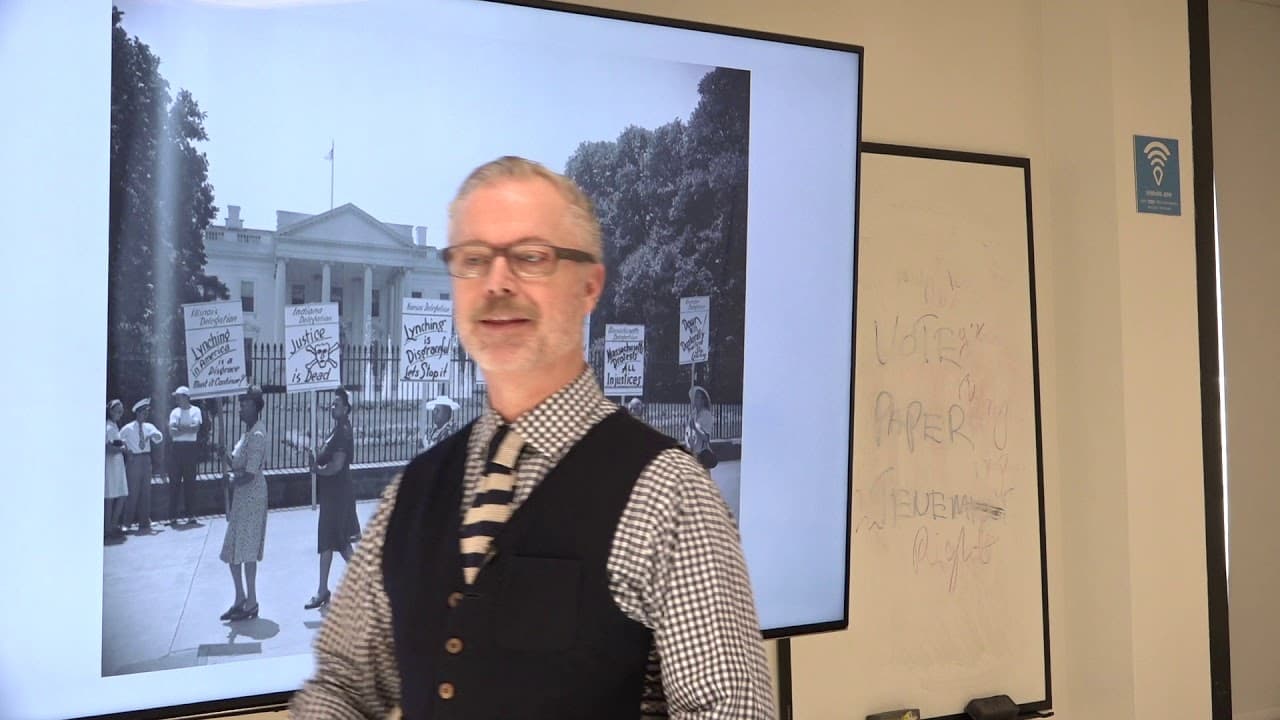
all right so we're moving further into the 60s and as as you know the civil rights movement began in the 50s obviously continues in the 60s continues to this day but what we are seeing here in the 60s also is the new group women breaking out beginning to fight for equal rights and as you heard me talk in a different lecture women very limit... Read More
Key Insights
- The 1960s saw women beginning to fight for equal rights, reflected in fashion with shorter skirts and less restrictive clothing, symbolizing freedom and independence.
- Job advertisements in the 1960s often specified gender and age, highlighting the era's gender inequality, which women began to challenge during this time.
- Fashion in the 1960s was influenced by the civil rights movement, with African American women initially dressing to fit in, but later adopting more militant styles like the Black Panthers' uniforms.
- The Black Panthers and the Brown Berets used clothing as a form of protest, adopting military-style uniforms to signify their stance and seriousness in the civil rights struggle.
- The Vietnam War veterans' protests in 1968 contrasted sharply with earlier veterans' parades, reflecting changing public sentiment and the divisive nature of the war.
- Hippie fashion of the 1960s rejected traditional gender norms, with men and women wearing similar, often psychedelic clothing, symbolizing a break from past conventions.
- The shift in fashion during the 1960s was not just aesthetic but deeply tied to identity, politics, and social change, reflecting broader cultural shifts.
- The 1960s were a period of significant transformation, with clothing serving as a visual representation of the era's evolving social and political dynamics.
Install to Summarize YouTube Videos and Get Transcripts
Explore YouTube Video Summarizer or Get YouTube Transcript Extractor
Questions & Answers
Q: How did women's fashion in the 1960s reflect their fight for equal rights?
Women's fashion in the 1960s reflected their fight for equal rights through the adoption of shorter skirts and less restrictive clothing, symbolizing freedom and independence. This shift away from traditional, conservative styles was a visual representation of women's desire to break free from societal constraints and assert their rights.
Q: What role did clothing play in the civil rights movement during the 1960s?
Clothing played a significant role in the civil rights movement during the 1960s by serving as a form of protest and expression. African American women initially dressed to fit in with societal norms, but later adopted more militant styles, such as the Black Panthers' uniforms, to signify their seriousness and determination in the struggle for equality.
Q: How did the Black Panthers and Brown Berets use fashion as a form of protest?
The Black Panthers and Brown Berets used fashion as a form of protest by adopting military-style uniforms, which included black leather jackets and berets for the Panthers, and brown berets for the Brown Berets. This choice of clothing symbolized their militant stance and commitment to fighting for civil rights and social justice.
Q: How did the Vietnam War influence fashion and public sentiment in the 1960s?
The Vietnam War influenced fashion and public sentiment in the 1960s by creating a stark contrast between earlier veterans' parades and the protests of Vietnam veterans. The divisive nature of the war led to changes in public perception, with veterans adopting more casual and protest-oriented clothing to express their discontent and opposition to the conflict.
Q: What was the significance of hippie fashion in the 1960s?
Hippie fashion in the 1960s was significant because it rejected traditional gender norms and societal conventions. Men and women wore similar, often psychedelic clothing, which symbolized a break from past conventions and reflected the counterculture movement's ideals of peace, love, and equality, challenging the status quo of the time.
Q: How did the fashion of the 1960s reflect broader cultural shifts?
The fashion of the 1960s reflected broader cultural shifts by serving as a visual representation of the era's evolving social and political dynamics. Clothing choices during this period were deeply tied to identity and politics, with different groups using fashion to express their values, beliefs, and desire for change, highlighting the decade's transformative nature.
Q: What was the impact of job advertisements specifying gender and age in the 1960s?
Job advertisements specifying gender and age in the 1960s highlighted the era's gender inequality and societal norms. This practice underscored the limited opportunities available to women, prompting them to challenge these constraints and fight for equal rights, contributing to the broader women's liberation movement and shifts in workplace policies.
Q: How did the civil rights movement influence African American women's fashion in the 1960s?
The civil rights movement influenced African American women's fashion in the 1960s by initially encouraging them to dress in a way that fit societal norms, aiming for acceptance and integration. However, as the movement progressed, more militant styles emerged, reflecting a shift towards a more assertive stance in the fight for equality and justice.
Summary & Key Takeaways
-
The 1960s were a transformative decade for fashion and social movements, with women's rights and civil rights groups using clothing as a form of protest and expression. Shorter skirts and less restrictive clothing symbolized women's fight for equality, while groups like the Black Panthers adopted military-style uniforms.
-
Fashion during the 1960s mirrored societal changes, with the civil rights movement influencing styles. African American women initially dressed to fit in but later adopted more militant styles. The Black Panthers and Brown Berets used clothing to signify their seriousness in the civil rights struggle.
-
The Vietnam War and changing public sentiment were reflected in veterans' protests, contrasting with earlier parades. Hippie fashion rejected traditional gender norms, with men and women wearing similar clothing, symbolizing a break from past conventions and reflecting broader cultural shifts.
Read in Other Languages (beta)
Share This Summary 📚
Summarize YouTube Videos and Get Video Transcripts with 1-Click
Try YouTube Summary with ChatGPT & Claude or YouTube Transcript Generator