Lecture 5: Artistic Origami Design
TL;DR
This comprehensive analysis explores the artistic perspective of origami design, including the use of tree theory, space allocation, and the creation of complex and representational origami models.
Transcript
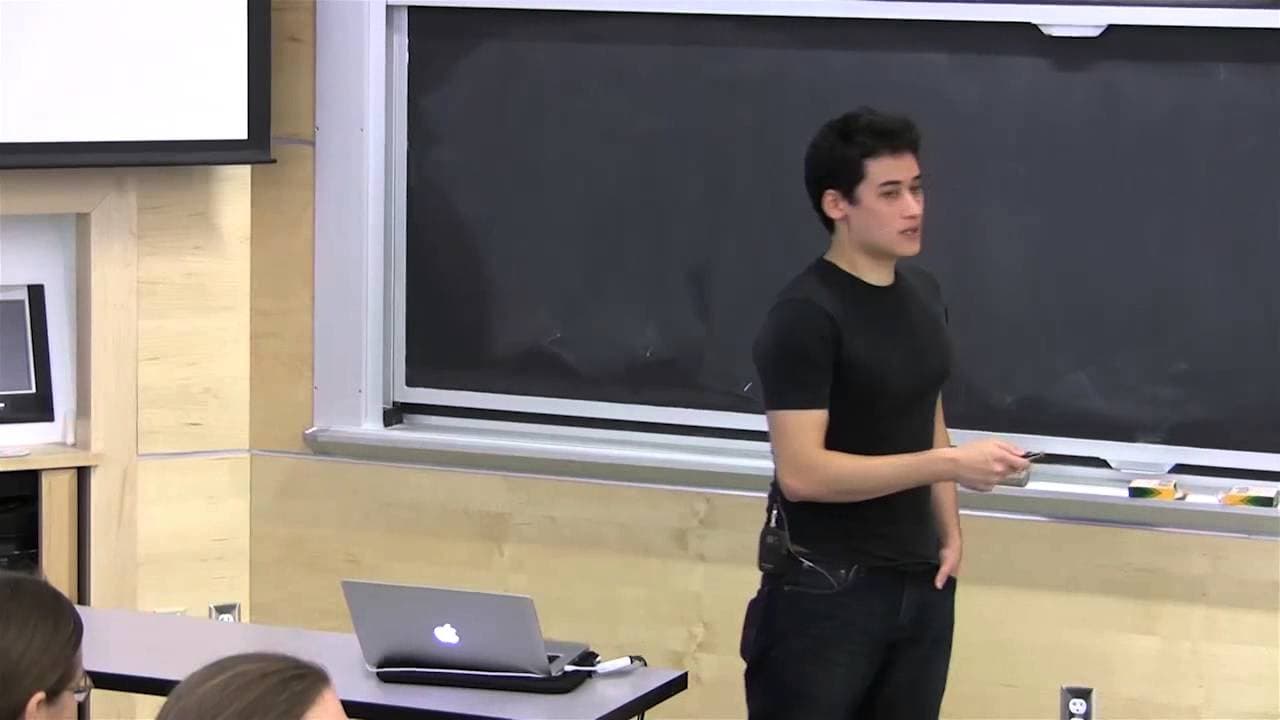
PROFESSOR: So for today's lecture we have Jason Ku guest lecturing. And he's the president of OrigaMIT, which you should all check out Sunday afternoons, origami club at MIT. He's an origami designer and a grad student in mechanical engineering, and he's going to talk about the more artistic perspective on how origami design works, in particular in... Read More
Key Insights
- 🎨 Origami design is a combination of mathematics, algorithms, and artistic creativity.
- ❓ Representational origami focuses on creating models that resemble real objects.
- 🧑🎨 Wet-folding and texture are techniques used by origami artists like Akira Yoshizawa and Eric Joisel to add depth and realism to their models.
Install to Summarize YouTube Videos and Get Transcripts
Explore YouTube Video Summarizer or Get YouTube Transcript Extractor
Questions & Answers
Q: How does origami design differ from traditional origami folding?
While traditional origami involves following specific folds to create models like cranes or frogs, origami design focuses on creating original models using mathematical principles and artistic intuition.
Q: What does wet-folding technique involve?
Wet-folding is a technique used by origami designers like Akira Yoshizawa to shape the paper by weakening the paper fibers with water and shaping it while wet. This technique allows for more flexibility and the creation of curved forms.
Q: How does tree theory apply to origami design?
Tree theory is a method used to map an origami model's structure onto a tree-like representation, where branches represent flaps and rivers represent spaces between flaps. This representation helps designers visualize how the model can be folded and shaped.
Q: What are some unique characteristics of complex origami models?
Complex origami models often require intricate shaping, use of wet-folding techniques, and incorporate texture and detail to create a realistic representation of the subject.
Summary & Key Takeaways
-
The art of origami is often compared to music, with composers and performers being the same in origami design.
-
Representational origami focuses on creating models that resemble real objects, while other styles focus on geometric patterns or abstract art.
-
Origami designers like Akira Yoshizawa and Eric Joisel have made significant contributions to representational origami, pushing the boundaries of the art form.
-
Designing origami requires a balance of mathematics, algorithmic design, and artistic creativity.
Read in Other Languages (beta)
Share This Summary 📚
Summarize YouTube Videos and Get Video Transcripts with 1-Click
Try YouTube Summary with ChatGPT & Claude or YouTube Transcript Generator
Explore More Summaries from MIT OpenCourseWare 📚


Summarize YouTube Videos and Get Video Transcripts with 1-Click
Try YouTube Summary with ChatGPT & Claude or YouTube Transcript Generator