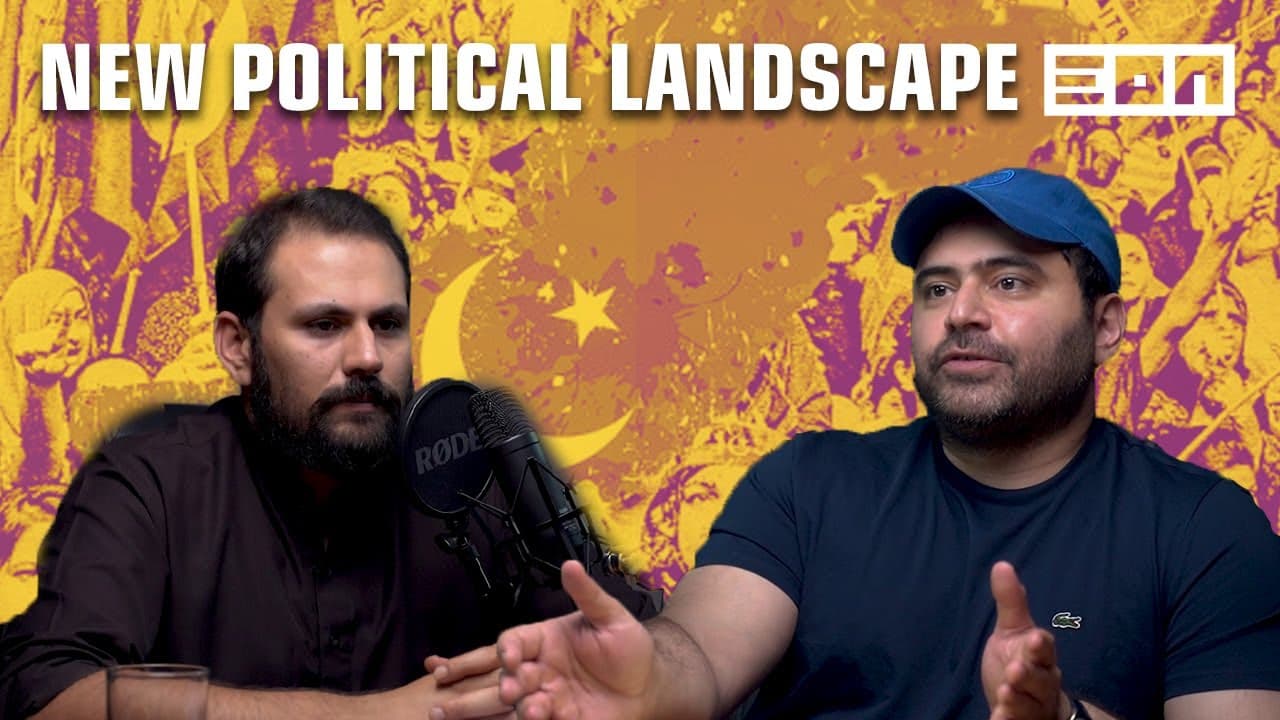
Deep Dive Into The New Age Of Pakistani Politics | Eon Podcast #102
TL;DR
The podcast discusses the polarized political landscape in Pakistan following recent elections, including issues of election rigging and governance.
Transcript
different to safan Welcome to the podcast thank you for coming thanks thanks thank you for having me here fantastic setup thank you and uh great to see the kind of work that you've been producing uh sufan there is a I think difference in the way we look at the world uh but the best thing that I over a per passage of time learned about you and under... Read More
Key Insights
- 💋 The political landscape in Pakistan is marked by deep polarization and allegations of rigged elections, undermining trust in the democratic process.
- 🎖️ Both the military and the establishment exert significant influence over political decisions, often prioritizing their interests over public welfare.
- 🎁 Liberal authoritarianism presents a paradox where individuals claiming to uphold democracy resort to undemocratic means to achieve desired outcomes.
- 🎮 Social media plays a critical role in shaping public discourse but faces attempts at control from state apparatuses seeking to manage narratives.
- 🧍 Economic practices reveal systemic issues with tax evasion and collusion, contributing to the country's inability to stand independently without foreign loans.
- 💍 Political accountability requires a shift in how citizens engage with their representatives, demanding adherence to democratic values.
- ❓ Understanding the motivations behind political actions can provide deeper insights into the integrity and effectiveness of governance.
Install to Summarize YouTube Videos and Get Transcripts
Explore YouTube Video Summarizer or Get YouTube Transcript Extractor
Questions & Answers
Q: What are the main points of contention regarding the recent elections in Pakistan?
The key points revolve around perceived election rigging, the legitimacy of the electoral process, and the polarization among different political parties. Many believe that although the election results showed a clear winner, there were significant manipulations that corrupt the democratic process, leading to deep divisions in public opinion.
Q: How does the concept of polarization affect political discourse in Pakistan?
Polarization creates an environment where individuals and groups steadfastly align with one side, often disregarding objective facts or broader national interests. This hyper-partisanship impedes constructive conversation and reinforces existing biases, making it difficult to reach common ground on pressing political issues.
Q: In what ways do the establishment and military influence politics in Pakistan?
The establishment and military play significant roles by controlling financial resources, influencing key political decisions, and sustaining their positions through various means, including political alliances and policy control. This dynamic often leads to conflicts with elected representatives and affects public trust in governance.
Q: What is meant by the term "liberal authoritarianism" as discussed in the podcast?
Liberal authoritarianism refers to a scenario where supposed advocates of democracy employ authoritarian tactics to maintain certain ideological values. This indicates a contradiction, as these proponents seek to enforce specific outcomes while undermining the democratic process, often in the name of higher moral ground.
Q: How does the podcast describe the role of social media in shaping political narratives?
Social media is noted for its significant influence in disseminating information and mobilizing support, especially among younger populations. However, it can also be a double-edged sword, as states often attempt to control narratives by policing online discourse, which complicates the flow of truthful information in political discussions.
Q: Why do the hosts argue that the character and motives of politicians matter in evaluating their actions?
The hosts emphasize that understanding the intrinsic motivations and character of politicians is crucial for assessing their actions honestly. When individuals act out of self-interest rather than principled values, it leads to a lack of accountability and creates disillusionment among voters about the political process.
Q: What criticisms are made regarding the tax system and economic practices in Pakistan?
The discussion critiques the ineffectiveness of the tax system, highlighting that a large part of the economy operates in a shadow market, thus evading taxes. This structural issue is exacerbated by collusion between elites and the state, hindering economic growth and fiscal responsibility.
Q: How do the hosts suggest Pakistani society can move toward a healthier political culture?
They argue for greater transparency in governance, a commitment to democratic principles, and a need for social accountability. Engaging citizens in discussions about the importance of their vote and demanding accountability from their leaders are essential steps for fostering a more vibrant political culture.
Summary & Key Takeaways
-
The conversation highlights the intense polarization in Pakistan's political environment post-elections, with significant debates around rigging and voter legitimacy.
-
The hosts explore the implications of using the establishment's power to undermine democratic processes and question the values that underpin political actions.
-
A central theme is the lack of consistent moral positions among politicians and the public, complicating the discourse surrounding democracy and governance in Pakistan.
Read in Other Languages (beta)
Share This Summary 📚
Summarize YouTube Videos and Get Video Transcripts with 1-Click
Try YouTube Summary with ChatGPT & Claude or YouTube Transcript Generator