A Socialist Perspective on the Pursuit of Happiness | Aaron Bastani | TED
TL;DR
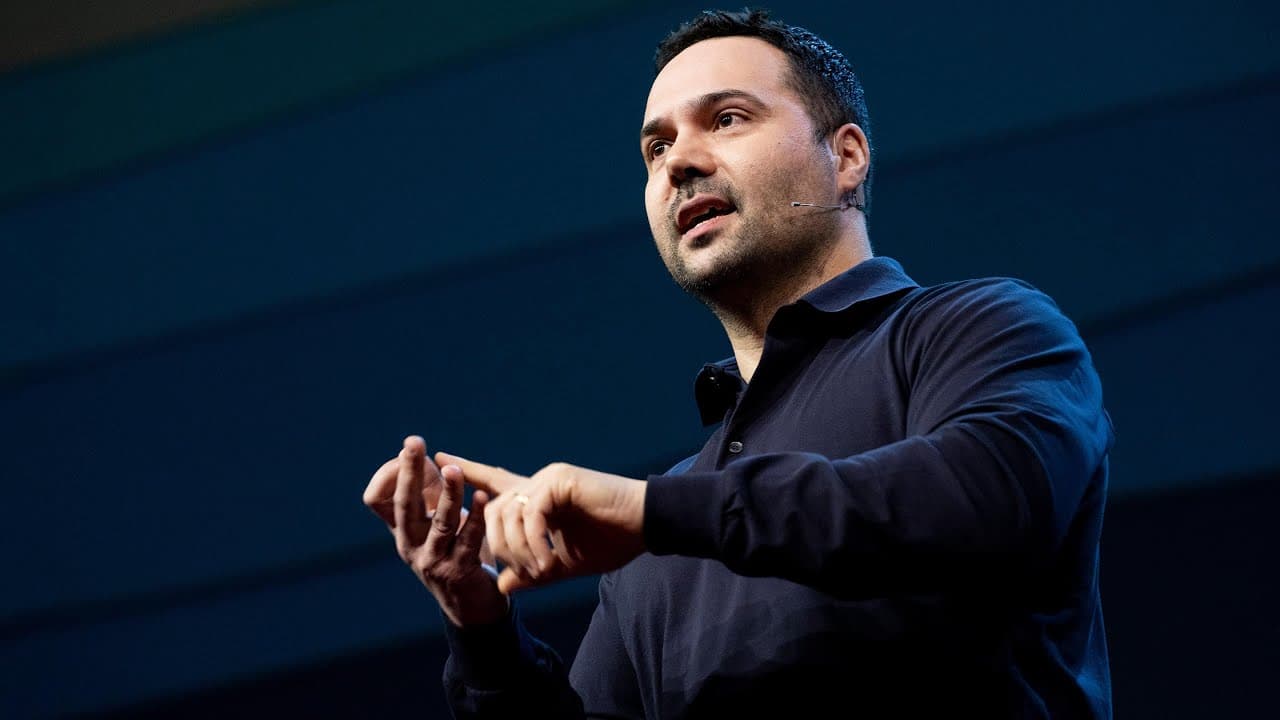
In this TED Talk, Aaron Bastani introduces the concept of universal basic services as a solution to address challenges such as rising inequality, the climate crisis, and demographic aging while leveraging the benefits of the technology revolution.
Transcript
Allow me to introduce myself. I’m a writer, journalist and a socialist. I also used to be broke. I did, for a long time. Being a student, trying to make a name for myself in the media industry and starting a media organization. I had to move 15 times in 15 years because the rent in London just kept on going up. Now, this taught me an important less... Read More
Key Insights
- 💡 Socialist means are necessary to achieve liberal ends of self-authorship and determining one's own life path. The state must be involved in providing access to necessary resources such as education, healthcare, housing, and transportation.
Install to Summarize YouTube Videos and Get Transcripts
Explore YouTube Video Summarizer or Get YouTube Transcript Extractor
Questions & Answers
Q: What important lesson did the speaker learn from his personal experiences?
The speaker learned that it is difficult to pursue one's goals and aspirations when constantly burdened by unpaid bills and financial insecurity.
Q: What does the speaker believe about individuals and their ability to determine their own lives?
The speaker agrees with the idea that individuals should have the autonomy to decide how their lives unfold, without any higher authority imposing limitations on them.
Q: What does the speaker suggest about the relationship between liberal ends and socialist means?
The speaker argues that while liberal ideals promote individual autonomy and self-authorship, it is socialist means that are necessary to provide the resources and access to education, healthcare, housing, and transportation that enable individuals to truly exercise their autonomy.
Q: What evidence does the speaker provide to highlight the shortcomings of capitalism?
The speaker cites statistics on food stamp usage in the United States and the number of people in the UK with minimal savings to illustrate the failure of capitalism to provide for the basic needs of a significant portion of the population. Additionally, he points out the decline in global growth, suggesting that capitalism is unable to deliver on its promise of prosperity for all.
Q: What solution does the speaker propose to address the challenges of the 21st century?
The speaker advocates for universal basic services (UBS) as a solution. He suggests that services like healthcare, housing, transportation, and education should be universally available, free at the point of consumption, and funded through progressive taxation.
Q: What are the primary obstacles to implementing universal basic services, according to the speaker?
The speaker identifies housing as the main challenge, particularly in Anglo-American economies where speculative investment in housing assets has become ingrained in the growth model. Shifting away from this model and ensuring affordable, stable housing would be a significant obstacle to overcome.
Q: How does the speaker argue that universal welfare systems can be more effective and inclusive?
The speaker highlights research conducted in Sweden, which shows that countries with universal welfare systems experience lower levels of hardship and inequality. By removing means testing and reducing bureaucracy, universal welfare systems are more accessible and less stigmatized, garnering broader support and consent from the middle class.
Q: What role does the speaker believe the state should play in society?
The speaker contends that the state should have a central role in economic and social affairs, citing the success and popularity of systems like the National Health Service (NHS) in the UK. He argues for the return of the state to address societal challenges and ensure the provision of essential services that guarantee liberty and equal opportunity for all.
Summary & Key Takeaways
-
The speaker, Aaron Bastani, shares his personal experience of being broke and struggling to make a living in the media industry due to rising rent prices in London.
-
Bastani believes that while individual liberty is important, access to resources such as education, healthcare, housing, and transportation is necessary for self-authorship and overall well-being.
-
He proposes the idea of universal basic services (UBS) instead of a universal basic income (UBI), arguing that UBS, including healthcare, housing, education, and transport, should be universally available and funded through progressive taxation.
Read in Other Languages (beta)
Share This Summary 📚
Summarize YouTube Videos and Get Video Transcripts with 1-Click
Try YouTube Summary with ChatGPT & Claude or YouTube Transcript Generator
Explore More Summaries from TED 📚

Summarize YouTube Videos and Get Video Transcripts with 1-Click
Try YouTube Summary with ChatGPT & Claude or YouTube Transcript Generator