Passive Cooling: 3 of the Best Design Strategies (How to Stay Cool with No AC!)
TL;DR
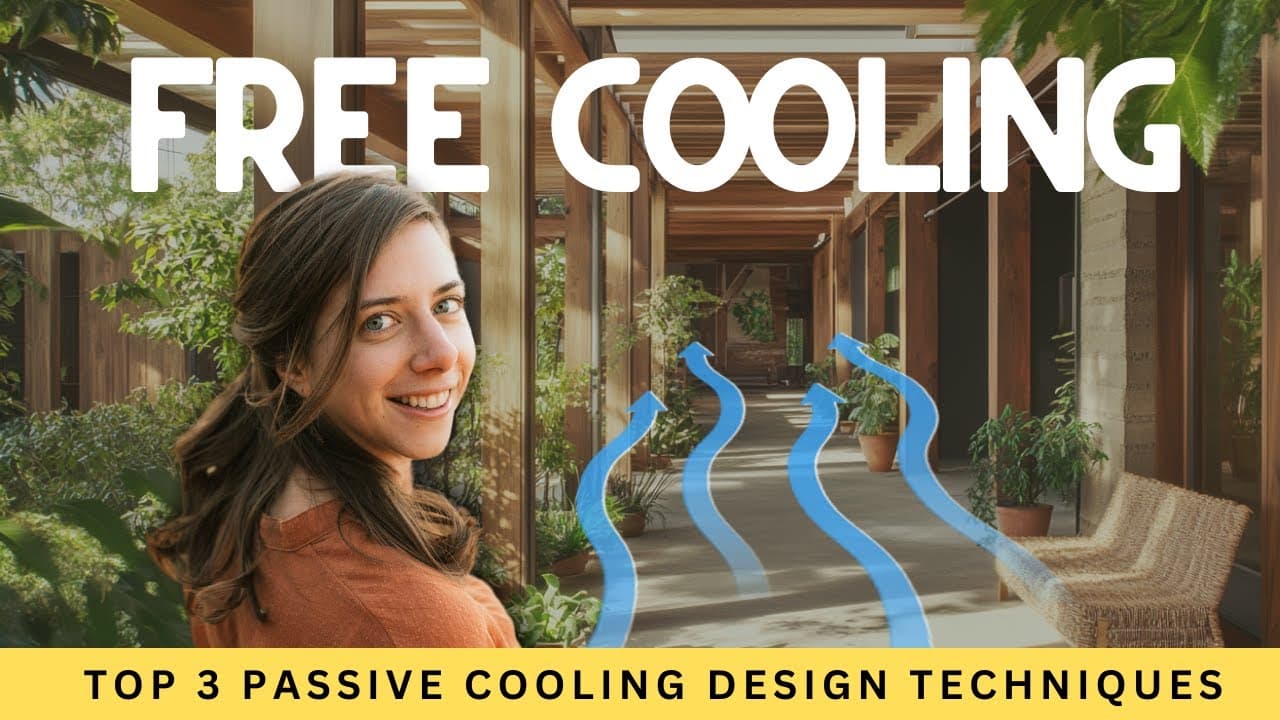
Learn passive cooling techniques to keep your home cool without AC.
Transcript
have you ever seen pictures of people living in scorching Hot Tropical regions without air conditioning and wondered how do they do it don't underestimate the impact of natural ventilation in this video you'll learn how to naturally get fresh cool air flowing through your home without AC or fans how to use water to lower the tempera... Read More
Key Insights
- Natural ventilation is crucial for cooling homes in hot climates without relying on air conditioning. Utilizing pressure zones and the stack effect can enhance airflow and maintain a comfortable indoor temperature.
- The stack effect leverages the natural movement of hot air rising to create a cycle of airflow, drawing in cooler air from below and expelling warm air from above, promoting natural ventilation.
- Cross ventilation is more effective when windows are staggered rather than directly opposite, encouraging air to circulate throughout the room rather than just passing through.
- Water can be used sustainably for cooling through evaporative cooling, green roofs, and radiant cooling systems, which absorb heat and lower surrounding air temperature.
- Shading is a simple yet powerful technique to reduce solar heat gain. Overhangs, shade structures, and planting trees can significantly lower indoor temperatures by blocking direct sunlight.
- Deciduous trees provide seasonal shading, offering shade in the summer and allowing sunlight during the winter, optimizing natural light and temperature control.
- Breezeways and solar chimneys are architectural features that facilitate natural airflow, enhancing passive cooling by taking advantage of prevailing winds and pressure differentials.
- Building orientation and material selection play vital roles in passive cooling, with certain materials and designs contributing to a cooler indoor environment by reflecting or absorbing less solar heat.
Install to Summarize YouTube Videos and Get Transcripts
Explore YouTube Video Summarizer or Get YouTube Transcript Extractor
Questions & Answers
Q: How does the stack effect contribute to passive cooling?
The stack effect is a natural phenomenon where warm air rises, creating a low-pressure zone that draws in cooler air from below. This continuous cycle of airflow helps maintain a comfortable indoor temperature without mechanical ventilation. By designing buildings with features like stacked windows, atriums, or solar chimneys, the stack effect can be optimized to enhance natural ventilation and passive cooling.
Q: What role does water play in passive cooling?
Water is a powerful tool for passive cooling due to its heat absorption properties. Techniques such as evaporative cooling, where water features cool the air as it enters a building, and radiant cooling, where cool water flows through ceiling tubes to absorb heat, can significantly lower indoor temperatures. Green roofs also utilize water retention to cool buildings, making water a sustainable option for reducing heat in both hot and dry climates.
Q: Why is shading important in passive cooling design?
Shading is crucial in passive cooling as it prevents solar heat gain, one of the primary sources of indoor heat. By using overhangs, shade structures, and planting deciduous trees, direct sunlight is blocked, keeping indoor spaces cooler. Shading not only reduces the need for air conditioning but also enhances energy efficiency, making it an essential component of sustainable building design.
Q: How can cross ventilation be optimized for better cooling?
Cross ventilation is optimized by staggering windows rather than placing them directly opposite each other. This arrangement encourages air to circulate throughout the room, rather than just passing in a straight line. By positioning windows on adjacent or diagonal walls, air movement is maximized, ensuring that the entire space benefits from the cooling effect of fresh air circulation.
Q: What are some architectural features that enhance passive cooling?
Architectural features such as breezeways and solar chimneys enhance passive cooling by facilitating natural airflow. Breezeways act as open passages that align with prevailing winds, promoting air movement through the building. Solar chimneys use the stack effect to draw hot air upwards, creating a vacuum that pulls in cooler air. These designs take advantage of natural forces to maintain a comfortable indoor environment.
Q: How does building orientation affect passive cooling?
Building orientation plays a significant role in passive cooling by influencing how solar heat and wind affect a structure. Orienting a building to take advantage of prevailing winds can enhance natural ventilation, while positioning it to minimize direct sunlight on walls and windows reduces heat gain. Thoughtful orientation, combined with strategic shading and ventilation, contributes to a cooler and more energy-efficient home.
Q: What materials are recommended for passive cooling?
Materials that reflect rather than absorb solar heat are recommended for passive cooling. Light-colored or reflective surfaces, such as cool roofs, reduce heat absorption, while materials with high thermal mass, like concrete or stone, can store heat during the day and release it at night. Choosing the right materials helps maintain a stable indoor temperature and enhances the effectiveness of passive cooling strategies.
Q: How can existing buildings benefit from passive cooling techniques?
Existing buildings can benefit from passive cooling techniques by retrofitting features such as shading devices, water elements, and improved ventilation systems. Adding overhangs or planting trees can provide immediate relief from solar heat, while incorporating water features or adjusting window placements can enhance airflow. Even without major renovations, these strategies can significantly improve indoor comfort and reduce reliance on mechanical cooling.
Summary & Key Takeaways
-
This video explores passive cooling methods to maintain a comfortable home environment without air conditioning. It covers strategies such as natural ventilation, utilizing water features, and shading to reduce heat gain and enhance air circulation.
-
Christina, a sustainability consultant, explains how to design homes that leverage natural elements for cooling. The video emphasizes the importance of planning during the design stage but also offers practical tips for existing structures.
-
Key techniques include the stack effect for airflow, evaporative and radiant cooling with water, and strategic shading. These methods not only lower energy costs but also contribute to a sustainable, eco-friendly living space.
Read in Other Languages (beta)
Share This Summary 📚
Summarize YouTube Videos and Get Video Transcripts with 1-Click
Try YouTube Summary with ChatGPT & Claude or YouTube Transcript Generator