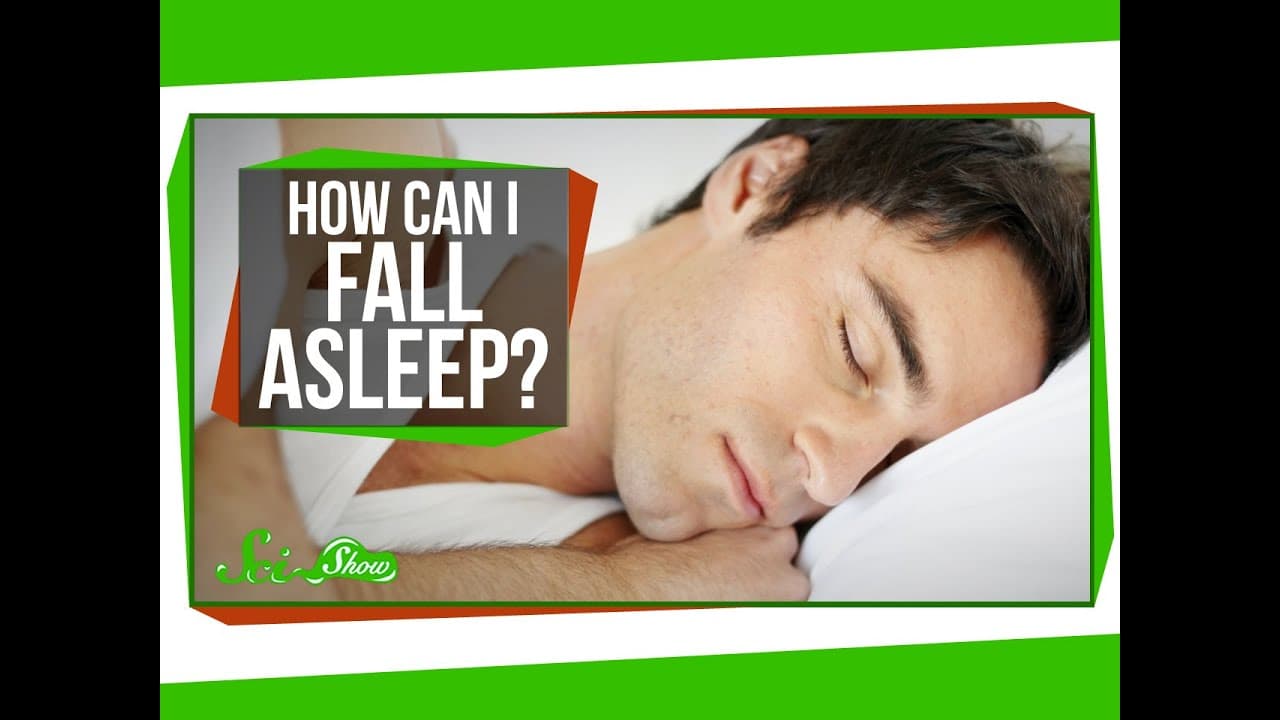
World's Most Asked Questions: How Can I Fall Asleep?
TL;DR
Many Americans suffer from insomnia, and this video explores the science of sleep and provides tips on falling asleep.
Transcript
As many as 60 million Americans suffer from insomnia, so it’s not much of a surprise that, when Google sent us their list of the most asked questions in the English-speaking world, “How Can I Fall Asleep” was pretty close to the top. Sixty million people! That’s weird since, y’know, it’s literally impossible NOT to sleep. And if you’re one of those... Read More
Key Insights
- 😪 Having a regular sleep schedule, aligned with the body's circadian rhythm, is crucial for falling asleep consistently.
- 🛌 Exposure to light before bed can disrupt the release of melatonin and hinder sleep.
- ⌛ Caffeine consumption, even several hours before bedtime, can contribute to insomnia.
- 😪 The way we think about sleep and worrying about not getting enough can affect sleep patterns.
- 😪 Medications can help with falling asleep, but research suggests that our mindset towards sleep can be more powerful.
- #️⃣ A significant number of Americans suffer from insomnia.
- ☠️ Saudi Arabians reported the lowest rates of insomnia, while English speakers in the US, UK, and Australia had higher rates.
Install to Summarize YouTube Videos and Get Transcripts
Explore YouTube Video Summarizer or Get YouTube Transcript Extractor
Questions & Answers
Q: How does having a regular sleep schedule help with falling asleep?
Having a regular sleep schedule aligns with our body's circadian rhythm, making it easier to fall asleep consistently.
Q: Why is exposure to light before bed discouraged?
Exposure to light, whether natural or artificial, inhibits the release of melatonin, a hormone that promotes relaxation and sleep. Avoiding screens before bed is recommended.
Q: How does caffeine affect sleep?
Studies have shown that consuming caffeine, even up to twelve hours before bedtime, can be linked to insomnia. It is best to avoid caffeine in the evening.
Q: Can worrying about not getting enough sleep cause insomnia?
Yes, worrying about not getting sufficient sleep can contribute to insomnia and is known as Sleep Onset Insomnia. It is important to manage stress and have a positive mindset towards sleep.
Summary & Key Takeaways
-
Sleeping regular hours and having a consistent wake-up time is important for falling asleep consistently, as it aligns with our body's natural circadian rhythm.
-
Exposure to light affects the release of the hormone melatonin, which plays a key role in inducing relaxation and sleep. Avoiding screens before bed is recommended.
-
Caffeine consumption, even up to twelve hours before bedtime, can contribute to insomnia. Thinking about sleep can also affect sleep patterns.
Read in Other Languages (beta)
Share This Summary 📚
Summarize YouTube Videos and Get Video Transcripts with 1-Click
Try YouTube Summary with ChatGPT & Claude or YouTube Transcript Generator
Explore More Summaries from SciShow 📚


Summarize YouTube Videos and Get Video Transcripts with 1-Click
Try YouTube Summary with ChatGPT & Claude or YouTube Transcript Generator