How to Use Past Papers for Effective Exam Revision
TL;DR
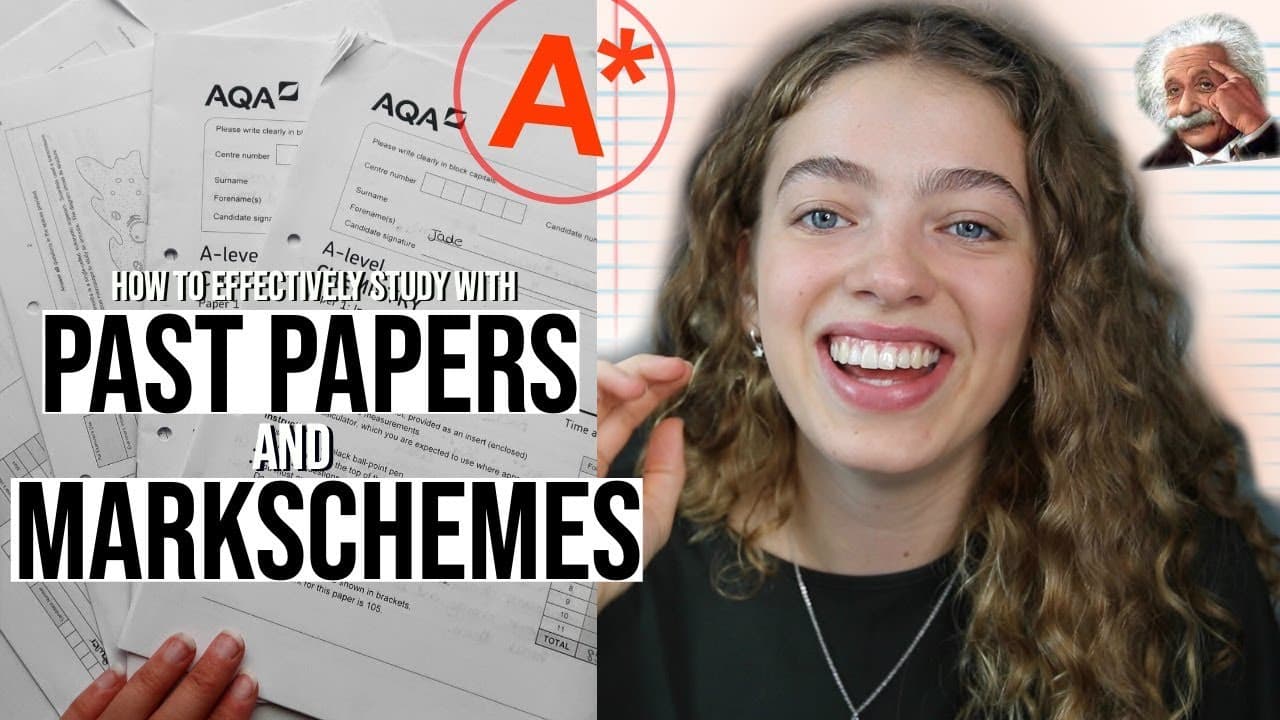
To effectively use past papers for exam revision, analyze your mistakes using the MARKS acronym, which identifies reasons for losing marks: maths errors, application issues, misinterpretation, communication flaws, knowledge gaps, and insufficient statements. Revisit problem areas, seek help from teachers, and adapt your study strategies based on insights gained from analyzing past papers to improve your performance.
Transcript
hey guys are welcome back to you on Jade Jade long time no see felt like it's been a little like forever since I've sat down and just done like a chatty revision video yesterday i sat down and I just wrote out a list of all the study videos that I want to make and I started planning them I thought this is a really important one so I really do think... Read More
Key Insights
- 🤩 Past papers are a key resource for exam preparation, providing relevant practice that mimics actual tests.
- 🧑🎓 Analyzing mistakes using the MARKS system helps students identify specific areas requiring improvement, tailored to their unique weaknesses.
- 🤩 Effective communication of answers, including adherence to key terms in mark schemes, is essential for scoring well.
- 🧑🏫 Engaging with teachers for clarification is critical for addressing misunderstandings and ensuring comprehensive knowledge before exams.
- 🥺 The systematic revision of identified weaknesses can lead to a more focused and efficient study routine.
- 👂 Creating lists of common exam questions tailored to specific subjects can aid in preparation by helping students anticipate potential queries.
- 💋 Adapting study notes to align with the focusing priorities of mark schemes can enhance relevance and effectiveness in exam environments.
Install to Summarize YouTube Videos and Get Transcripts
Explore YouTube Video Summarizer or Get YouTube Transcript Extractor
Questions & Answers
Q: What does the acronym MARKS stand for, and how does it help with exam preparation?
MARKS is an acronym used to analyze mistakes made in past papers. Each letter represents a potential reason for losing marks: M for maths errors, A for application issues, R for misinterpretation of questions, C for communication errors, K for knowledge gaps, and S for lacking statements. By identifying these issues, students can strategically focus their revision efforts on the areas where they struggle the most, leading to improved performance.
Q: Why is it important to analyze your mistakes after completing a past paper?
Analyzing mistakes after a past paper is crucial because it helps students understand not just what they got wrong, but why they got it wrong. This reflective practice allows them to identify patterns in their errors, whether they stem from knowledge gaps, misunderstandings, or miscommunications. This understanding can inform targeted revision strategies, ultimately enhancing their exam readiness and confidence.
Q: How can students effectively use their teachers to improve their understanding of difficult topics?
Students are encouraged to see their teachers as valuable resources. If they struggle with certain exam questions or topics, it is essential to ask questions and seek clarification. Engaging with teachers can help students fill knowledge gaps and build understanding, creating a more solid foundation for succeeding in exams. This proactive approach reduces the likelihood of confusion during exams and fosters a supportive learning environment.
Q: What should students do if they perform poorly on a past paper or test?
If a student performs poorly on a past paper, it is recommended they analyze their performance and seek to redo the paper after proper revision. By understanding where they went wrong and rectifying these issues, they can compare their new results to learn about their progress. This not only improves their understanding but also builds exam skills, showing dedication to learning and growth.
Summary & Key Takeaways
-
The speaker emphasizes the importance of utilizing past papers and mark schemes as vital tools for effective exam preparation, highlighting their similarity to actual exam questions.
-
A structured method for analyzing mistakes—using the acronym MARKS—is introduced, where each letter stands for different reasons for losing marks in exams.
-
To improve future performance, students are encouraged to revisit questions, seek clarification from teachers, and adapt their study strategies based on past paper insights.
Read in Other Languages (beta)
Share This Summary 📚
Summarize YouTube Videos and Get Video Transcripts with 1-Click
Try YouTube Summary with ChatGPT & Claude or YouTube Transcript Generator
Explore More Summaries from UnJaded Jade 📚






Summarize YouTube Videos and Get Video Transcripts with 1-Click
Try YouTube Summary with ChatGPT & Claude or YouTube Transcript Generator