What Is the Fourth Industrial Revolution?
TL;DR
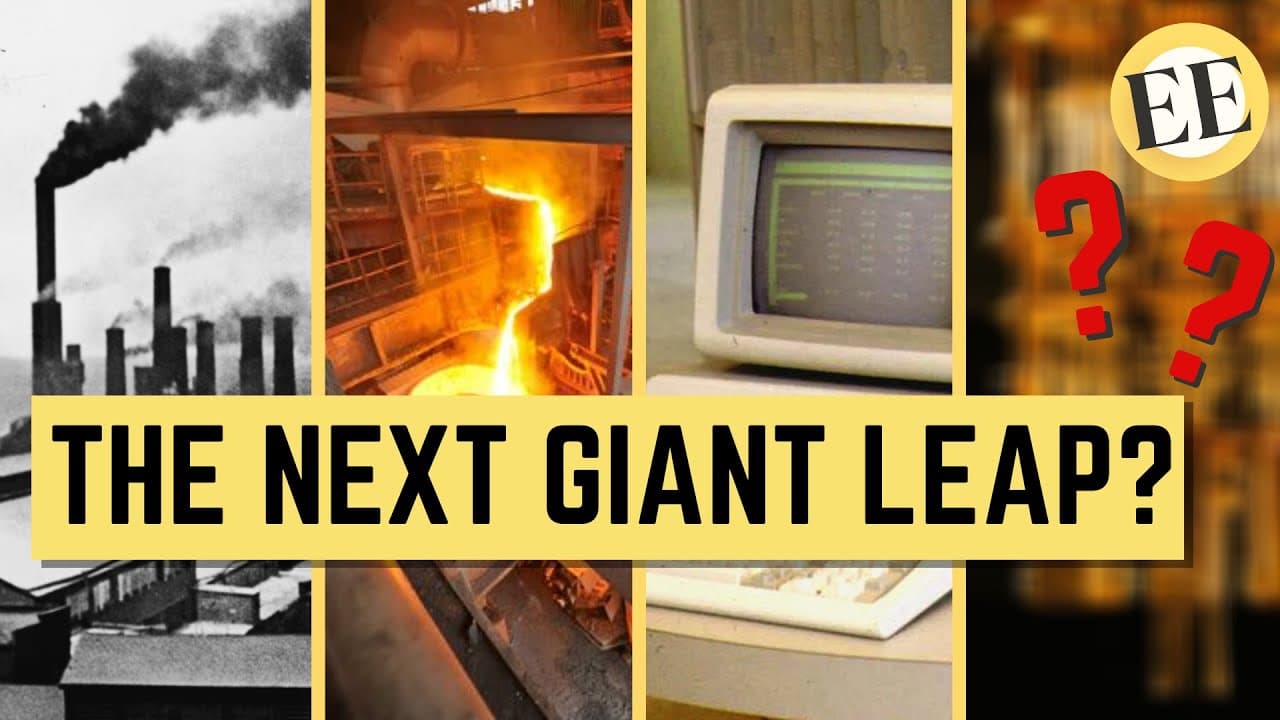
The Fourth Industrial Revolution promises a transformative shift in how we live and work, driven by advancements like AI, 3D printing, and quantum computing. Economists debate whether it's truly revolutionary or just an extension of previous technological progress. Understanding past industrial revolutions helps in recognizing the potential impact of these new technologies on global economies.
Transcript
So apparently we are due for a fourth industrial revolution, which might come as a surprise to you because as far as most people can tell we have only had one industrial revolution, and some nations haven’t even got around to that one yet. All the same, this promise of a radical shift in the way we live our lives has got a lot of economists ver... Read More
Key Insights
- The Fourth Industrial Revolution is expected to transform industries with technologies like AI and quantum computing.
- Past industrial revolutions significantly changed production methods and societal structures.
- The first industrial revolution introduced mechanized production, fundamentally altering economies.
- The second industrial revolution was marked by standardization and mass steel production.
- The third industrial revolution saw the rise of computers and digital data storage.
- Economists debate whether current advancements are revolutionary or evolutionary.
- Artificial intelligence could enhance computer capabilities, similar to how steel improved iron usage.
- Future growth depends on new technologies that radically change current practices.
Install to Summarize YouTube Videos and Get Transcripts
Explore YouTube Video Summarizer or Get YouTube Transcript Extractor
Questions & Answers
Q: What is the Fourth Industrial Revolution?
The Fourth Industrial Revolution refers to the current and emerging technological advancements expected to transform industries and economies. It includes developments like artificial intelligence, 3D printing, quantum computing, and blockchain technology. These innovations have the potential to fundamentally change production processes, business models, and societal structures, much like previous industrial revolutions did.
Q: How do economists define an industrial revolution?
Economists define an industrial revolution as a systematic shift in technology that significantly changes and improves business operations, leading to the creation of new industries across the economy. It is not just about technological advancements but about those that have widespread impact across multiple sectors, fundamentally altering economic and social structures.
Q: What were the key features of the first industrial revolution?
The first industrial revolution was characterized by the introduction of mechanized production, which replaced manual labor with machines. This shift led to significant increases in production capacity and efficiency, fundamentally changing economic structures and societal living standards. It also marked the beginning of sustained economic growth and industrialization.
Q: What advancements marked the second industrial revolution?
The second industrial revolution was marked by major advancements such as standardization, the Bessemer process for mass steel production, and the telegraph. These innovations enabled mass production, improved communication, and the creation of large-scale infrastructure, significantly boosting industrial growth and economic development.
Q: What role did computers play in the third industrial revolution?
Computers played a pivotal role in the third industrial revolution by introducing digital data storage and processing capabilities. This revolutionized how information was managed and utilized in business operations, leading to increased efficiency and the creation of new industries. The integration of computers into everyday work and life marked a significant shift in economic and social dynamics.
Q: Why is there debate about the Fourth Industrial Revolution?
There is debate about the Fourth Industrial Revolution because some economists view current technological advancements as an extension of previous progress rather than a distinct revolution. While technologies like AI and quantum computing have transformative potential, their full impact and implementation are still uncertain, leading to differing opinions on whether they constitute a true industrial revolution.
Q: What is the potential impact of artificial intelligence in the Fourth Industrial Revolution?
Artificial intelligence has the potential to significantly enhance the capabilities of existing technologies, much like how the Bessemer process improved steel production. AI could revolutionize industries by automating complex tasks, improving decision-making processes, and creating new business models. Its impact could be as profound as previous industrial revolutions, transforming economies and societies.
Q: How might quantum computing affect future economic growth?
Quantum computing could drastically affect future economic growth by solving complex problems much faster than traditional computers. This capability could lead to breakthroughs in various fields, including medicine, finance, and logistics, driving innovation and efficiency. If fully realized, quantum computing could be a key driver in the Fourth Industrial Revolution, enabling new possibilities for economic development.
Summary & Key Takeaways
-
The Fourth Industrial Revolution is anticipated to bring about significant changes in how industries operate through advancements in technologies like AI, 3D printing, and quantum computing. These technologies have the potential to drastically alter production and economic structures, much like previous industrial revolutions did. However, there is debate among economists about whether these changes are genuinely revolutionary or simply extensions of existing technological progress.
-
Understanding the characteristics and impacts of past industrial revolutions can provide insight into the potential effects of the Fourth Industrial Revolution. The first revolution introduced mechanized production, while the second brought standardization and mass steel production. The third revolution was driven by the advent of computers and digital data storage, which continue to impact industries today.
-
The distinction between a true industrial revolution and mere technological advancement lies in the ability to transform industries across the board. The Fourth Industrial Revolution is expected to do just that, provided these new technologies are fully realized and implemented. This potential for transformation is what keeps economists optimistic about future economic growth and prosperity.
Read in Other Languages (beta)
Share This Summary 📚
Summarize YouTube Videos and Get Video Transcripts with 1-Click
Try YouTube Summary with ChatGPT & Claude or YouTube Transcript Generator
Explore More Summaries from Economics Explained 📚





Summarize YouTube Videos and Get Video Transcripts with 1-Click
Try YouTube Summary with ChatGPT & Claude or YouTube Transcript Generator