WHAT IS A STOCK SPLIT? 📈 Stock Splits Explained
TL;DR
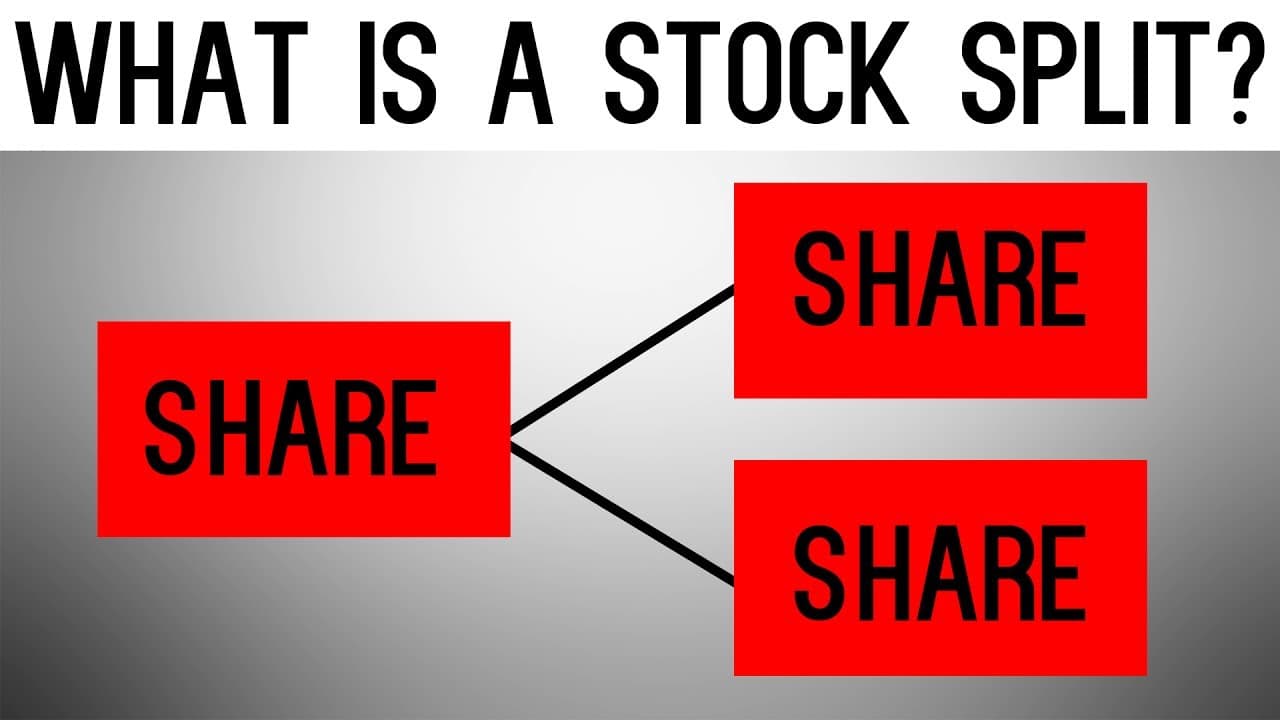
A stock split increases the number of outstanding shares while proportionally lowering the price per share, so it does not change the company’s market capitalization. For example, a 2:1 split turns 1,000 shares at $10 each into 2,000 shares at $5 each. Companies typically split shares when the price appears too high, making the mechanics and valuation misconceptions worth reading about below.
Transcript
so they were going to be talking about a stock split so I had somebody reach out to me and asked me about a reverse stock split and they wanted me to basically explain what exactly that was and to be honest with you until somebody mentioned that to me I wasn't even really aware that that was something that existed but it's very funny because coinci... Read More
Key Insights
- 💨 Stock splits are a way for companies to make their stock seem more affordable to investors.
- 🥳 The value of a stock is not determined by its price per share but rather by its price to earnings ratio.
- 🥺 Stock splits can lead to an increase in the price per share due to increased demand from investors.
- ✋ Companies may choose to split their stock if the price per share is too high compared to other companies in the sector.
- 🙈 Stock splits are seen as a sign of confidence in the company's future performance.
- 🥹 Shareholders typically receive more shares for each existing share they hold during a stock split.
- 🔰 Stock splits can attract beginner investors who perceive the stock as more affordable after the split.
Install to Summarize YouTube Videos and Get Transcripts
Explore YouTube Video Summarizer or Get YouTube Transcript Extractor
Questions & Answers
Q: What is a stock split?
A stock split is a decision to increase the number of outstanding shares by issuing additional shares to current shareholders. The price per share falls proportionally, while the company’s market capitalization remains unchanged.
Q: How does a 2:1 stock split work?
In a 2:1 split, a shareholder receives two shares for every one share previously held. In the transcript’s example, 1,000 shares priced at $10 become 2,000 shares priced at $5.
Q: Does a stock split increase the value of an investment?
No value is added or subtracted during the split itself. The number of shares and price per share change proportionally, leaving market capitalization unchanged.
Q: Why do companies split their stock?
The primary reason described is that the board considers the price per share too high. Splitting the stock lowers its price per share and can make it seem more affordable to investors.
Q: Who decides whether a stock split happens?
The company’s board of directors first concludes that the stock should be split. The proposal is generally put to a shareholder vote, and shareholders with voting rights receive proxy materials to cast their votes.
Q: What happens in a 5:1 stock split?
A shareholder receives five shares for every one share previously held. In the example, 1,000 shares at $10 become 5,000 shares at $2, preserving the $10,000 market capitalization.
Q: Can share price alone show whether a stock is expensive or cheap?
No, the transcript says share price alone cannot determine whether a stock is expensive, cheap, overvalued, or a good buy. It recommends examining the price-to-earnings ratio and comparing it with those of other stocks in the same sector.
Q: What is the difference between a forward stock split and a reverse stock split?
A forward split increases outstanding shares and lowers the price per share. In the reverse-split example, five shares become one, outstanding shares fall by a factor of five, and the price per share rises by a factor of five.
Summary & Key Takeaways
-
A stock split occurs when a company's board of directors decides to increase the number of outstanding shares.
-
The split ratio determines how many new shares shareholders receive for each existing share they hold.
-
Stock splits are often done to make the stock price seem more affordable to investors and can lead to an increase in the price per share.
Read in Other Languages (beta)
Share This Summary 📚
Summarize YouTube Videos and Get Video Transcripts with 1-Click
Try YouTube Summary with ChatGPT & Claude or YouTube Transcript Generator
Explore More Summaries from Ryan Scribner 📚


Summarize YouTube Videos and Get Video Transcripts with 1-Click
Try YouTube Summary with ChatGPT & Claude or YouTube Transcript Generator