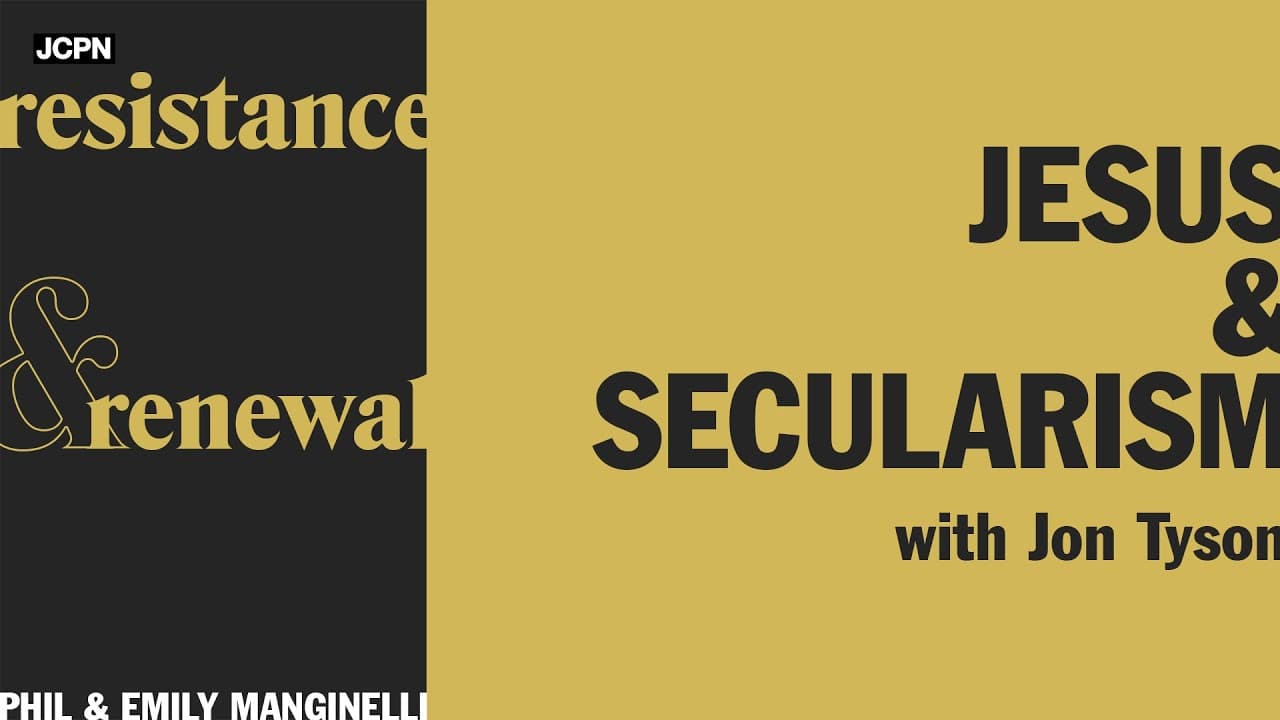
Jesus & Secularism (ft. Jon Tyson) | Resistance & Renewal Podcast
TL;DR
Exploring secularism's impact on Christianity with Jon Tyson.
Transcript
welcome to the resistance and renewal podcast our second episode um this is a real thing I think it's I think it's the second episode where it's real and babe yes two days ago two days ago your book came out yeah you wrote a book yeah I did write a book I'm so proud of you thank you I mean because I saw you write it ... Read More
Key Insights
- The podcast discusses the impact of secularism on Christianity, emphasizing the need for a countercultural approach rooted in Jesus.
- Jon Tyson highlights that secularism often leads to a crisis of identity among Christians, who struggle to discern their secular beliefs.
- The conversation underscores the importance of understanding cultural narratives to effectively communicate the gospel in a secular world.
- Secularism is described as a worldview that dismisses the transcendence of God, focusing instead on human flourishing and individualism.
- The podcast emphasizes the power of longings, suggesting that secular longings can only be fulfilled by Jesus, offering hope for revival.
- Phil and Emily Manginelli discuss the deformation caused by secularism, particularly among young Christians who struggle with identity and belief.
- The speakers advocate for intentional spiritual formation and discipleship as antidotes to the secular influences shaping believers.
- Jon Tyson calls for awareness of cultural influences and a passionate pursuit of Jesus as essential steps toward transformation and freedom.
Install to Summarize YouTube Videos and Get Transcripts
Explore YouTube Video Summarizer or Get YouTube Transcript Extractor
Questions & Answers
Q: What is the main focus of the podcast episode?
The main focus of the podcast episode is the exploration of secularism's impact on Christianity and how believers can reclaim a countercultural vision rooted in Jesus. The episode features Jon Tyson, who discusses the challenges posed by secular beliefs and the need for intentional spiritual formation to navigate these challenges.
Q: How does Jon Tyson describe secularism?
Jon Tyson describes secularism as a worldview that dismisses the transcendence of God, focusing instead on human flourishing and individualism. It is characterized by a 'this-world-only' approach to reality, where religion is privatized, and the individual is considered the highest authority. Secularism makes it difficult for people to believe in God, as it frames life in purely imminent terms.
Q: What are the key challenges posed by secularism to Christians?
The key challenges posed by secularism to Christians include a crisis of identity, where believers struggle to discern their secular beliefs. Secularism leads to the deformation of faith, causing existential doubt and anxiety. Christians often find themselves caught between their belief in Jesus and the secular convictions that have subtly shaped their lives, leading to confusion and disillusionment.
Q: What role do cultural narratives play in the discussion?
Cultural narratives play a significant role in the discussion as they are seen as essential for effectively communicating the gospel in a secular world. Understanding these narratives helps believers identify the secular influences shaping their lives and allows them to present the gospel in a way that resonates with the longings and questions of a secular audience. Jon Tyson emphasizes the importance of engaging with cultural narratives to build a plausibility structure for faith.
Q: How do the speakers view the potential for revival in a secular world?
The speakers view the potential for revival in a secular world as hopeful, driven by the idea that secular longings are uniquely Christian and can only be fulfilled by Jesus. They believe that the exhaustion and disillusionment caused by secularism create an open door for the gospel's transformative power. The speakers express confidence that the secular world's search for meaning and truth can lead to a significant spiritual awakening.
Q: What is the suggested approach to counteract secular influences?
The suggested approach to counteract secular influences involves intentional spiritual formation and discipleship. The speakers advocate for paying attention to the cultural stories and influences shaping believers' lives and pursuing a passionate relationship with Jesus. They emphasize the importance of understanding how secularism deforms faith and actively seeking transformation through the teachings and love of Jesus.
Q: What is the role of the Bible in addressing secular challenges?
The Bible plays a crucial role in addressing secular challenges by providing a foundation for discerning truth from lies. The speakers stress the importance of understanding the Bible not just as a text but as a means to encounter the real Jesus and discern the secular influences affecting faith. They encourage believers to engage deeply with Scripture to counteract the deceptive narratives of secularism and find authentic hope in Jesus.
Q: How do the speakers suggest believers find freedom from secularism?
The speakers suggest that believers find freedom from secularism by becoming aware of the cultural influences shaping their lives and pursuing an intentional relationship with Jesus. They advocate for understanding the stories and narratives that inform secular beliefs and actively seeking transformation through the teachings of Jesus. By recognizing the deceptions of secularism and embracing the truth of the gospel, believers can experience spiritual freedom and renewal.
Summary & Key Takeaways
-
The podcast explores the intersection of Jesus and secularism, featuring Jon Tyson, who discusses how secularism impacts Christians' faith and identity. The conversation emphasizes the need for a countercultural approach, rooted in the teachings of Jesus, to address the challenges posed by secular beliefs.
-
Jon Tyson highlights the transformative potential of understanding cultural narratives and longings, suggesting that these can be pathways to revival. The speakers discuss the importance of recognizing the secular influences shaping believers and the need for intentional spiritual formation to counteract these effects.
-
The discussion delves into the nature of secularism, describing it as a worldview that prioritizes human flourishing and individualism over transcendence. The podcast calls for a passionate pursuit of Jesus and awareness of cultural influences as essential steps toward achieving spiritual freedom and transformation.
Read in Other Languages (beta)
Share This Summary 📚
Summarize YouTube Videos and Get Video Transcripts with 1-Click
Try YouTube Summary with ChatGPT & Claude or YouTube Transcript Generator