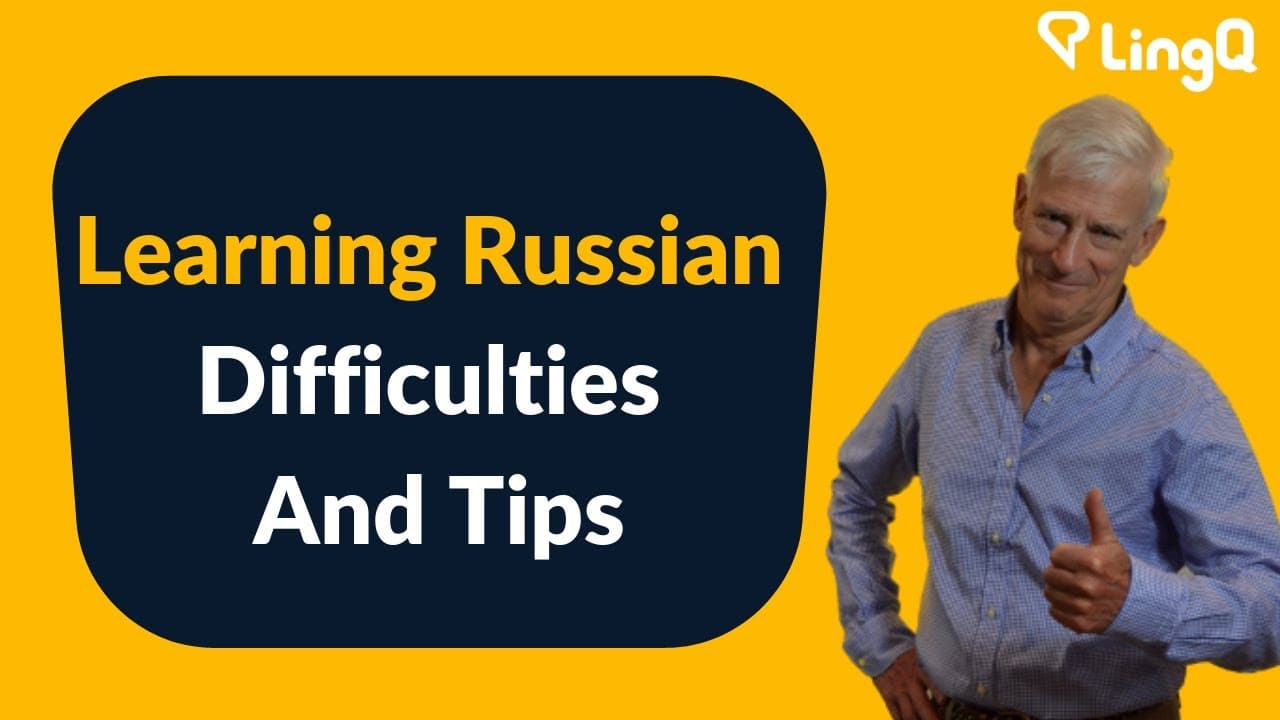
Learning Russian - Difficulties And Tips
TL;DR
Learning Russian can be challenging due to its complex grammar, cases, verbs of motion, and aspect of verbs, but the rich culture and interesting people make it worth the effort.
Transcript
yeah hello Steve Kaufman here today I'm going to talk about Russian my experience with Russian about how i learned the language some comments about the language and i'm going to begin by explaining a bit about Russia and Russian culture as I perceive it i had mentioned in my video about learning French that the French like to be very logical at lea... Read More
Key Insights
- 🔡 Russian is a difficult language for beginners due to its complex grammar, cases, verbs of motion, and aspect of verbs.
- 👯 Russia's rich history, diverse culture, and interesting people make learning the language a fascinating experience.
- ❓ Exposure to the language through extensive listening and reading is essential for improving comprehension and fluency.
- 🔊 Practice in speaking Russian is necessary to develop confidence and accuracy in the language.
- 🔊 Despite the challenges, the speaker encourages others to learn Russian because of its unique cultural and linguistic characteristics.
- 🐦⬛ Russian's lack of political correctness and tendency to speak their minds adds to the excitement of engaging with the language.
Install to Summarize YouTube Videos and Get Transcripts
Explore YouTube Video Summarizer or Get YouTube Transcript Extractor
Questions & Answers
Q: Why did the speaker decide to learn Russian?
The speaker had two main reasons: wanting to read Russian literature in its original form and his learning approach of de-emphasizing grammar and focusing on exposure to the language.
Q: How does Russian compare to other languages in terms of difficulty?
Russian can be considered difficult, especially for those without any background in Slavic languages. However, the difficulty of a language depends on the starting point of the learner.
Q: What are the three major challenges in learning Russian?
The three major challenges are the cases, verbs of motion, and aspect of verbs. Cases refer to the different endings of nouns depending on their role in a sentence. Verbs of motion have different forms based on the direction and means of transportation. The aspect of verbs refers to the completion or non-completion of an action.
Q: How can one improve fluency in Russian?
The speaker suggests extensive listening and reading as the key to improving fluency in Russian. Additionally, practicing speaking is crucial to develop confidence and accuracy.
Key Insights:
- Russian is a difficult language for beginners due to its complex grammar, cases, verbs of motion, and aspect of verbs.
- Russia's rich history, diverse culture, and interesting people make learning the language a fascinating experience.
- Exposure to the language through extensive listening and reading is essential for improving comprehension and fluency.
- Practice in speaking Russian is necessary to develop confidence and accuracy in the language.
- Despite the challenges, the speaker encourages others to learn Russian because of its unique cultural and linguistic characteristics.
- Russian's lack of political correctness and tendency to speak their minds adds to the excitement of engaging with the language.
- Learning any language requires continuous effort and dedication, but the rewards are worth it in terms of personal growth and cultural understanding.
Summary & Key Takeaways
-
The Russian language is known for its complex grammar, cases, verbs of motion, and aspect of verbs, making it difficult for beginners.
-
Russia is a vast country with a rich history and diverse culture, which adds to the fascination of learning the language.
-
Despite the challenges, learning Russian through extensive listening and reading can help improve understanding and fluency over time.
Read in Other Languages (beta)
Share This Summary 📚
Summarize YouTube Videos and Get Video Transcripts with 1-Click
Try YouTube Summary with ChatGPT & Claude or YouTube Transcript Generator
Explore More Summaries from Steve Kaufmann - lingosteve 📚




Summarize YouTube Videos and Get Video Transcripts with 1-Click
Try YouTube Summary with ChatGPT & Claude or YouTube Transcript Generator