How Netflix changed entertainment -- and where it's headed | Reed Hastings
TL;DR
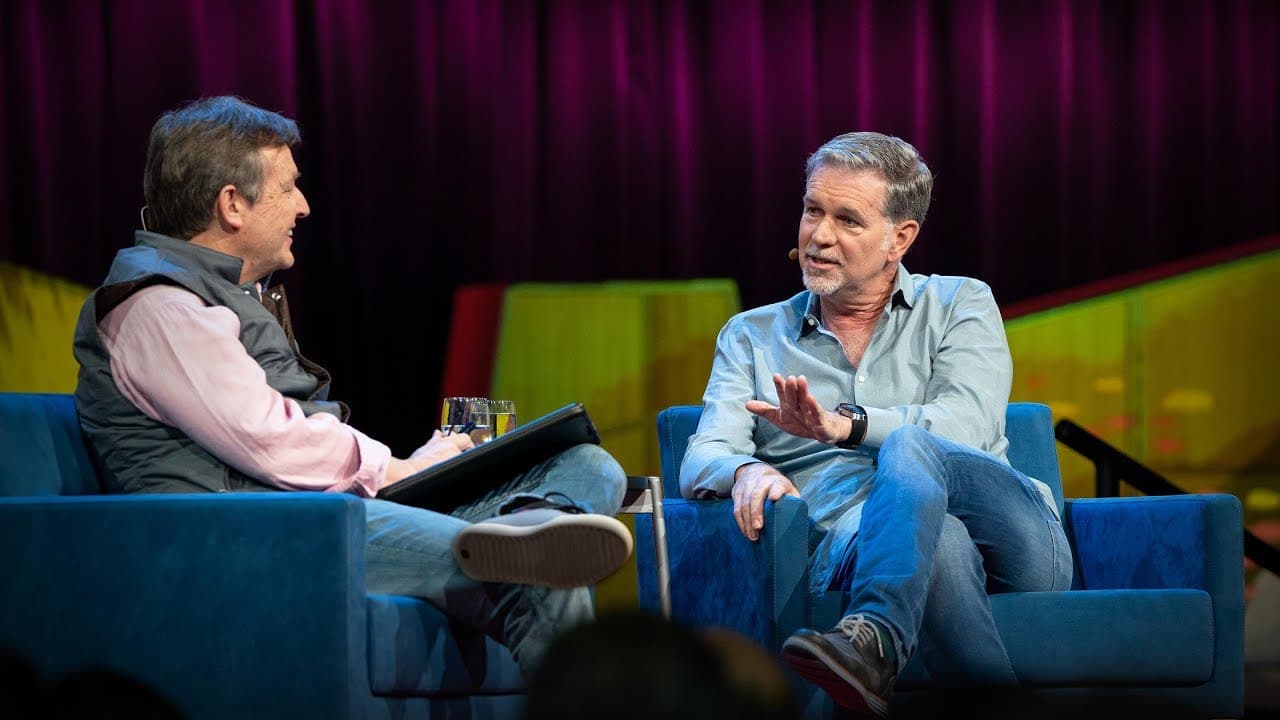
Reed Hastings, CEO of Netflix, discusses the company's radical shift from a DVD rental service to a streaming platform and their focus on original content.
Transcript
Chris Anderson: I have been long so fascinated and amazed by so many aspects of Netflix. You're full of surprises, if I may say so. One of those surprises happened, I think about six years ago. So, the company back then was doing really well, but you were basically a streaming service for other people's films and TV content. You'd persuaded Wall St... Read More
Key Insights
- 💡 Netflix made a risky bet to shift from streaming other people's content to producing its own original content, a decision that paid off and strengthened their brand.
Install to Summarize YouTube Videos and Get Transcripts
Explore YouTube Video Summarizer or Get YouTube Transcript Extractor
Questions & Answers
Q: What was the bet-the-company decision that Netflix made six years ago and what motivated it?
The bet-the-company decision that Netflix made six years ago was to shift from being a streaming service for other people's films and TV content to producing their own original content. This decision was motivated by the opportunity to grow as a company and follow the model of cable networks that started with other people's content and later transitioned to their own originals.
Q: Was Netflix confident in their decision to produce original content and move away from just streaming other people's content?
No, Netflix was not confident in their decision to produce original content. They were aware of the risks involved in this shift, but they saw the potential and felt that it was worth taking the risk. It was a tense and scary moment for the company, but it turned out to be a breakthrough decision.
Q: Why did Netflix choose to introduce binge-viewing for their original series rather than following the traditional model of releasing episodes one at a time?
Netflix chose to introduce binge-viewing because they realized the power and appeal of watching episodic content in one go. They had experienced binge-watching through DVDs and saw how it created a stronger connection between viewers and the content. They recognized that this was something that linear TV could not provide, and it became a defining factor in their strategy.
Q: Did the decision to produce original content and introduce binge-viewing work out financially for Netflix?
Netflix's success is not solely measured by the financial performance of individual shows or episodes. As a subscription-based service, they focus on making the brand stronger and attracting more people to join. Producing original content, such as "House of Cards," had a positive impact on their brand and growth, even if the financial metrics are not tracked at a detailed level.
Q: How much does Netflix plan to invest in new content this coming year and how does it compare to other content commissioners?
Netflix plans to invest approximately eight billion dollars globally in new content. While this may sound like a significant amount, it is spread across multiple markets and is not as much as it may seem. Disney is also in a similar investment range, and if they acquire Fox, their investment would be even bigger.
Q: How would you describe the culture at Netflix that allows for bold and well thought-through decisions?
The culture at Netflix is built on freedom and responsibility. There is a focus on minimal decision-making by the leaders, allowing employees to have the freedom to make decisions and take responsibility for their work. This culture encourages curiosity, debate, and speaking the truth, ultimately leading to better decisions as a collective.
Q: What are some surprising aspects of the Netflix culture and how are they different from other companies?
Some surprising aspects of the Netflix culture include higher pay for equivalent jobs compared to peers and a low employee turnover rate. The company emphasizes freedom, allowing employees to set their own vacation time, and courage, encouraging them to speak the truth and participate in open debates. These elements create a culture of responsibility and accountability, where decisions are made collectively and information is shared openly.
Q: How does Netflix determine the content to recommend to its subscribers and how do they avoid algorithm bias?
Netflix uses algorithms to determine content recommendations based on individual preferences. In the past, they have experimented by opening up their algorithm to the world to find better recommendations. While algorithms play a role, they also rely on the judgment of their content commissioning process and relationships with content creators. The goal is to offer a variety of content and avoid bias by considering a mix of revealed preferences and the diversity of subscriber choices.
Summary & Key Takeaways
-
Netflix made a radical shift from being a DVD rental service to a streaming platform for original content, with the success of "House of Cards" being a breakthrough moment.
-
The company takes a data-driven approach, using algorithms to recommend content based on users' revealed preferences rather than their aspirational values.
-
Reed Hastings, the CEO of Netflix, is passionate about education and has invested hundreds of millions of dollars in charter schools.
Read in Other Languages (beta)
Share This Summary 📚
Summarize YouTube Videos and Get Video Transcripts with 1-Click
Try YouTube Summary with ChatGPT & Claude or YouTube Transcript Generator
Explore More Summaries from TED 📚




Summarize YouTube Videos and Get Video Transcripts with 1-Click
Try YouTube Summary with ChatGPT & Claude or YouTube Transcript Generator