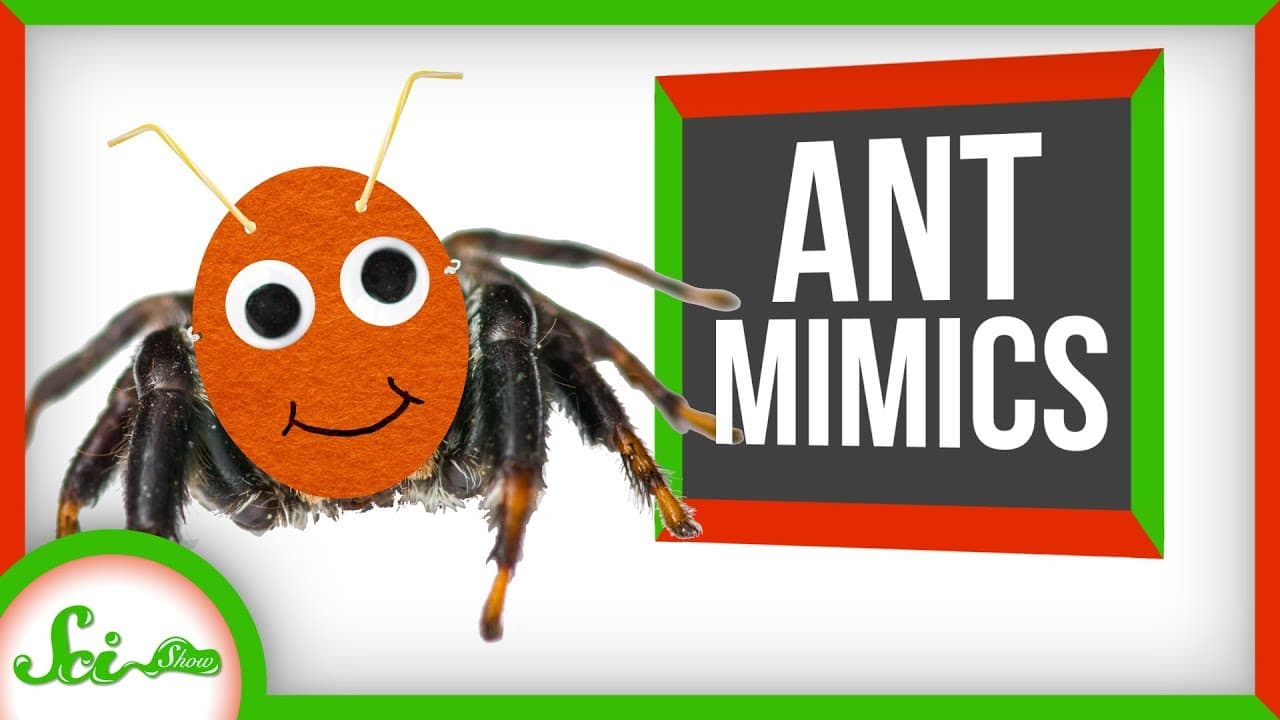
Seriously, None of These Are Ants | 8 Ant Mimics
TL;DR
Many organisms, including spiders, insects, plants, and beetles, have evolved to mimic ants for various reasons, including defense, reproduction, and predation.
Transcript
[intro ] Ants are one of the most abundant organisms on land. They’re found practically everywhere. But not everything that looks or acts like an ant/is an ant. They’re… ant-posters. Charlat-ants. Ant mimics. Mimicry is a pretty common ecological phenomenon, and it works in a lot of different ways. Sometimes it’s defensive, sometimes aggressive. So... Read More
Key Insights
- 🇦🇬 Ant mimicry is a common ecological phenomenon found in various organisms, with at least 70 cases of ant mimicry estimated to have evolved.
- 🤰 Mimicking ants can serve as a defense strategy, protecting organisms from predators that avoid ants due to their intimidating behavior.
- 🤰 Mimicry can also be aggressive, with predators exploiting the trust or benefits associated with ant colonies to prey on real ants.
- ♿ Mimicry may involve visual, behavioral, chemical, and even acoustic imitation to deceive predators or gain access to resources.
- 🕷️ Ant mimicry is not limited to insects and spiders but can also be observed in plants, such as dark spots and flecks on certain species, potentially deterring herbivores.
- 🤰 Some organisms, like the large blue butterfly, use chemical and acoustic mimicry to mooch off ant colonies, benefiting from the ants' care and resources.
Install to Summarize YouTube Videos and Get Transcripts
Explore YouTube Video Summarizer or Get YouTube Transcript Extractor
Questions & Answers
Q: How do ants benefit from mimicking other ants?
Ants benefit from mimicking other ants mainly by avoiding predation. By resembling ants, they can deter predators that are wary of the biting, stinging, or swarming behavior of real ants. Mimicking ants can also provide camouflage within ant colonies, helping predators blend in and access resources like food and protection.
Q: What is defensive mimicry?
Defensive mimicry is a type of mimicry where an organism resembles a more harmful or intimidating species to deter potential predators. In the case of ant mimicry, organisms mimic ants to appear aggressive or unattractive to predators, thus protecting themselves from potential harm.
Q: How do some beetles exploit ants using mimicry?
Some beetles, like the Aleocharinae, have evolved to mimic ants to gain access to ant colonies. These ant-mimicking beetles not only look like ants but also release pheromones and engage in behaviors that make them indistinguishable from real ants. Once inside the colony, they prey on ants and their resources.
Q: Can mimicry be both defensive and aggressive?
Yes, some organisms exhibit both defensive and aggressive mimicry. For example, the black-footed ant spider mimics ants to defend itself against other spiders and to trick its prey, other jumping spiders, into thinking it is an ant. This makes it both a defensive mimic (for self-protection) and an aggressive mimic (for predation).
Summary & Key Takeaways
-
Ant mimicry is a widespread ecological phenomenon seen in various organisms like spiders, insects, and even plants.
-
Mimicry can serve as a defensive strategy, allowing organisms to avoid predators by resembling ants, which are known for their aggression and chemical defenses.
-
Some organisms use aggressive mimicry, pretending to be ants to exploit and prey on real ants.
Read in Other Languages (beta)
Share This Summary 📚
Summarize YouTube Videos and Get Video Transcripts with 1-Click
Try YouTube Summary with ChatGPT & Claude or YouTube Transcript Generator
Explore More Summaries from SciShow 📚


Summarize YouTube Videos and Get Video Transcripts with 1-Click
Try YouTube Summary with ChatGPT & Claude or YouTube Transcript Generator