CCleaner hacked, Replaced by Malware!
TL;DR
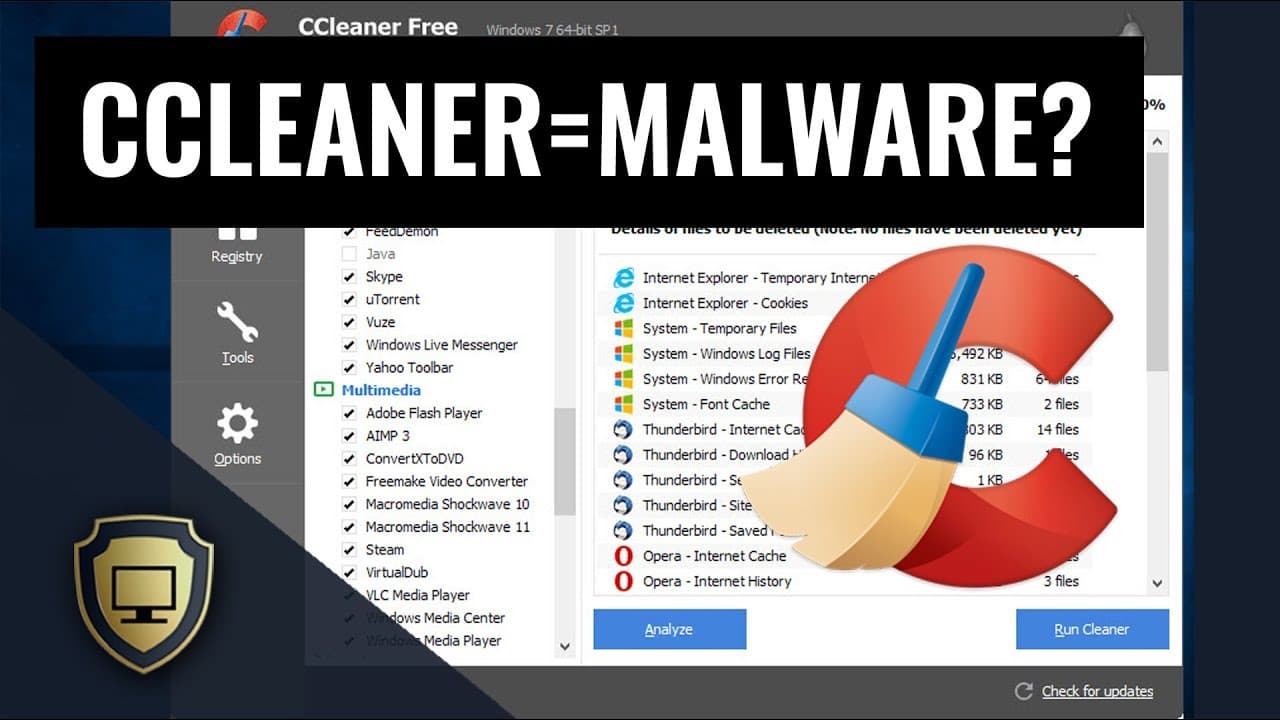
CCleaner's official servers were hacked, replacing the real software with malware, highlighting the need for anti-malware and the growing threat of supply chain attacks.
Transcript
okay there's no easy way to put this this video is not a joke CCleaner was actually hacked and replaced by malware and I'm not talking about any fringe download website that served CCleaner I'm talking about the official servers so first thing to do if you're currently running ccleaner uploaded to VAR stole and check that you have an uninfected ver... Read More
Key Insights
- 👤 CCleaner's official servers were hacked, distributing malware to users who downloaded the software.
- 👊 The hack exemplifies the threat of supply chain attacks, where trusted software is infected with malware.
- 🕵️ Users cannot easily detect the infected CCleaner version since it appears legitimate in terms of properties and functionality.
- 👊 This incident emphasizes the need for anti-malware software to detect and prevent such attacks.
- 😒 Hackers may use supply chain attacks to replace official installers or updates to gain access to systems and deliver further malware.
- 🛟 The incident reflects poorly on Avast, which recently acquired CCleaner and had its servers compromised.
- 🏃 Users should replace the infected CCleaner version and run scans to ensure their system is not compromised.
Install to Summarize YouTube Videos and Get Transcripts
Explore YouTube Video Summarizer or Get YouTube Transcript Extractor
Questions & Answers
Q: How did the CCleaner hack occur?
The hack was a supply chain attack, where malicious actors replaced the legitimate CCleaner installer with a version containing malware on the official servers.
Q: Can users easily detect the infected CCleaner version?
It is almost impossible for users to detect the infected version since it looks and works just like the legitimate software, with authentic properties and functionality.
Q: What potential harm could the infected CCleaner cause?
The infected CCleaner version acted as a backdoor, allowing remote code execution and giving hackers access to the compromised system. It could be used to deliver additional malware or carry out malicious activities.
Q: Should users stop using CCleaner after this incident?
While the incident raises concerns about CCleaner's security, it is not enough evidence to entirely stop using the software. Users should scan their systems with anti-malware software and ensure they have an uninfected version.
Summary & Key Takeaways
-
CCleaner's official servers were hacked, and users who downloaded the software were unknowingly infected with malware.
-
The hack was a supply chain attack, where legitimate software installers or updates are replaced with malware by hackers.
-
The incident highlights the importance of having anti-malware software and the difficulty in detecting such attacks.
Read in Other Languages (beta)
Share This Summary 📚
Summarize YouTube Videos and Get Video Transcripts with 1-Click
Try YouTube Summary with ChatGPT & Claude or YouTube Transcript Generator
Explore More Summaries from The PC Security Channel 📚
Summarize YouTube Videos and Get Video Transcripts with 1-Click
Try YouTube Summary with ChatGPT & Claude or YouTube Transcript Generator