AI Search Rank Trackers Are Lying to You
TL;DR
AI search rank trackers often make false claims about data accuracy.
Transcript
So, every single day there are new AI search rank trackers popping up and so many of them are making some pretty wild claims and I just want to put some kind of misconceptions to rest here and this is very important when you're trying to decide what rank tracker you want to use. Now, one thing I will say is that you should be tracking your brand's ... Read More
Key Insights
- AI search rank trackers are proliferating, often making exaggerated claims about their capabilities and data accuracy, which can mislead users.
- Tracking brand performance in AI platforms like ChatGPT and Google’s AI products is crucial, but the claims about real search demand data are often false.
- The average cost of AI tracking tools is about $337 per month, highlighting the importance of understanding the tool's validity before investing.
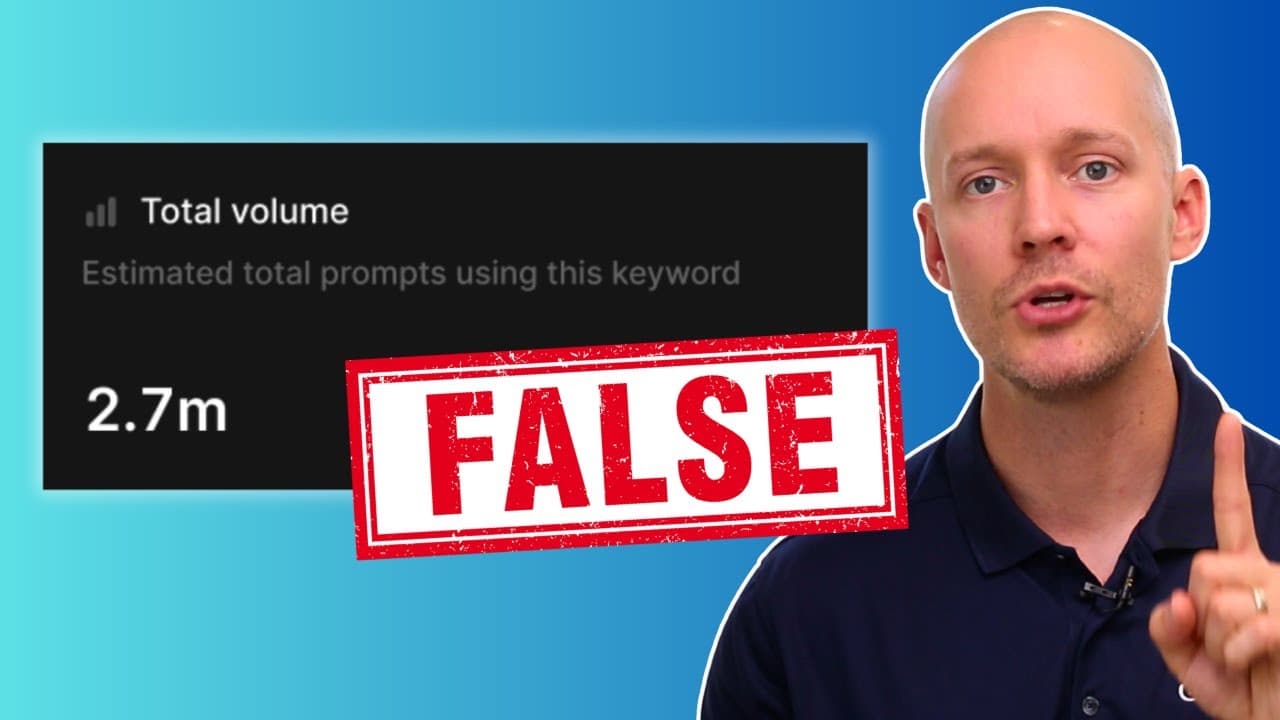
- Claims about accessing real search demand data on AI platforms are misleading since such data is not publicly shared by these platforms.
- The variance in AI-generated responses is significant due to factors like personalization, model differences, and unique user queries.
- Personalization in AI tools creates challenges for tracking, as responses may vary significantly based on user profiles and interactions.
- Synthetic prompts are often used by tracking tools to simulate user queries, but they lack quantifiable data, making them speculative at best.
- Attribution in AI tracking is complex and often unreliable, necessitating a focus on brand visibility in generated responses rather than conversion tracking.
Install to Summarize YouTube Videos and Get Transcripts
Explore YouTube Video Summarizer or Get YouTube Transcript Extractor
Questions & Answers
Q: What are the common misconceptions about AI search rank trackers?
A common misconception about AI search rank trackers is that they can access real search demand data from AI platforms like ChatGPT. However, these platforms do not share such data, making any claims about real search demand misleading. Tools often rely on traditional search volume data, which does not reflect actual AI platform usage.
Q: Why is personalization a challenge for AI tracking?
Personalization poses a challenge for AI tracking because AI tools like ChatGPT tailor responses based on user profiles and previous interactions. This means that responses can vary significantly from one user to another, making it difficult to obtain consistent tracking data. The personalized nature of AI responses complicates efforts to accurately track brand mentions and visibility.
Q: How does the variance in AI-generated responses affect tracking?
The variance in AI-generated responses affects tracking by creating inconsistencies. Factors such as different model versions, unique user queries, and personalization lead to varied responses. This makes it challenging to obtain reliable, consistent data for tracking purposes, as the same query can yield different results each time it's run.
Q: What is the role of synthetic prompts in AI tracking?
Synthetic prompts are used in AI tracking to simulate potential user queries and assess brand visibility. These prompts are created based on logical assumptions about what users might search for. However, they lack quantifiable data, making them speculative. While they can provide insights, they do not reflect actual user behavior on AI platforms.
Q: Why is attribution difficult in AI search tracking?
Attribution in AI search tracking is difficult due to the complex and erratic nature of user journeys. Users may interact with multiple platforms and tools before converting, making it hard to track the path to conversion accurately. The lack of direct links and consistent tracking data further complicates attribution efforts, making it an unreliable metric.
Q: How can brands improve their visibility in AI-generated responses?
Brands can improve their visibility in AI-generated responses by ensuring their content is optimized for AI platforms. This involves focusing on broad visibility across multiple queries and understanding the factors influencing AI recommendations. Brands should aim to appear in generated responses by targeting commercial intent queries and enhancing their overall presence on AI platforms.
Q: What is the significance of prompt diversity in AI tracking?
Prompt diversity is significant in AI tracking as it helps capture a broad range of potential queries users might use. By running multiple variants of a base query, brands can gain a comprehensive understanding of their visibility across different AI-generated responses. This approach helps mitigate the effects of variance and provides a more accurate picture of brand performance.
Q: What should brands focus on when using AI tracking tools?
Brands should focus on tracking their overall visibility in AI-generated responses rather than precise conversions. Understanding where their brand appears in AI recommendations is crucial. Brands should also be cautious of tools making high-conviction claims about data accuracy and instead use a broad approach to assess their performance across multiple queries and platforms.
Summary & Key Takeaways
-
AI search rank trackers often make exaggerated claims about their capabilities, misleading users about the accuracy of their data. It's crucial to understand the limitations and realities of these tools before investing.
-
The average cost of AI tracking tools is significant, emphasizing the importance of verifying their claims, especially regarding access to real search demand data, which is not available from AI platforms.
-
Personalization, model variants, and unique user queries contribute to the significant variance in AI-generated responses, complicating the tracking of brand visibility and necessitating a focus on broad visibility rather than precise conversion tracking.
Read in Other Languages (beta)
Share This Summary 📚
Summarize YouTube Videos and Get Video Transcripts with 1-Click
Try YouTube Summary with ChatGPT & Claude or YouTube Transcript Generator
Explore More Summaries from Nathan Gotch 📚





Summarize YouTube Videos and Get Video Transcripts with 1-Click
Try YouTube Summary with ChatGPT & Claude or YouTube Transcript Generator