Does It Pay To Cheat?
TL;DR
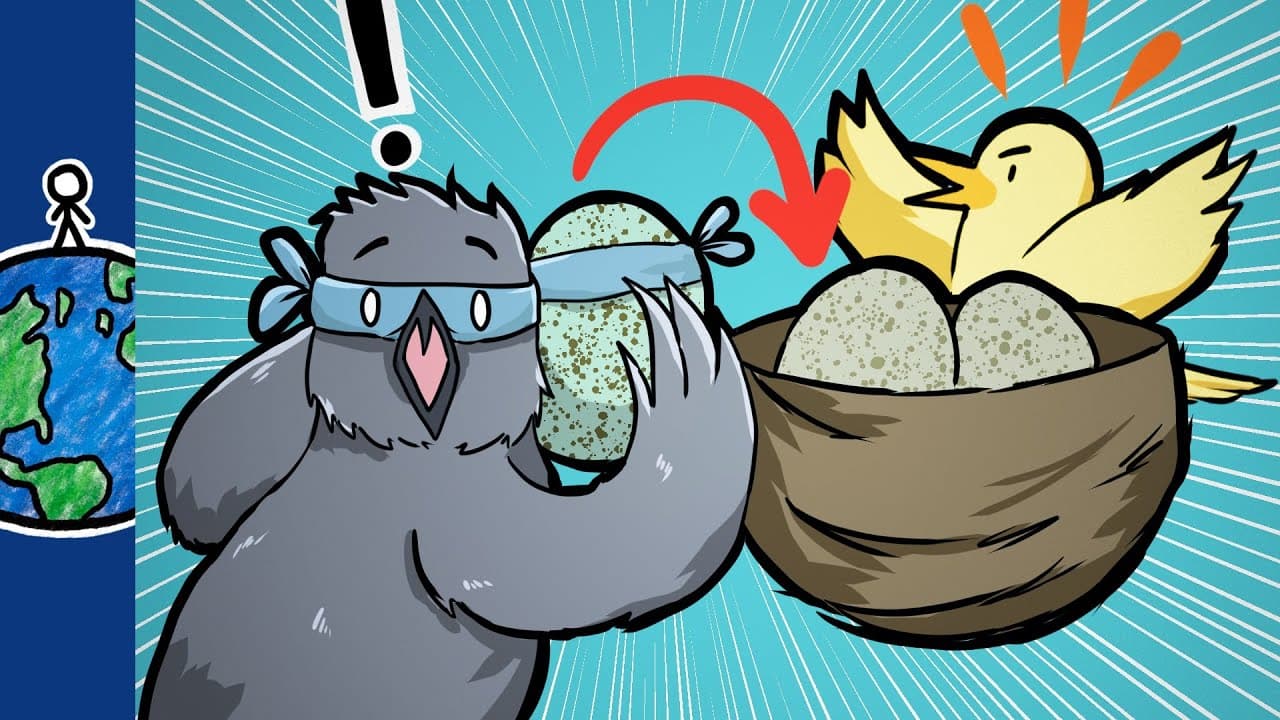
Some birds use trickery or force to get other birds to raise their young, but it doesn't necessarily result in more offspring.
Transcript
Hi, this is David from MinuteEarth. All animals that have offspring are technically parents, but some leave their young to fend for themselves, some dote on their babies, and others try to get out of parenting by foisting the job onto other animals. And passing off parenting duties is particularly common among birds. Some, like cuckoos, sneakily la... Read More
Key Insights
- 🐦 Birds have different parenting strategies, with some relying on trickery or force to get other birds to raise their young.
- 😨 Freeloading birds still have to invest time and energy in finding suitable nests and ensuring the host parents are properly caring for their offspring.
- 🪺 Birds that use traditional parenting strategies invest time and energy in constructing safe nests, incubating eggs, and providing food for their chicks.
- ✋ Trickery or force doesn't necessarily result in higher reproductive success for freeloading birds.
- 🤨 Freeloading birds may face higher risks and energy costs compared to birds that raise their own young.
- 👻 Some host birds may abandon their nests if they become victims of the freeloading behavior.
- 🐦 Cheating in parenting strategies could upset the balance of host birds and freeloading birds, resulting in potential problems.
Install to Summarize YouTube Videos and Get Transcripts
Explore YouTube Video Summarizer or Get YouTube Transcript Extractor
Questions & Answers
Q: Why do some birds lay their eggs in other birds' nests?
Birds like cuckoos and cowbirds lay their eggs in other birds' nests to avoid the energetic costs of parenting and increase their reproductive success.
Q: How do cuckoos and cowbirds ensure their eggs are raised by the host parents?
Cuckoos have to sneakily deposit their eggs in the nest without arousing suspicion. Cowbirds use the threat of killing the host birds' chicks as a way to ensure they raise the cowbird offspring.
Q: Do cuckoos and cowbirds have higher reproductive success compared to birds that raise their own young?
No, birds that use trickery or force to get other birds to raise their offspring often have fewer surviving chicks compared to birds that invest time and energy in parenting.
Q: What are the tradeoffs for freeloading birds like cuckoos and cowbirds?
Freeloading birds have to spend energy scouting for suitable nests, monitoring their eggs, and ensuring the host parents are caring for their offspring. They also face the risk of getting their eggs noticed and dumped.
Summary & Key Takeaways
-
Some birds, like cuckoos and cowbirds, lay their eggs in other birds' nests and rely on the host parents to raise their offspring.
-
Birds that use traditional parenting strategies invest a lot of time and energy in building nests, incubating eggs, and raising their chicks.
-
Freeloading birds, such as cuckoos and cowbirds, have to spend energy finding suitable nests and ensuring their offspring are being properly cared for.
Read in Other Languages (beta)
Share This Summary 📚
Summarize YouTube Videos and Get Video Transcripts with 1-Click
Try YouTube Summary with ChatGPT & Claude or YouTube Transcript Generator
Explore More Summaries from MinuteEarth 📚






Summarize YouTube Videos and Get Video Transcripts with 1-Click
Try YouTube Summary with ChatGPT & Claude or YouTube Transcript Generator