How Does Magnesium React with Nitrogen to Form Ammonia?
TL;DR
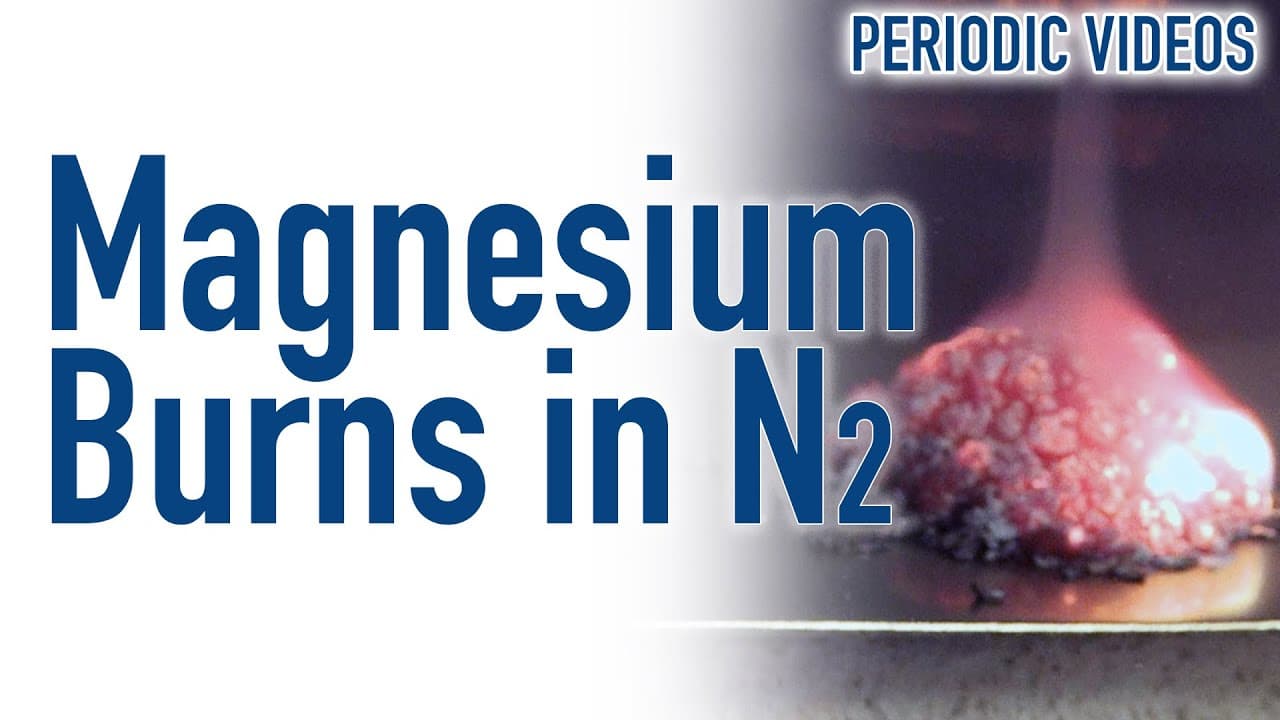
Magnesium reacts with nitrogen when ignited, forming magnesium nitride, which can further react with water to produce ammonia. This reaction requires high heat, which is more effectively achieved with magnesium granules than ribbons. The experiment demonstrates impressive visual effects such as a glowing plume and the formation of magnesium oxide as well.
Transcript
all right today we're going to look at the reaction of magnesium with nitrogen in the air and this is an experiment which in one of our videos I said I had tried for 25 years in front of the students and it had never worked out of the blue I got an email from a viewer called Karsten in Germany who said he had the book of experiments in German and h... Read More
Key Insights
- 🥵 Successful magnesium nitride experiment resulted from using magnesium granules for higher heat.
- ❓ Interaction between magnesium and nitrogen showcased the chemical properties of magnesium oxide and nitride.
- 💦 Further reactions with water produced ammonia, highlighting the alkaline nature of magnesium nitride.
- 🕯️ Introduction of a candle as an indicator added a layer of observation to the experiment.
- 🤍 White smoke observed in the beaker likely consisted of finely divided magnesium oxide particles.
- 😥 Neil's clever adjustments improved the experiment, pointing out potential issues with carbon dioxide buildup.
- 🇩🇪 Recognition of Karsten from Germany for sharing the successful experiment method.
Install to Summarize YouTube Videos and Get Transcripts
Explore YouTube Video Summarizer or Get YouTube Transcript Extractor
Questions & Answers
Q: How did the experiment with magnesium nitride succeed after previous failed attempts?
The success of the experiment was attributed to using magnesium granules that provided the necessary heat for the reaction to occur. The high activation energy required for the reaction was achieved with the hotter magnesium granules, leading to a successful outcome.
Q: Why does magnesium react with nitrogen, despite the strong bond in N2 gas?
The high activation energy needed to break the strong NN bond is overcome by the formation of magnesium two plus ions and nitride three minus ions, which generate significant energy when combined due to their small size and high charge.
Q: What was the purpose of introducing a candle into the experiment?
The candle served as a indicator of oxygen levels in the beaker, similar to a canary in coal mines, showing when oxygen was being consumed by comparing its burn time to that of the magnesium reaction.
Q: What causes the appearance of white smoke in the beaker during the experiment?
The white smoke observed is likely finely divided magnesium oxide, a byproduct of the reaction between magnesium and nitrogen, similar to the white smoke seen in fireworks containing magnesium.
Summary & Key Takeaways
-
Magnesium reacts with nitrogen in a spectacular experiment, culminating in the formation of magnesium nitride.
-
The reaction involves burning magnesium granules in a beaker to create magnesium oxide and interacting with nitrogen.
-
Further reactions with water result in the production of ammonia, showcasing the chemical properties of magnesium nitride.
Read in Other Languages (beta)
Share This Summary 📚
Summarize YouTube Videos and Get Video Transcripts with 1-Click
Try YouTube Summary with ChatGPT & Claude or YouTube Transcript Generator
Explore More Summaries from Periodic Videos 📚
Summarize YouTube Videos and Get Video Transcripts with 1-Click
Try YouTube Summary with ChatGPT & Claude or YouTube Transcript Generator