Why Did Sri Lanka's Economy Collapse?
TL;DR
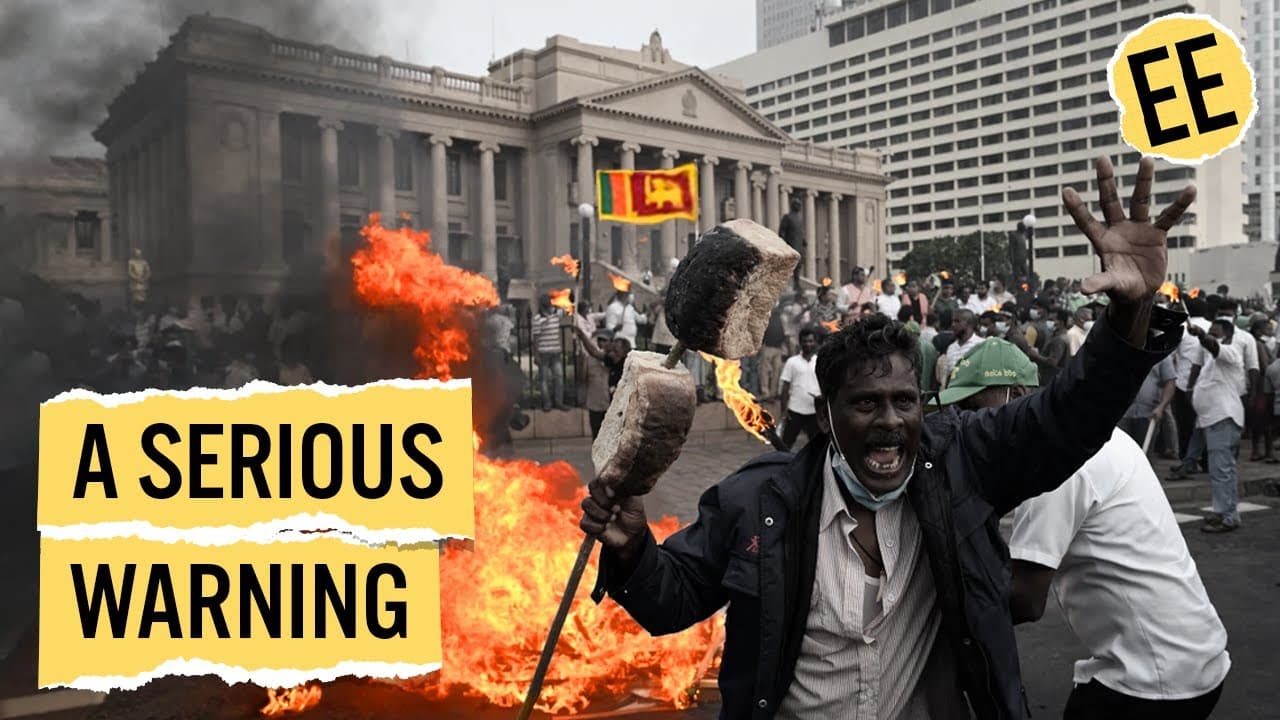
Sri Lanka's economy collapsed due to excessive debt and reliance on non-tradable industries. The pandemic exacerbated the crisis by halting tourism and remittances, leading to a severe shortage of foreign currency. The country must now rebuild its economy from the ground up, but faces challenges in attracting investment and developing sustainable industries.
Transcript
- [Narrator] This is Sri Lanka, a small island nation off the coast of India, home to just 22 million people. The country's economy has a lot going for it. It has a relatively skilled and literate population when compared to its direct geographic neighbors. It has highly fertile land, beautiful beaches, and rainforests for tourists, and even strong... Read More
Key Insights
- Sri Lanka was one of the fastest-growing economies in Asia in the late 2000s and early 2010s.
- The country heavily invested in non-tradable industries, neglecting tradable sectors that could sustain long-term growth.
- Excessive borrowing at high interest rates led to a severe debt crisis.
- The pandemic halted tourism and remittances, cutting off major sources of foreign currency.
- Sri Lanka's economy became reliant on imports, with insufficient exports to balance trade.
- The government's ban on fertilizers worsened food production and agricultural exports.
- Sri Lanka's collapse highlights the challenges of transitioning to an advanced economy.
- The global economy's structure limits the number of nations that can become advanced economies.
Install to Summarize YouTube Videos and Get Transcripts
Explore YouTube Video Summarizer or Get YouTube Transcript Extractor
Questions & Answers
Q: How did Sri Lanka's economy collapse?
Sri Lanka's economy collapsed due to excessive borrowing at high interest rates, reliance on non-tradable industries, and a severe debt crisis. The pandemic exacerbated the situation by halting tourism and remittances, leading to a shortage of foreign currency. The government's ban on fertilizers further worsened agricultural exports, contributing to the collapse.
Q: What role did the pandemic play in Sri Lanka's economic crisis?
The pandemic played a significant role in Sri Lanka's economic crisis by halting tourism and remittances, which were major sources of foreign currency. This cut off vital income streams, exacerbating the already severe debt crisis caused by excessive borrowing and reliance on non-tradable industries.
Q: Why did Sri Lanka invest heavily in non-tradable industries?
Sri Lanka invested heavily in non-tradable industries like infrastructure, education, and healthcare to stimulate economic growth. These industries employ many workers and use domestic products, but they cannot sustain long-term growth without complementary tradable sectors to generate foreign income and balance trade.
Q: How did excessive borrowing affect Sri Lanka's economy?
Excessive borrowing at high interest rates strained Sri Lanka's economy by increasing debt obligations. The borrowed funds were often used for non-tradable industries, neglecting tradable sectors that could generate foreign income. This imbalance led to a severe debt crisis, contributing to the economic collapse.
Q: What challenges does Sri Lanka face in rebuilding its economy?
Sri Lanka faces challenges in rebuilding its economy, such as attracting investment, developing sustainable industries, and balancing trade. The country needs to diversify its economy, enhance exports, and manage debt effectively. Political instability and a small labor force also hinder economic recovery efforts.
Q: Why is it difficult for all countries to become advanced economies?
It is difficult for all countries to become advanced economies due to limited global resources and competition. Advanced economies require a skilled workforce, competitive industries, and stable environments. Not all countries have the infrastructure, investment, or economic conditions to support such transitions, as seen in Sri Lanka's case.
Q: How did the fertilizer ban impact Sri Lanka's agriculture?
The fertilizer ban in Sri Lanka aimed to force organic farming but resulted in reduced food production and higher costs. Agricultural exports like tea became unprofitable, worsening food insecurity. The decision was partly driven by the need to cut foreign spending on imported fertilizers amid the economic crisis.
Q: What lessons can other countries learn from Sri Lanka's economic collapse?
Other countries can learn from Sri Lanka's economic collapse by understanding the risks of excessive borrowing and over-reliance on non-tradable industries. Developing a balanced economy with strong tradable sectors, managing debt prudently, and ensuring political stability are crucial for sustainable growth and avoiding similar crises.
Summary & Key Takeaways
-
Sri Lanka's economy grew rapidly in the late 2000s but collapsed due to excessive debt and reliance on non-tradable industries. The pandemic worsened the situation by halting tourism and remittances, leading to a severe shortage of foreign currency. The country must now rebuild its economy but faces challenges in attracting investment and developing sustainable industries.
-
Sri Lanka's economic collapse demonstrates the challenges of transitioning to an advanced economy. The country heavily invested in non-tradable industries, neglecting tradable sectors that could sustain long-term growth. Excessive borrowing at high interest rates led to a severe debt crisis, compounded by the pandemic.
-
The global economy's structure limits the number of nations that can become advanced economies. Sri Lanka's reliance on imports, with insufficient exports to balance trade, contributed to its collapse. The government's ban on fertilizers further worsened food production and agricultural exports, highlighting the need for strategic economic planning.
Read in Other Languages (beta)
Share This Summary 📚
Summarize YouTube Videos and Get Video Transcripts with 1-Click
Try YouTube Summary with ChatGPT & Claude or YouTube Transcript Generator
Explore More Summaries from Economics Explained 📚
Summarize YouTube Videos and Get Video Transcripts with 1-Click
Try YouTube Summary with ChatGPT & Claude or YouTube Transcript Generator