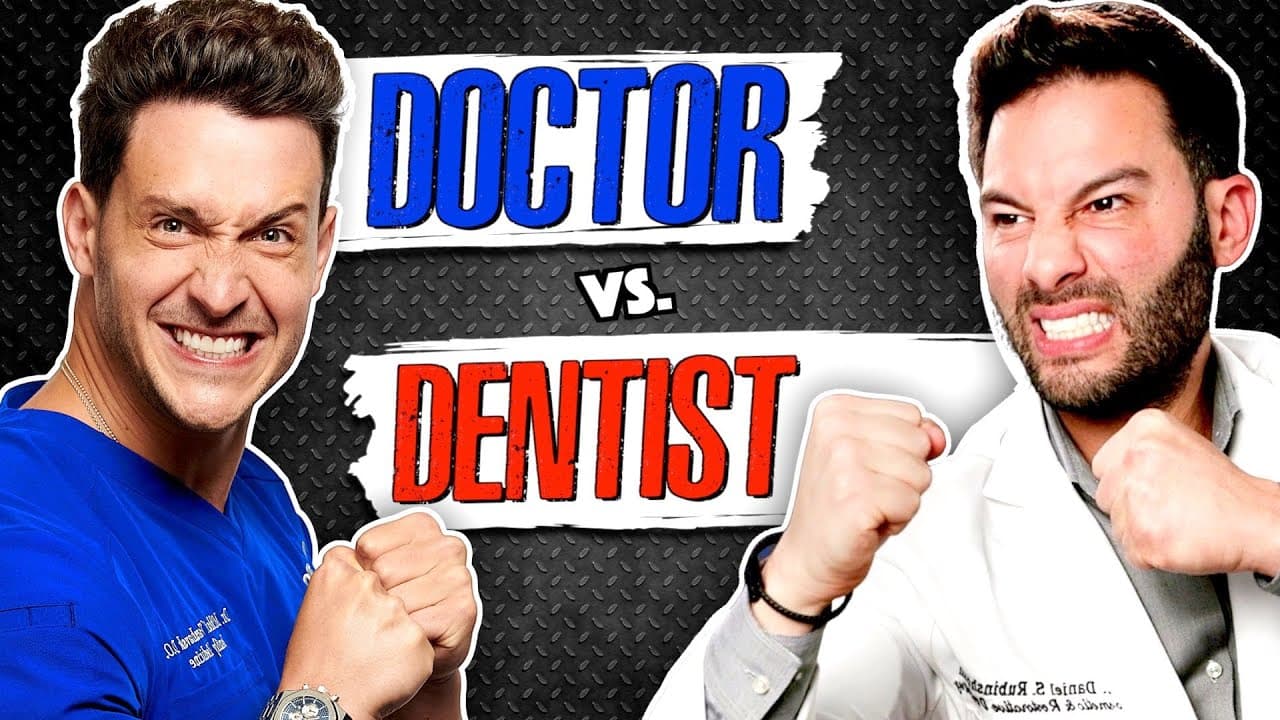
Is Dental School Harder Than Med School?
TL;DR
A lighthearted comparison of dental and medical school challenges and experiences.
Transcript
- You've seen me take on law school, but it's time to take on dental school. Please welcome Dr. Daniel to the channel. - Thanks for having me. - Are you nervous? - Not at all. - Well, medical school is about to beat dental school 'cause we're the cooler school. - All the medical students say that exact same line, so. - Okay, well, we're about to fi... Read More
Key Insights
- 🤗 Dental school is generally perceived as shorter but can require significant hand skills comparable to complex medical training.
- 😷 Both dental and medical schools require rigorous examinations that can overwhelm students if not managed well.
- 🧑🎓 Practical training is vital; dental students begin with hands-on practice, while medical students often engage with actors portraying patients.
- 🧑⚕️ Personal sacrifices are common in both paths, affecting students’ social lives and mental health.
- 😑 Financial burdens are a pressing concern, impacting career choices and ethical considerations in future practice.
- 🧑🎓 Professors are often supportive and invested in students’ success, contrary to stereotypes about harsh academic environments.
- 👨🏫 Peer relationships are important but can be strained by the fierce competition present in both schools.
Install to Summarize YouTube Videos and Get Transcripts
Explore YouTube Video Summarizer or Get YouTube Transcript Extractor
Questions & Answers
Q: What are the main differences in education duration between dental and medical school?
Dental school typically lasts four years, whereas medical school consists of four years of education followed by at least three years of residency. Depending on the specialty chosen, additional years may be required for further training, such as four additional years for dental specialization.
Q: How do dental and medical students train for practical skills?
Dental students practice on mannequins that simulate dental procedures, while medical students often train on standardized patients—actors who present specific symptoms. This hands-on experience is critical to develop the necessary skills before interacting with real patients.
Q: What role do exams play in medical and dental education?
Exams are frequent and rigorous in both fields, with dental students often facing multiple assessments in short timeframes. This continuous testing can hinder comprehensive learning and engagement with the material, leading to high levels of stress and competition.
Q: What personal sacrifices do students make while in training?
Many students find their personal lives heavily impacted, experiencing isolation from peers and reduced time for social activities. The academic pressures and emotional toll can be significant, affecting relationships and mental well-being during their rigorous educational journeys.
Q: What advice do the speakers give to students entering medical or dental school?
They advise new students not to let poor grades deter them from their goals. Resilience and the ability to learn from setbacks are essential for maintaining motivation and perspective throughout their challenging education.
Q: How do financial concerns affect students in healthcare education?
The high costs of tuition and living expenses are a significant burden for students. This debt can pressure graduates to make career choices based on financial necessity rather than passion, which can impact their ethics in practice.
Q: What is the camaraderie like among medical and dental students?
Despite the competitive nature of their fields, patients and education foster a degree of camaraderie among students. They often share experiences and challenges, drawing connections and supporting each other through rigorous training.
Q: How do the experiences differ between dental and medical school with patient interaction?
Dental students often start seeing patients early in their education, learning hands-on skills directly, while medical students may spend initial years focused on theoretical knowledge before rotating through clinical experiences.
Summary & Key Takeaways
-
The conversation explores the differing challenges and experiences faced in dental and medical school, addressing the academic and practical skill requirements unique to each discipline.
-
Dr. Daniel shares insights from his dental education at NYU, emphasizing the importance of hands-on practice and patient interaction, while also highlighting the pressures of exams and tuition costs.
-
Both speakers reflect on the personal sacrifices made during their education, acknowledging the rigorous demands and the emotional journey of pursuing careers in healthcare.
Read in Other Languages (beta)
Share This Summary 📚
Summarize YouTube Videos and Get Video Transcripts with 1-Click
Try YouTube Summary with ChatGPT & Claude or YouTube Transcript Generator
Explore More Summaries from Doctor Mike 📚



Summarize YouTube Videos and Get Video Transcripts with 1-Click
Try YouTube Summary with ChatGPT & Claude or YouTube Transcript Generator