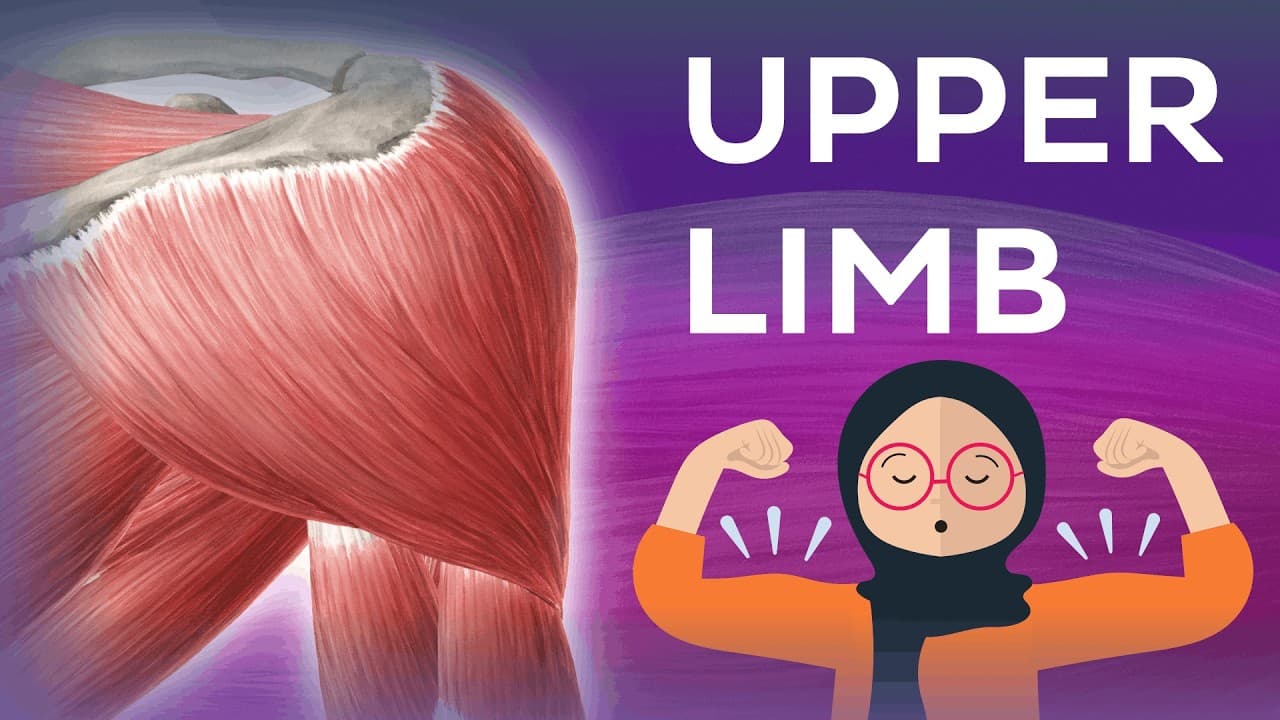
FULL VIDEO: Main muscles of the upper limb - Human Anatomy | Kenhub
TL;DR
This analysis provides a detailed overview of the muscles in the upper limb, including the shoulder, arm, forearm, and hand, describing their functions and movements.
Transcript
when you think of the muscles of the Upper Limb you might think I know those already everyone knows where their bulging biceps are we all know how to flex those maybe you're even aware of your popping triceps after doing some triceps tips what about deltoids you might have even heard of those before but if we look a little bit deeper there's much m... Read More
Key Insights
- ↖️ The muscles of the upper limb are responsible for various movements and actions, including abduction, adduction, flexion, and extension.
- ▶️ The rotator cuff muscles play a crucial role in stabilizing and rotating the shoulder joint.
- 🤙 The forearm muscles are divided into superficial and deep layers, each contributing to specific movements of the forearm, hand, and digits.
- 🤙 The intrinsic muscles of the hand are essential for fine motor control and dexterity.
- 🎨 Rotator cuff injuries, such as strains, can occur due to overuse or acute trauma, resulting in pain, swelling, and limited shoulder movement.
- ↖️ Stretching and strengthening exercises can help improve flexibility and strength in the upper limb muscles.
- ↖️ Understanding the anatomy of the upper limb muscles is important for healthcare professionals, athletes, and individuals seeking to improve their exercise routines.
Install to Summarize YouTube Videos and Get Transcripts
Explore YouTube Video Summarizer or Get YouTube Transcript Extractor
Questions & Answers
Q: What are the main muscles of the shoulder and how do they contribute to arm movement?
The main muscles of the shoulder include the deltoid (abductor), supraspinatus, infraspinatus, teres minor, and subscapularis (rotator cuff). These muscles work together to allow arm abduction, adduction, and rotational movements at the shoulder joint.
Q: What are the main muscles of the arm and their functions?
The main muscles of the arm include the biceps brachii, coracobrachialis, brachialis, and triceps brachii. The biceps and brachialis flex the forearm, while the triceps extends it. The coracobrachialis aids in flexion and adduction of the arm.
Q: How are the muscles of the forearm divided and what movements do they control?
The muscles of the forearm are divided into anterior and posterior compartments. The anterior compartment contains muscles that flex the wrist, hand, and digits, while the posterior compartment consists of muscles that extend them.
Q: What are the intrinsic muscles of the hand and what movements do they create?
The intrinsic muscles of the hand include the dorsal and palmar interossei, lumbricals, hypothenar muscles, and thenar muscles. These muscles work together to perform fine motor movements, such as abduction, adduction, flexion, and extension of the fingers and thumb.
Key Insights:
- The muscles of the upper limb are responsible for various movements and actions, including abduction, adduction, flexion, and extension.
- The rotator cuff muscles play a crucial role in stabilizing and rotating the shoulder joint.
- The forearm muscles are divided into superficial and deep layers, each contributing to specific movements of the forearm, hand, and digits.
- The intrinsic muscles of the hand are essential for fine motor control and dexterity.
- Rotator cuff injuries, such as strains, can occur due to overuse or acute trauma, resulting in pain, swelling, and limited shoulder movement.
- Stretching and strengthening exercises can help improve flexibility and strength in the upper limb muscles.
- Understanding the anatomy of the upper limb muscles is important for healthcare professionals, athletes, and individuals seeking to improve their exercise routines.
- Further resources, such as articles, quizzes, and anatomical images, can be found on kenhub.com to enhance one's knowledge of anatomy.
Summary & Key Takeaways
-
The tutorial covers the main muscles of the upper limb in different regions: shoulder, arm, forearm, and hand.
-
The muscles of the upper limb are divided into superficial and deep layers, with specific functions and anatomical relations to surrounding structures.
-
Different groups of muscles are identified within each region, along with their main actions and origins.
Read in Other Languages (beta)
Share This Summary 📚
Summarize YouTube Videos and Get Video Transcripts with 1-Click
Try YouTube Summary with ChatGPT & Claude or YouTube Transcript Generator
Explore More Summaries from Kenhub - Learn Human Anatomy 📚
Summarize YouTube Videos and Get Video Transcripts with 1-Click
Try YouTube Summary with ChatGPT & Claude or YouTube Transcript Generator