What Is Elliott Wave Theory and How Can It Help Traders?
TL;DR
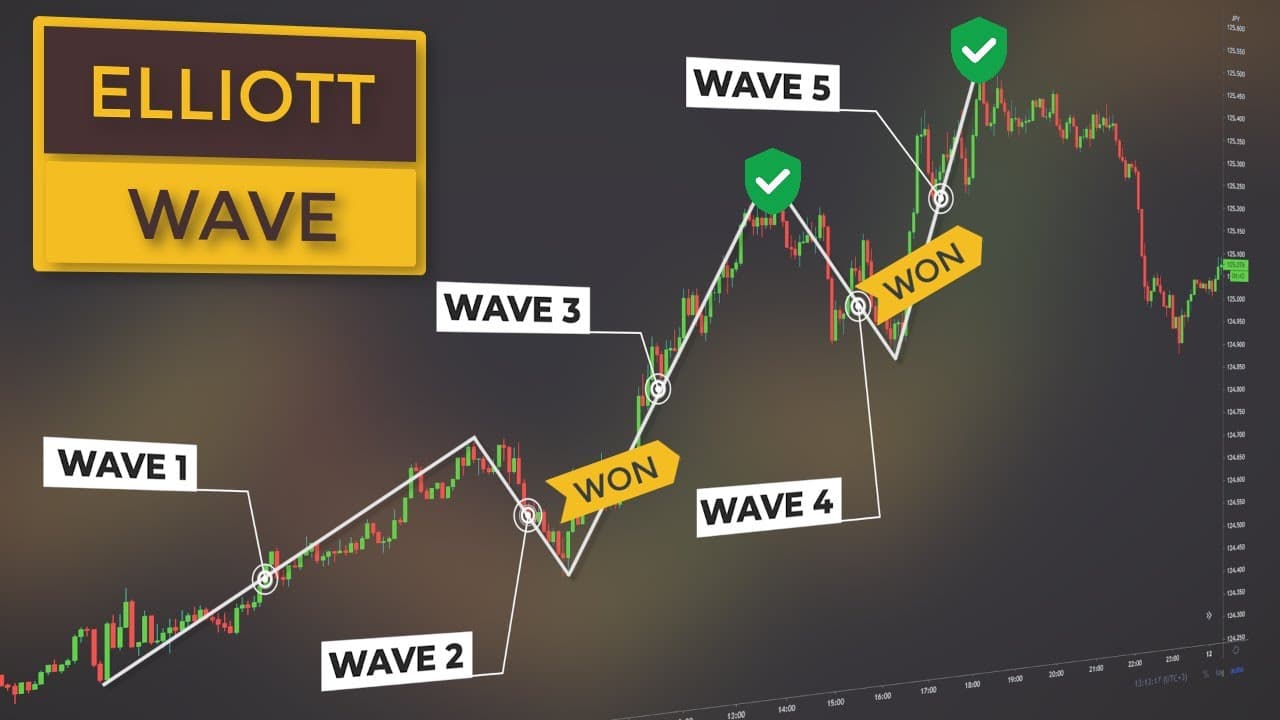
Elliott Wave Theory posits that financial market trends follow predictable patterns called waves, which include impulsive and corrective movements. Understanding these waves assists traders in forecasting price changes and improving their trade timing, as they can identify when to enter or exit trades based on wave structures.
Transcript
Financial markets have price movements that repeat over and over again. These movements are called waves. Elliott Wave Theory is a comprehensive and complex topic, taking practitioners months and even years to master. Despite its complexity, there are some elements of Elliott Wave that can be incorporated and may help improve your trade timing. So ... Read More
Key Insights
- ⚾ Ralph Nelson Elliott developed the Elliott Wave Theory based on the idea that trends in financial prices result from investors' psychology.
- 👋 Understanding impulsive and corrective waves can help traders determine trade direction and timing.
- 👋 The structure of waves can be observed on different time frames, and the size of corrections can provide insights into trade timing.
- 📏 The three golden rules and three guidelines of Elliott Wave Theory provide rules for labeling and identifying wave patterns.
- 😒 The theory can be complex to apply, and there is no one right way to use it in trading.
- ❓ Elliott Wave Theory has been successfully used by some traders, but it may not be suitable for everyone.
Install to Summarize YouTube Videos and Get Transcripts
Explore YouTube Video Summarizer or Get YouTube Transcript Extractor
Questions & Answers
Q: What are impulsive and corrective waves in Elliott Wave Theory?
Impulsive waves are large price moves in the direction of the trend, while corrective waves are smaller waves that occur within the trend.
Q: How can traders use impulsive and corrective waves to improve trade timing?
Traders can trade in the direction of the impulse waves, as they provide a better chance of making a large profit. They can use corrective waves to enter into a trend trade and capture the next impulse wave.
Q: How can the structure of waves help determine when a trend is changing direction?
If there are big moves to the upside with small corrective waves in between, followed by a much larger down move, it indicates the uptrend may be over. Conversely, a big up wave during a downtrend indicates the trend is now up.
Q: What is the typical size of corrections in Elliott Wave Theory?
Wave two, which is the first correction in a trend, is typically 60% the length of wave one. Wave four, the second correction, is typically 30 to 40% the size of wave three.
Summary & Key Takeaways
-
Elliott Wave Theory is based on the idea that price movements in financial markets follow repetitive wave patterns.
-
Impulsive waves are large price moves in the direction of the trend, while corrective waves are smaller waves within the trend.
-
Understanding the structure of the waves can help traders predict future market moves and improve trade timing.
Read in Other Languages (beta)
Share This Summary 📚
Summarize YouTube Videos and Get Video Transcripts with 1-Click
Try YouTube Summary with ChatGPT & Claude or YouTube Transcript Generator
Explore More Summaries from The Secret Mindset 📚





Summarize YouTube Videos and Get Video Transcripts with 1-Click
Try YouTube Summary with ChatGPT & Claude or YouTube Transcript Generator