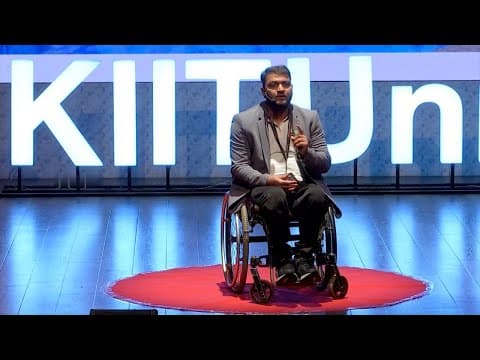
Explore the world of music and how it heals you | Ridhima Mehrotra | TEDxSRMIST

TL;DR
Music has a profound impact on the brain, emotions, and physical coordination, making it a powerful therapy tool.
Transcript
I would like each and every one to close their eyes and feel this music it's not just music It's Magic it instills a joy compassion happiness within you it tells you that you are not alone there's someone out there free music is not just about lyrics or the tune it's more about the emotion that comes up when you listen to music helps you in bringin... Read More
Key Insights
- 💨 Music impacts cognitive functions, emotional regulation, memory recall, and physical coordination in various ways.
- 😚 Music therapy techniques like Iceberg, Surfacing, and Closing the Circle facilitate emotional expression and healing.
- 🤰 Pregnant women listening to music can influence their child's early responses to music.
- 🧠 Music engages different brain regions, enhancing fine motor skills and emotional processing.
- 🎼 Music can evoke powerful emotions, triggering memories and enhancing coordination in movement disorders.
- 🎼 Therapy techniques like Iceberg and Surfacing encourage emotional exploration and connectivity through music.
- 😑 Collaborative music-making processes can foster emotional expression and understanding among individuals.
Install to Summarize YouTube Videos and Get Transcripts
Explore YouTube Video Summarizer or Get YouTube Transcript Extractor
Questions & Answers
Q: How does music impact different parts of the brain?
Music influences thinking, memory, movement, and emotional processing by activating various areas of the brain, leading to improved cognitive functions and emotional regulation.
Q: Can music help individuals with Alzheimer's disease?
Yes, music can help Alzheimer's patients access memories through musical cues, enabling them to reconnect with their past despite memory impairment.
Q: What are some music therapy techniques mentioned in the content?
Techniques like Iceberg, Surfacing, and Closing the Circle involve emotional expression and collaboration through music, aiding in emotional healing and self-exploration.
Q: How does music therapy benefit individuals emotionally and physically?
Music therapy can help individuals explore emotions, cope with challenges, and improve physical coordination through rhythm, memory recall, and emotional expression.
Summary & Key Takeaways
-
Music affects various parts of the brain, aiding in thinking, memory, movement, and emotional regulation.
-
It can help Alzheimer's patients recall musical memories despite memory loss.
-
Music therapy techniques like Iceberg, Surfacing, and Closing the Circle enable emotional expression and healing.
Read in Other Languages (beta)
Share This Summary 📚
Summarize YouTube Videos and Get Video Transcripts with 1-Click
Try YouTube Summary with ChatGPT & Claude or YouTube Transcript Generator
Explore More Summaries from TEDx Talks 📚




Summarize YouTube Videos and Get Video Transcripts with 1-Click
Try YouTube Summary with ChatGPT & Claude or YouTube Transcript Generator