C_132 Introduction to Dynamic Memory Allocation in C | SMA vs DMA
TL;DR
Explains dynamic vs static memory allocation in C programming.
Transcript
so in the series of learning C programming we are done with file handling Concepts in C but we are left with one important Concept in C that is dynamic memory allocation so in this video we'll see that thing right what is dynamic memory allocation how this is different from static memory allocation how memory can be allocated dynamically me... Read More
Key Insights
- Dynamic memory allocation (DMA) allows memory to be allocated at runtime, providing flexibility in managing memory resources.
- Static memory allocation (SMA) allocates memory at compile time, leading to fixed memory sizes and potential wastage.
- DMA uses functions like malloc, calloc, realloc, and free to manage memory, enabling allocation and deallocation as needed.
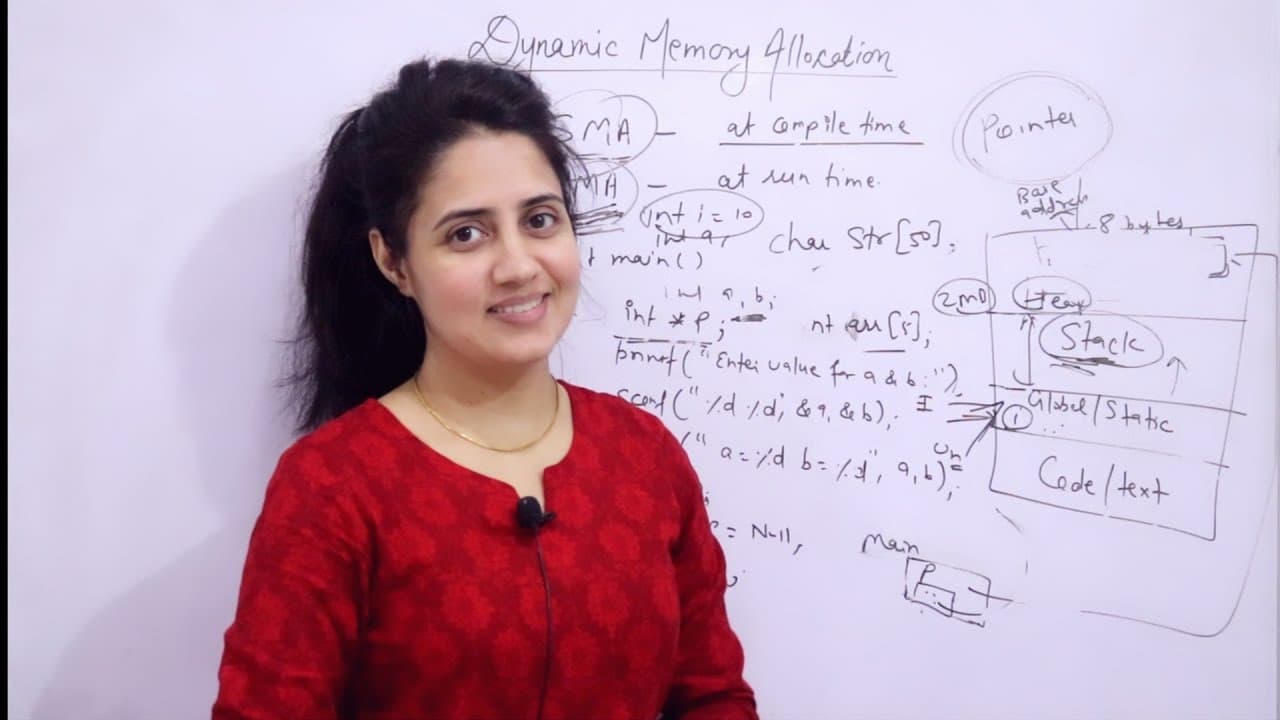
- Memory in a program is divided into segments: code, global/static variables, stack, and heap, with DMA occurring in the heap.
- Pointers are essential for DMA, allowing programs to access and manipulate dynamically allocated memory blocks.
- Efficient memory management is crucial in large-scale applications to prevent wastage and ensure optimal resource use.
- In SMA, memory cannot be reused or freed during program execution, unlike DMA, which supports reusability.
- Understanding memory layout and allocation strategies can differentiate good programmers from those who disregard memory efficiency.
Install to Summarize YouTube Videos and Get Transcripts
Explore YouTube Video Summarizer or Get YouTube Transcript Extractor
Questions & Answers
Q: What is the main difference between dynamic and static memory allocation?
The main difference between dynamic and static memory allocation is the timing of memory allocation. Dynamic memory allocation (DMA) occurs at runtime, allowing for flexible memory management and the ability to allocate and deallocate memory as needed. In contrast, static memory allocation (SMA) occurs at compile time, resulting in fixed memory sizes that cannot be changed during program execution, potentially leading to memory wastage.
Q: Why is dynamic memory allocation important in programming?
Dynamic memory allocation is important in programming because it allows for efficient use of memory resources by allocating memory at runtime based on the program's needs. This flexibility helps prevent memory wastage, which is particularly crucial in large-scale applications where optimal resource management is essential. DMA also supports the creation of complex data structures like linked lists and trees, which require dynamic memory management.
Q: How does the memory layout in a program affect memory allocation?
The memory layout in a program is divided into several segments, including code, global/static variables, stack, and heap. Memory allocation is affected by these segments as static memory is allocated in the stack, while dynamic memory allocation occurs in the heap. Understanding this layout is crucial for efficient memory management, as it helps programmers allocate and deallocate memory appropriately, ensuring optimal use of resources and preventing memory leaks.
Q: What role do pointers play in dynamic memory allocation?
Pointers play a crucial role in dynamic memory allocation as they are used to access and manage memory blocks allocated in the heap. When memory is dynamically allocated, a pointer holds the base address of the allocated block, allowing the program to read from and write to that memory. Without pointers, it would be impossible to use dynamic memory allocation effectively, as they provide the means to manipulate and interact with the allocated memory directly.
Q: What are some common functions used in dynamic memory allocation?
Common functions used in dynamic memory allocation include malloc, calloc, realloc, and free. Malloc allocates a specified number of bytes and returns a pointer to the allocated memory. Calloc allocates memory for an array of elements, initializing them to zero. Realloc adjusts the size of previously allocated memory, and free deallocates memory, making it available for future use. These functions are essential for managing memory dynamically in C programming.
Q: Why is it important to free memory in dynamic memory allocation?
Freeing memory in dynamic memory allocation is important because it prevents memory leaks, which occur when allocated memory is no longer needed but not deallocated. Memory leaks can exhaust available memory, leading to program crashes or slowdowns. By using the free function to deallocate memory when it's no longer in use, programmers ensure that resources are available for other parts of the program, maintaining efficient memory management and program stability.
Q: What are the drawbacks of static memory allocation?
The drawbacks of static memory allocation include fixed memory sizes determined at compile time, which can lead to memory wastage if the allocated memory is not fully utilized. Additionally, static memory cannot be resized during program execution, limiting flexibility and potentially causing issues if more memory is needed than initially allocated. This lack of reusability and flexibility makes static memory allocation less suitable for applications requiring dynamic and efficient memory management.
Q: How does dynamic memory allocation contribute to software development?
Dynamic memory allocation contributes to software development by providing the flexibility needed to manage memory efficiently in dynamic applications. It allows developers to allocate memory based on runtime requirements, reducing wastage and optimizing resource use. This capability is essential for creating complex data structures and handling variable data sizes, making it a critical component in developing scalable and efficient software solutions, especially in large-scale or resource-constrained environments.
Summary & Key Takeaways
-
The video discusses dynamic memory allocation (DMA) in C, contrasting it with static memory allocation (SMA). It explains how DMA allows memory to be allocated at runtime, offering flexibility, while SMA fixes memory size at compile time, potentially causing wastage.
-
It covers key functions for DMA like malloc, calloc, realloc, and free, emphasizing the importance of pointers in accessing and managing dynamic memory. The video also highlights the memory layout in programs and the role of stack and heap.
-
Efficient memory management is crucial in programming, especially in large-scale applications, to prevent wastage. The video encourages understanding memory allocation strategies to become a better programmer and introduces a new coding platform and course by Jenny.
Read in Other Languages (beta)
Share This Summary 📚
Summarize YouTube Videos and Get Video Transcripts with 1-Click
Try YouTube Summary with ChatGPT & Claude or YouTube Transcript Generator
Explore More Summaries from Jenny's Lectures CS IT 📚






Summarize YouTube Videos and Get Video Transcripts with 1-Click
Try YouTube Summary with ChatGPT & Claude or YouTube Transcript Generator