What Is the Solow Model and Its Steady State Effects?
TL;DR
The Solow Model illustrates that economic growth relies on capital investment exceeding depreciation; reaching a steady state occurs when both are equal, resulting in no net growth. Initially low capital levels, as seen in post-WWII Germany and Japan, lead to high productivity, which diminishes as capital accumulates, highlighting the concept of diminishing returns.
Transcript
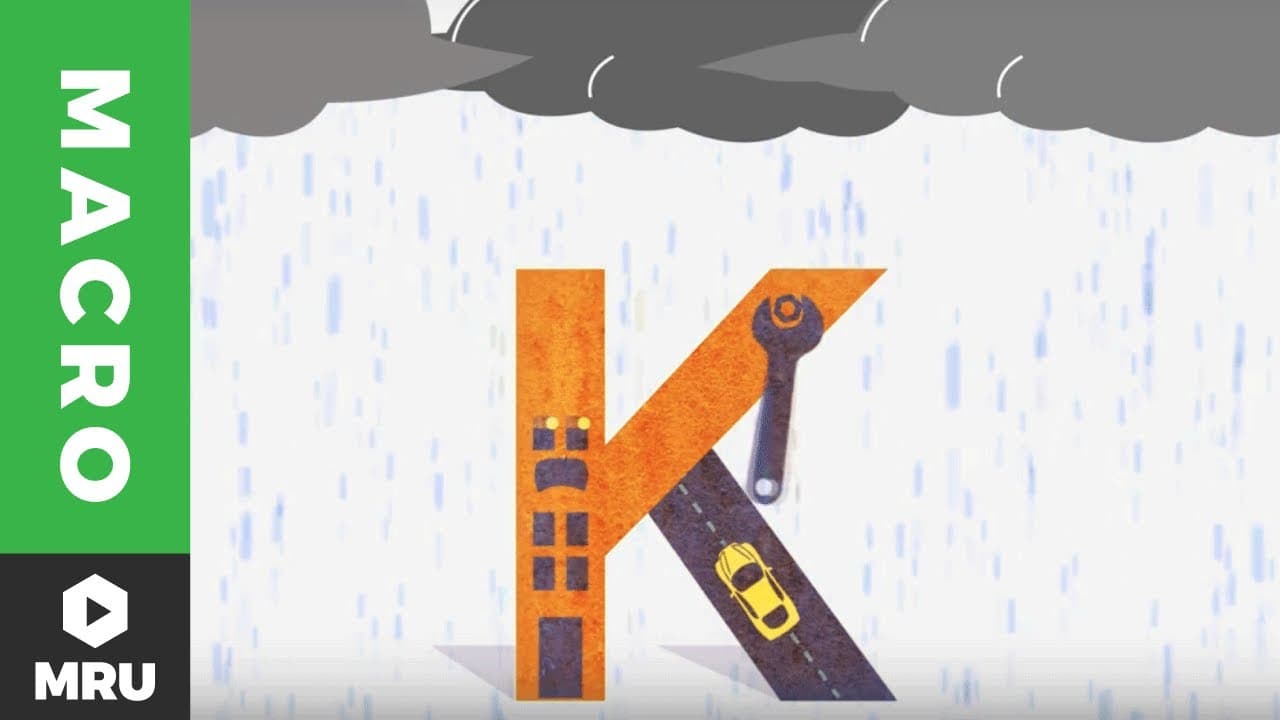
♪ [music] ♪ - [Alex] Welcome back. Let's continue our exploration of the Solow Growth Model. In our last video, we covered how physical capital faces the iron logic of diminishing returns. Now let's turn to another unfortunate aspect of physical capital: capital rusts. Roads get potholes and need to be repaired, tools wear out, trucks break down. I... Read More
Key Insights
- The Solow Growth Model explains how physical capital depreciates over time, affecting economic output and growth.
- Investment in new capital must exceed depreciation for the capital stock to grow and drive economic expansion.
- The steady-state level of capital occurs when investment equals depreciation, resulting in no net growth in capital stock.
- Diminishing returns mean that as more capital is added, each unit contributes less to output, slowing growth over time.
- Historical examples, like post-WWII Germany and Japan, illustrate how initial capital investments can lead to rapid growth.
- Increased savings rates can temporarily boost growth by raising the steady-state level of capital and output.
- Despite reaching the steady state, growth can continue through other variables like human capital, not just physical capital.
- Future discussions will explore the impact of human capital, including education and labor, on economic growth.
Install to Summarize YouTube Videos and Get Transcripts
Explore YouTube Video Summarizer or Get YouTube Transcript Extractor
Questions & Answers
Q: What is the steady-state level of capital in the Solow Model?
The steady-state level of capital in the Solow Model is the point where investment equals depreciation. At this stage, all investment is used to repair and replace existing capital, resulting in no net growth in the capital stock. Consequently, the economy experiences zero economic growth, as no additional capital is added.
Q: How does the Solow Model explain diminishing returns?
The Solow Model illustrates diminishing returns by showing that as more capital is added, each additional unit contributes less to overall output. Initially, new capital is highly productive, generating significant output. However, as capital stock grows, the output from each new unit decreases, slowing economic growth and leading to the steady-state.
Q: Why did Germany and Japan experience rapid growth after World War II?
Germany and Japan experienced rapid growth post-World War II due to initially low capital levels, which made new investments highly productive. This led to substantial output and savings, allowing for significant reinvestment in capital. As their capital stock increased, however, diminishing returns set in, slowing growth as they approached the steady-state.
Q: What role does savings play in the Solow Model?
In the Solow Model, savings play a critical role in capital accumulation. A portion of economic output not consumed is saved and invested in new capital. A higher savings rate can temporarily boost growth by increasing the steady-state level of capital and output, although diminishing returns eventually lead to a new steady-state with zero growth.
Q: Can economic growth continue after reaching the steady-state?
Yes, economic growth can continue after reaching the steady-state by focusing on other growth factors beyond physical capital. The Solow Model acknowledges variables like human capital, including education and labor, which can drive growth. These factors will be explored in subsequent discussions, highlighting their influence on sustained economic development.
Q: What happens if depreciation exceeds investment in the Solow Model?
If depreciation exceeds investment in the Solow Model, the capital stock decreases, as there is insufficient investment to maintain or grow the existing capital. This results in a shrinking capital stock, pushing the economy back towards the steady-state where investment equals depreciation, ultimately reducing economic output and growth.
Q: How does increased savings affect the steady-state level of capital?
Increased savings raise the steady-state level of capital by shifting the investment curve upward, leading to higher investment relative to depreciation. This temporarily boosts capital accumulation and economic growth. However, due to diminishing returns, the economy eventually reaches a new steady-state where investment again equals depreciation, halting further growth.
Q: What will future discussions on the Solow Model focus on?
Future discussions on the Solow Model will focus on the role of human capital in economic growth. This includes examining factors like education and labor, which can drive growth beyond the limitations of physical capital. These discussions aim to provide a comprehensive understanding of how various elements contribute to sustained economic development.
Summary & Key Takeaways
-
The Solow Growth Model demonstrates how physical capital depreciates, necessitating investment to maintain or grow the capital stock. When investment equals depreciation, the steady-state is reached, halting growth. The model highlights diminishing returns, where additional capital yields progressively less output.
-
Post-WWII Germany and Japan exemplify the Solow Model's principles. Initially, low capital levels led to high productivity and output, fostering rapid growth. As capital stock increased, diminishing returns slowed growth, illustrating the steady-state's impact on economic expansion.
-
While the Solow Model focuses on physical capital, it acknowledges other growth factors. Increased savings can temporarily boost growth by raising the steady-state. Future discussions will address human capital's role, emphasizing education and labor's influence on sustained economic development.
Read in Other Languages (beta)
Share This Summary 📚
Summarize YouTube Videos and Get Video Transcripts with 1-Click
Try YouTube Summary with ChatGPT & Claude or YouTube Transcript Generator
Explore More Summaries from Marginal Revolution University 📚

Summarize YouTube Videos and Get Video Transcripts with 1-Click
Try YouTube Summary with ChatGPT & Claude or YouTube Transcript Generator