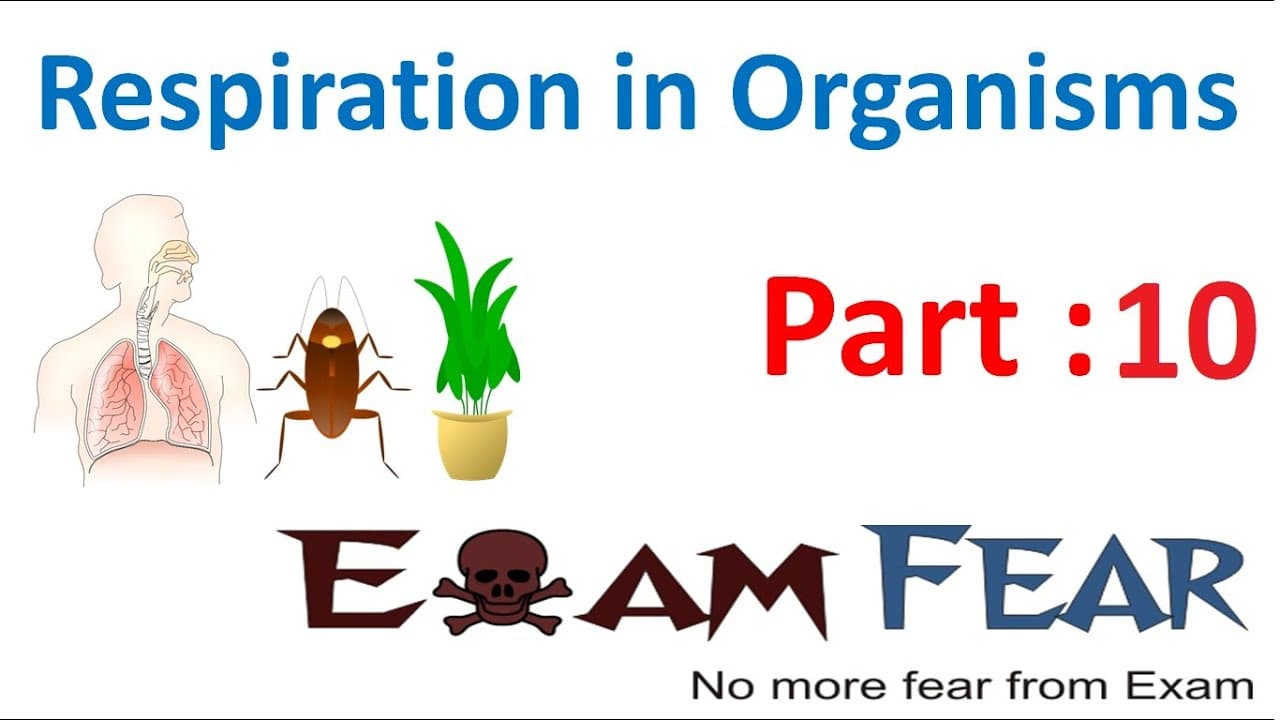
Biology Respiration in Organisms Part 10 (Respiration System) Class 7 VII
TL;DR
The video explains the different parts of the human respiratory system, categorizing them into conducting parts and exchange parts.
Transcript
hello friends this video on respiration in organisms part 10 is brought to you by example.com no more fear from exam so now based on whatever we have learned about the different parts of the respiratory system we can say that certain parts of the respiratory system act as conducting parts that is they help in they just help in conducting they just ... Read More
Key Insights
- 🥳 The respiratory system is divided into conducting parts and exchange parts.
- 🛫 Conducting parts allow the air to pass through without exchanging gases.
- 💱 The exchange of oxygen and carbon dioxide occurs at the alveoli.
- 🤥 Foreign particles and microorganisms are blocked by celia, hair-like structures, and mucus in the conducting parts.
- 🥳 Exhalation also involves the conducting parts, as carbon dioxide is released through the same pathway.
- 🥳 The nostrils, nasal cavity, pharynx, trachea, and bronchioles are conducting parts.
- 💱 The alveoli are the exchange part of the respiratory system.
Install to Summarize YouTube Videos and Get Transcripts
Explore YouTube Video Summarizer or Get YouTube Transcript Extractor
Questions & Answers
Q: What are the conducting parts of the respiratory system?
The conducting parts include the nostrils, nasal cavity, pharynx, trachea, bronchi, and bronchioles. They provide a pathway for air to pass through without exchanging gases.
Q: Where does the actual exchange of oxygen and carbon dioxide take place?
The exchange of gases occurs at the alveoli. Oxygen is taken in by the blood vessels, while carbon dioxide is given by the blood vessels to the alveoli.
Q: How do the conducting parts protect against foreign particles and microorganisms?
The conducting parts have celia, hair-like structures, and mucus that help trap and remove foreign particles and microorganisms, preventing them from entering further into the respiratory system.
Q: What happens during exhalation?
During exhalation, the carbon dioxide in the blood is released. It moves from alveoli to bronchioles, then to bronchi, trachea, pharynx, and finally exits through the nostrils.
Summary & Key Takeaways
-
The respiratory system has conducting parts that provide a pathway for air to pass through, such as the nostrils, nasal cavity, pharynx, trachea, and bronchioles.
-
The exchange part of the respiratory system is where the actual exchange of oxygen and carbon dioxide takes place, specifically at the alveoli.
-
The conducting parts also help filter out foreign particles and microorganisms with the help of celia, hair-like structures, and mucus.
Read in Other Languages (beta)
Share This Summary 📚
Summarize YouTube Videos and Get Video Transcripts with 1-Click
Try YouTube Summary with ChatGPT & Claude or YouTube Transcript Generator
Explore More Summaries from LearnoHub - Class 11, 12 📚

Summarize YouTube Videos and Get Video Transcripts with 1-Click
Try YouTube Summary with ChatGPT & Claude or YouTube Transcript Generator