Active Integrator - Operational Amplifier and 555 Timer - Industrial Electronics
TL;DR
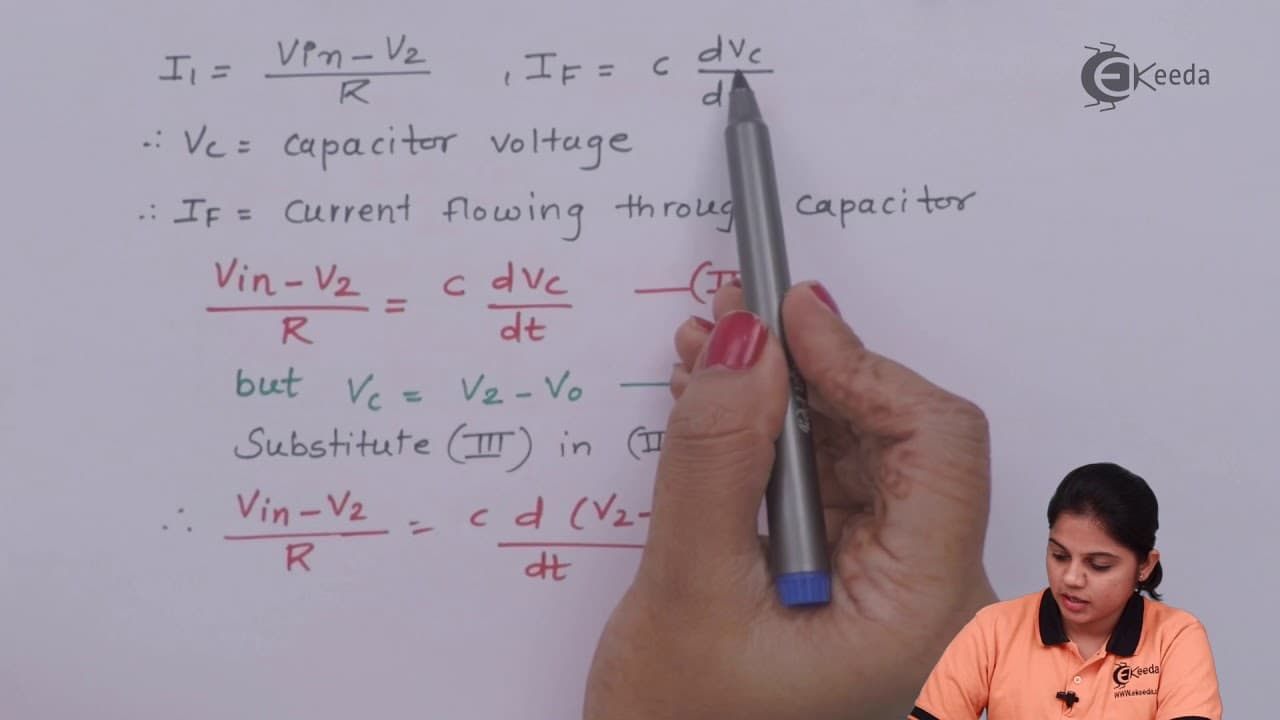
Active integrators, using an operational amplifier and a capacitor, can integrate input voltage and produce an output signal.
Transcript
click the bell icon to get latest videos from equator hello friends in this video we are going to see what is active integrator is integrator is also one of the application of operational amplifier in inverting configuration mode open can be used as an integrator where the output voltage will be the integration of input voltage let's see how integr... Read More
Key Insights
- ⚡ An active integrator is an electronics circuit that integrates input voltage using an operational amplifier and a capacitor.
- ☢️ The circuit diagram for an active integrator replaces the feedback resistor with a capacitor.
- 🉐 A practical integrator includes a resistance in parallel with the capacitor to stabilize the gain and prevent saturation.
- ⚡ The output voltage of an integrator is directly proportional to the integration of the input voltage.
- ⌛ The time constant of an integrator is determined by the product of the resistance and the capacitance.
- ⚡ Using only a capacitor in the feedback path can cause voltage gain instability at high frequencies and error voltage in idle conditions.
- 🉐 A practical integrator with a resistance in parallel stabilizes the gain and avoids saturation.
Install to Summarize YouTube Videos and Get Transcripts
Explore YouTube Video Summarizer or Get YouTube Transcript Extractor
Questions & Answers
Q: What is an active integrator?
An active integrator is an electronics circuit that uses an operational amplifier and a capacitor to integrate the input voltage and produce an output signal.
Q: How does the circuit diagram for an active integrator differ from conventional circuits?
The circuit diagram for an active integrator replaces the usual feedback resistor with a capacitor, allowing the op-amp to perform integration.
Q: What is the disadvantage of using only a capacitor in the feedback path of an active integrator?
At high frequencies, the capacitor can get short-circuited, changing the voltage gain of the integrator and potentially causing saturation. Additionally, an open-circuited capacitor in an idle integrator can result in an error voltage.
Q: How does a practical integrator address the disadvantages of the active integrator?
A practical integrator includes a resistance connected in parallel with the capacitor in the feedback path. This stabilizes the gain and prevents op-amp saturation, providing a more reliable output.
Summary & Key Takeaways
-
Active integrators use an operational amplifier and a capacitor to produce an output signal that is the integration of the input voltage.
-
The circuit diagram for an active integrator replaces the feedback resistor with a capacitor.
-
A practical integrator includes a resistance in parallel with the capacitor to stabilize the gain and prevent op-amp saturation.
Read in Other Languages (beta)
Share This Summary 📚
Summarize YouTube Videos and Get Video Transcripts with 1-Click
Try YouTube Summary with ChatGPT & Claude or YouTube Transcript Generator
Explore More Summaries from Ekeeda 📚





Summarize YouTube Videos and Get Video Transcripts with 1-Click
Try YouTube Summary with ChatGPT & Claude or YouTube Transcript Generator