Davos 2010 - IdeasLab Global Redesign - High-Performing Tri-Sector Partnerships
TL;DR
The World Economic Forum aims to reshape humanitarian aid for more effective disaster response and prevention.
Transcript
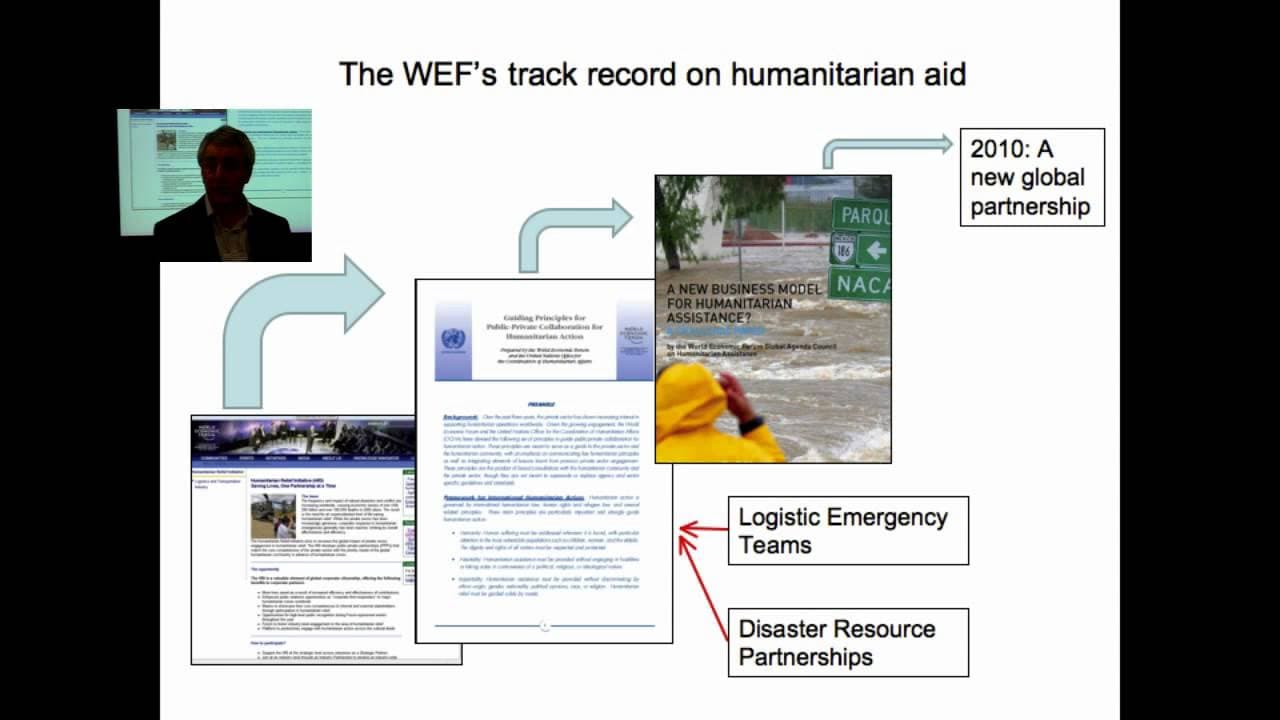
I am going to do five things in the next five minutes. I am going to tell you why this issue of humanitarian need will remain on our agenda even after Haiti has faded from the headlines. I am going to tell you about the track record of the World Economic Forum on this issue. I am going to tell you about the work that the Global Agenda Council has d... Read More
Key Insights
- 🦻 Risks from natural disasters and conflicts necessitate a proactive approach to humanitarian aid.
- 🔒 Private sector collaboration can significantly improve the effectiveness of disaster response operations.
- 🚨 Prioritizing prevention and preparedness over emergency relief is crucial in reshaping humanitarian assistance.
- 🌐 The proposed global partnership aims to enhance coordination and support for future disaster management efforts.
- 🤩 A focus on building national and local capacity is key to successful disaster response and recovery.
- 🌏 Southeast Asia, Southern Africa, South Asia, and the Andes are regions identified as high priorities for humanitarian aid reform.
- 👶 New partnerships, resources, and support are essential for advancing the proposed reforms in humanitarian assistance.
Install to Summarize YouTube Videos and Get Transcripts
Explore YouTube Video Summarizer or Get YouTube Transcript Extractor
Questions & Answers
Q: Why is there a necessity for reform in humanitarian assistance efforts?
The increase in global crises due to natural disasters, wars, and climate change calls for a more efficient and proactive approach in delivering aid to those in need.
Q: How does the private sector contribute to enhancing humanitarian efforts?
The private sector's involvement brings diverse skills and resources not typically available to public sector and NGOs, allowing for more comprehensive disaster response and preparedness.
Q: What role does risk assessment play in reshaping humanitarian aid models?
Risk assessment helps prioritize funding towards prevention, preparedness, and recovery efforts, reducing the need for costly emergency relief interventions in the future.
Q: How does the proposed global partnership aim to improve disaster management?
The global partnership seeks to coordinate efforts between governments, the private sector, and civil society on national and international levels to enhance disaster response and prevention strategies.
Summary & Key Takeaways
-
The World Economic Forum addresses the need for a new approach to humanitarian assistance due to increasing global crises.
-
Emphasis is placed on risk assessment, increased prevention and preparedness spending, and private sector collaboration.
-
The goal is to create a new global partnership to better manage future emergencies and reduce reliance on emergency relief.
Read in Other Languages (beta)
Share This Summary 📚
Summarize YouTube Videos and Get Video Transcripts with 1-Click
Try YouTube Summary with ChatGPT & Claude or YouTube Transcript Generator
Explore More Summaries from World Economic Forum 📚
Summarize YouTube Videos and Get Video Transcripts with 1-Click
Try YouTube Summary with ChatGPT & Claude or YouTube Transcript Generator