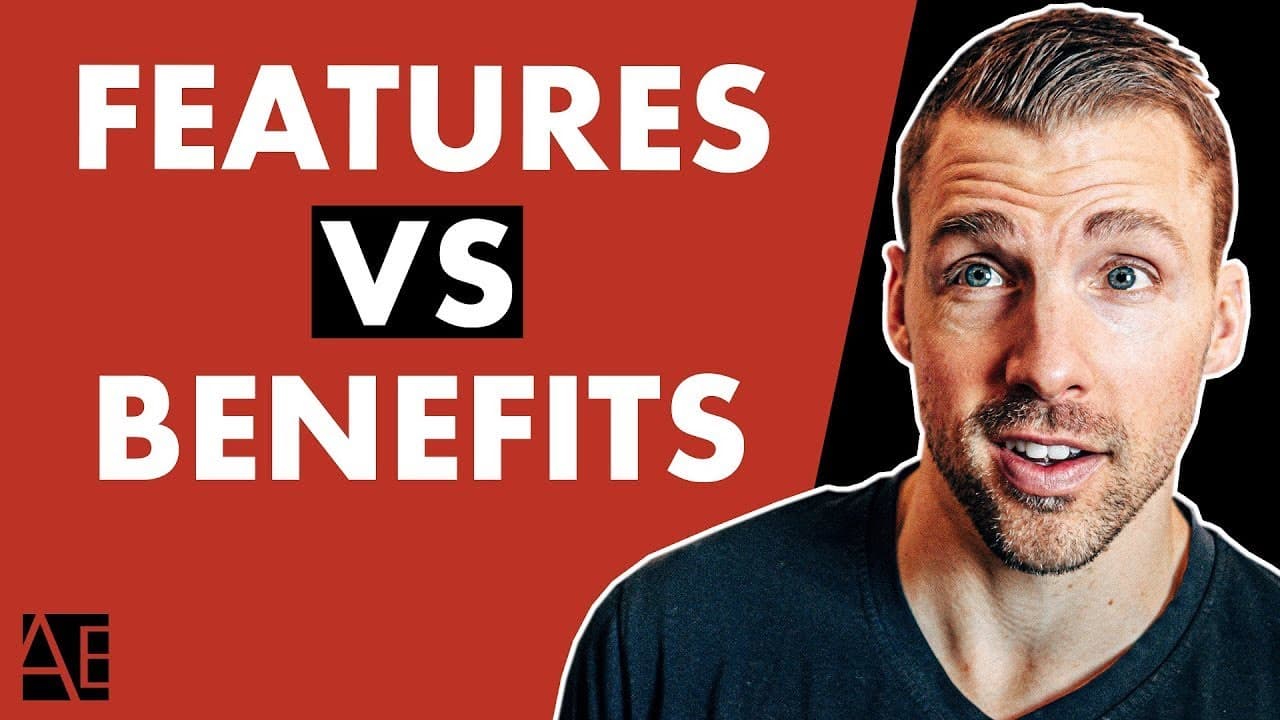
Benefits vs Features | The Crucial Key to Selling More Of Your Product and Services | Adam Erhart
TL;DR
Communicate benefits over features to boost sales effectively.
Transcript
In this episode I'm talking all about features vs. benefits and I'm gonna save you a ton of time, money and energy by breaking down one of the single biggest reasons that customers don't buy from you so you can avoid this trap and never make this mistake again. Let's get to it! Hey there my name is Adam Erhart, marketing strategist and welcome to ... Read More
Key Insights
- One of the biggest reasons customers don't buy is the failure to communicate the benefits of a product, rather than just its features.
- Features describe what a product does, while benefits explain what it does for the customer, highlighting the value added to their life.
- Businesses often focus too much on features, neglecting the benefits that actually drive customer interest and sales.
- The 'so you can' technique helps transform features into customer-centered benefits, making marketing messages more compelling.
- Both features and benefits are necessary; features provide rational justification while benefits appeal to the emotional side of customers.
- A benefit without a supporting feature can seem unbelievable, while a feature without a benefit lacks emotional appeal.
- Emphasizing benefits helps customers care more about the product, leading to increased sales and customer retention.
- To create effective marketing, it's crucial to balance the presentation of features and benefits, appealing to both logic and emotion.
Install to Summarize YouTube Videos and Get Transcripts
Explore YouTube Video Summarizer or Get YouTube Transcript Extractor
Questions & Answers
Q: Why do customers often not buy a product?
Customers often do not buy a product because businesses fail to communicate the benefits of the product effectively. While features describe what a product does, benefits explain what it does for the customer, highlighting the added value to their life. Without this understanding, customers may not see the relevance or importance of the product.
Q: What is the difference between a feature and a benefit?
A feature is a characteristic of a product, such as its color, size, or functionality. A benefit, on the other hand, is the positive impact or value that the product provides to the customer, such as making them feel safer or more efficient. Benefits are what ultimately drive customer interest and sales.
Q: How can marketers effectively communicate benefits?
Marketers can effectively communicate benefits by using the 'so you can' technique, which helps transform features into customer-centered benefits. By clearly stating what a feature allows the customer to do, marketers can make their messages more compelling and relevant, appealing to the customer's needs and desires.
Q: Why are both features and benefits necessary in marketing?
Both features and benefits are necessary in marketing because they appeal to different aspects of customer decision-making. Benefits appeal to the emotional side, helping customers care about the product, while features provide rational justification, allowing customers to logically justify their purchase decisions.
Q: What happens if a benefit is presented without a supporting feature?
If a benefit is presented without a supporting feature, it can seem unbelievable and lack credibility. Customers may perceive it as an exaggerated claim, leading to skepticism. Features provide the necessary evidence and support to make benefits believable and convincing, ensuring that marketing messages are both emotionally and logically appealing.
Q: How does the 'so you can' technique work?
The 'so you can' technique works by appending a benefit to a feature, making the value of the feature clear to the customer. For example, instead of saying a coffee cup has a handle (feature), you would say it has a handle so you can hold a hot cup of coffee without burning your hands (benefit), emphasizing the customer's gain.
Q: What is the role of emotion in customer buying decisions?
Emotion plays a crucial role in customer buying decisions, as customers often make purchases based on how a product makes them feel or the perceived benefits it provides. Emotional appeal through benefits can drive initial interest and decision-making, while features help rationalize and justify the purchase logically.
Q: How can businesses increase customer interest and sales?
Businesses can increase customer interest and sales by effectively communicating the benefits of their products, ensuring that customers understand the value and relevance to their needs. By balancing the presentation of features and benefits, businesses can appeal to both the emotional and rational sides of customers, making their marketing more effective and compelling.
Summary & Key Takeaways
-
Adam Erhart emphasizes the importance of focusing on benefits rather than features to avoid losing sales. He explains that features describe what a product does, while benefits highlight the value it adds to the customer's life, making them more likely to purchase.
-
The 'so you can' technique is introduced as a tool to transform features into benefits, making marketing messages more compelling. Erhart stresses that both features and benefits are necessary for effective marketing, as they appeal to different aspects of customer decision-making.
-
Erhart concludes that by effectively communicating benefits, businesses can increase customer interest and sales. He advises marketers to balance the presentation of features and benefits to appeal to both the emotional and rational sides of customers.
Read in Other Languages (beta)
Share This Summary 📚
Summarize YouTube Videos and Get Video Transcripts with 1-Click
Try YouTube Summary with ChatGPT & Claude or YouTube Transcript Generator
Explore More Summaries from Adam Erhart 📚


Summarize YouTube Videos and Get Video Transcripts with 1-Click
Try YouTube Summary with ChatGPT & Claude or YouTube Transcript Generator