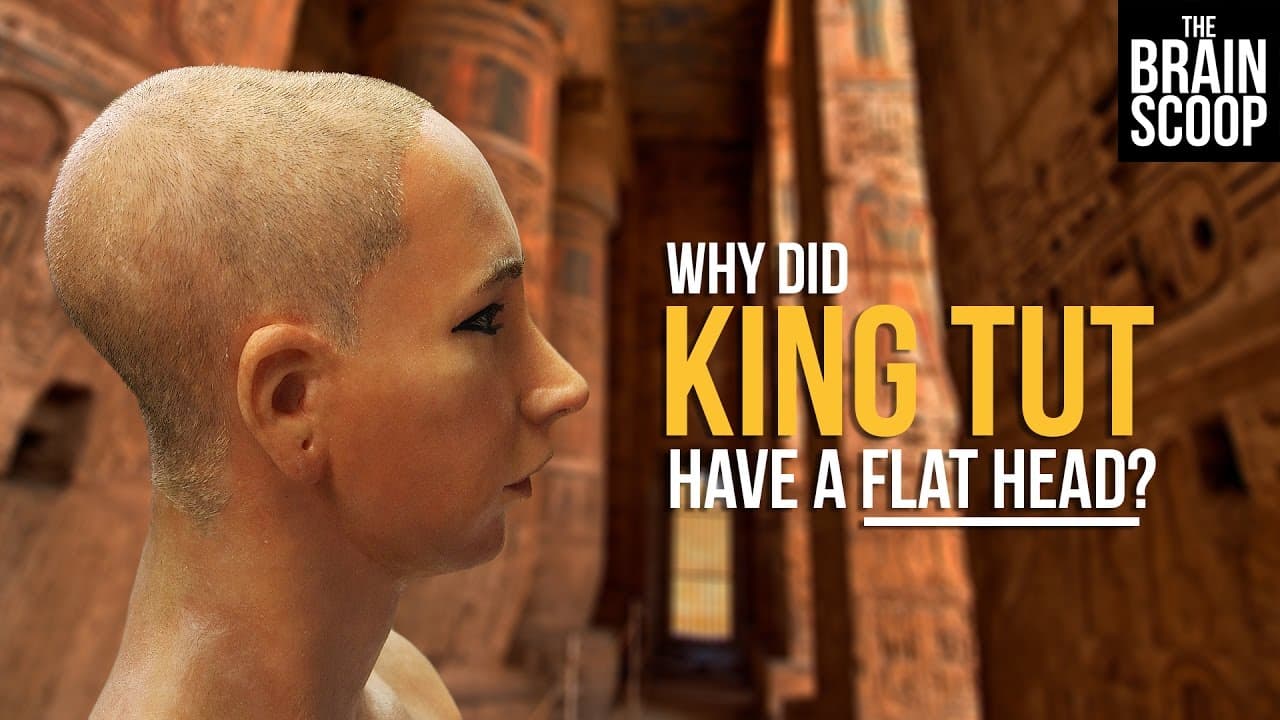
Why did King Tut have a flat head?
TL;DR
Artificial head binding in ancient Egypt involved deliberately shaping the skulls of babies to achieve unique and distinctive head shapes.
Transcript
We're here back in the Human Evolution Lab with Dr. Robert Martin, who is curator emeritus of human evolution here at the Field Museum, and today we're going to be talking about artificial head binding in ancient Egypt! So uh, Bob can you start by telling us a little bit about what artificial head binding is? Yes, you know, there are various cultur... Read More
Key Insights
- 🤕 Artificial head binding in ancient Egypt involved deliberately shaping the skulls of babies for aesthetic purposes.
- 👥 This practice was mostly done by the elite or specific groups in society.
- 🤕 There are no known negative effects of artificial head binding on fetal development if it does not reduce skull volume.
- 🤕 Akhenaten, Nefertiti, and King Tut are prominent examples of individuals who had experienced cranial deformation through artificial head binding.
- 🤕 The prevalence of head binding in different human populations suggests a cultural influence, potentially stemming from the practice of cradle boarding.
Install to Summarize YouTube Videos and Get Transcripts
Explore YouTube Video Summarizer or Get YouTube Transcript Extractor
Questions & Answers
Q: What is artificial head binding in ancient Egypt?
Artificial head binding in ancient Egypt involved tightly binding babies' skulls from birth to achieve distinctive head shapes.
Q: Did artificial head binding have any negative impact on fetal development?
No, as long as the volume of the skull was not reduced, there are no negative effects of artificial head binding on fetal development.
Q: Was King Tut's flattened head artistic or a result of artificial head binding?
There is evidence that King Tut and his family members, including his father Akhenaten and his mother, Nefertiti, had experienced cranial deformation, indicating that their flattened heads were a result of artificial head binding.
Q: Why is there no written record of artificial head binding in ancient Egypt?
It is believed that artificial head binding was kept secret and only practiced by a small group of people to maintain a distinctive appearance, which would have been ruined if it were public knowledge.
Summary & Key Takeaways
-
Artificial head binding was a cultural practice in ancient Egypt, where babies' skulls were intentionally molded into different shapes.
-
This practice was typically done by the elite or specific groups in society.
-
There are no known negative effects of artificial head binding as long as it does not reduce the volume of the skull.
Read in Other Languages (beta)
Share This Summary 📚
Summarize YouTube Videos and Get Video Transcripts with 1-Click
Try YouTube Summary with ChatGPT & Claude or YouTube Transcript Generator
Explore More Summaries from thebrainscoop 📚






Summarize YouTube Videos and Get Video Transcripts with 1-Click
Try YouTube Summary with ChatGPT & Claude or YouTube Transcript Generator