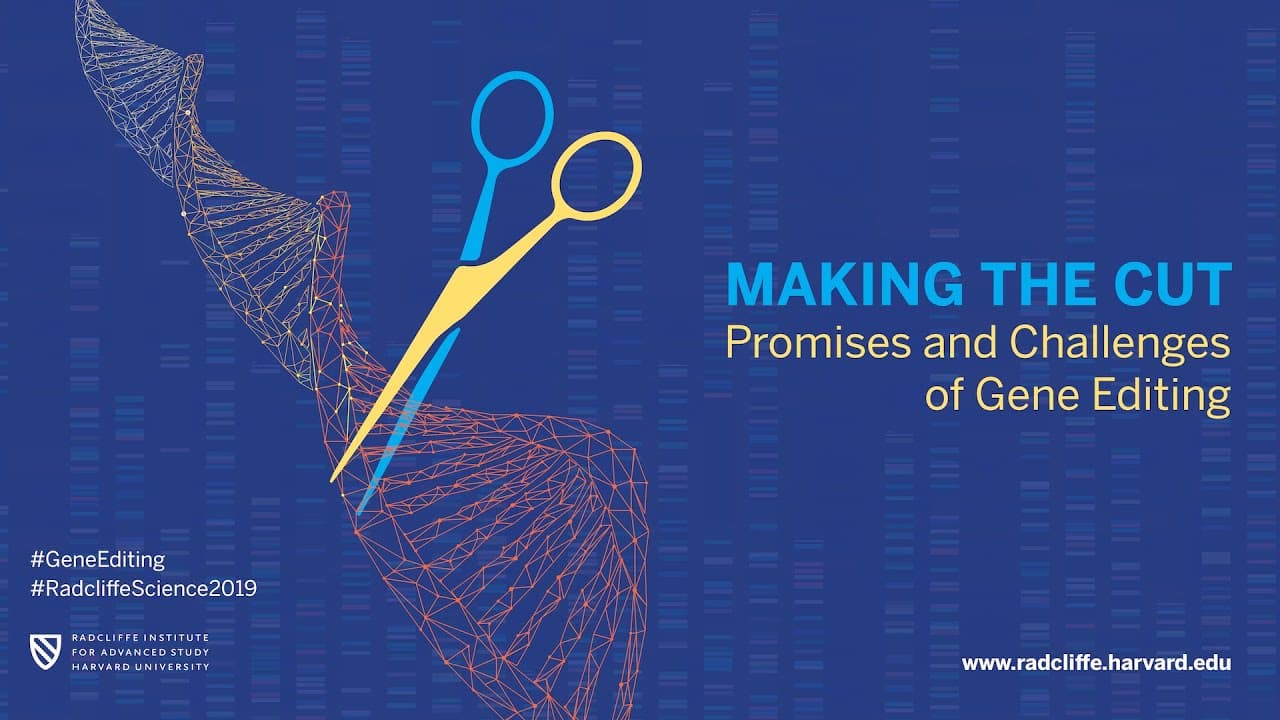
Making the Cut | Session 1: Science and Society || Radcliffe Institute
TL;DR
The development and application of human gene editing technologies, such as CRISPR-Cas9, may have a more modest impact on medicine than initially anticipated due to long timelines, challenges in establishing safety and efficacy, and issues of equitable access.
Transcript
- Good morning, everyone. I'm Tomiko Brown-Nagin, the Dean of the Radcliffe Institute for Advanced Study, and I'm delighted to see all of you here today. I'm so pleased to welcome you to the Radcliffe Symposium focused on the critical and urgent topic of human gene editing. Now, I say urgent because we find ourselves in a new scientific era, an era... Read More
Key Insights
- 👨🔬 CRISPR-Cas9 is a powerful research tool that has already advanced our understanding of human biology.
- 🧘 The translation of gene editing technologies into clinical applications is a slow process, with long development timelines and regulatory requirements.
- 🧘 Establishing the safety and efficacy of gene editing techniques poses challenges due to small populations, difficulty in measuring outcomes, and the need for surrogate endpoints.
Install to Summarize YouTube Videos and Get Transcripts
Explore YouTube Video Summarizer or Get YouTube Transcript Extractor
Questions & Answers
Q: How long do you think it will take for gene editing technologies to be widely available for medical use?
The timeline for the translation of gene editing technologies into clinical applications is uncertain. Currently, clinical trials are ongoing, but it may take many years to establish safety and efficacy and gain regulatory approval. Additionally, factors such as long development timelines, challenges in measuring outcomes, and the need for access and affordability contribute to the uncertainty of widespread availability.
Q: What are the challenges in definitively establishing the safety and efficacy of gene editing techniques?
One major challenge is the need for large populations to conduct randomized controlled trials, but gene editing techniques often target small populations. This can make it difficult to achieve statistical power and measure long-term effects. Additionally, surrogate endpoints may be used, but they may not accurately reflect meaningful clinical benefits.
Q: What are the potential barriers to equitable access to gene editing interventions?
Gene editing interventions are likely to be expensive due to the high cost of development and the small patient populations they target. Limited competition and the one-time nature of treatments also contribute to challenges in access. Healthcare systems may have to prioritize funding for these interventions, potentially limiting access to other treatments or interventions.
Q: What is the expected impact of gene editing technologies on medicine?
While there will be significant impacts and transformation in niche areas, the overall impact of gene editing technologies on medicine may be more modest than initially anticipated. Factors such as long development timelines, challenges in establishing safety and efficacy, and issues of access may limit the widespread impact of these technologies.
Summary & Key Takeaways
-
CRISPR-Cas9 is a powerful research tool that has already advanced our understanding of human biology, but its impact on medicine may be more limited than expected.
-
Long timelines of development and regulatory approvals make the translation of gene editing techniques into clinical applications a slow process.
-
Definitively establishing the safety and efficacy of gene editing technologies poses challenges due to small populations, difficulty in measuring long-term outcomes, and the need for surrogate endpoints.
-
Ensuring equitable access to gene editing interventions is hindered by high costs, limited competition, and the one-time nature of treatments.
Read in Other Languages (beta)
Share This Summary 📚
Summarize YouTube Videos and Get Video Transcripts with 1-Click
Try YouTube Summary with ChatGPT & Claude or YouTube Transcript Generator
Explore More Summaries from Harvard University 📚




Summarize YouTube Videos and Get Video Transcripts with 1-Click
Try YouTube Summary with ChatGPT & Claude or YouTube Transcript Generator