Coaster Brake Hub - What's Inside? How Does It Work? Cutaway View!
TL;DR
Learn how a coaster brake hub functions and transitions between pedaling forward, coasting, and braking.
Transcript
Hey Veiwers! Have you ever wondered what's inside a coaster brake hub and how they work? first if you're not familiar with what a coaster brake hub is if you pedal forward you go forward you can stop and it coasts and to brake you just paddle backwards and that engages the brakes inside the hub They're generally pretty easy to identify because they... Read More
Key Insights
- 🚴 Coaster brake hubs are easy to identify, with a brake arm attached to the chainstay. They are usually single speed but can also have an internally geared hub.
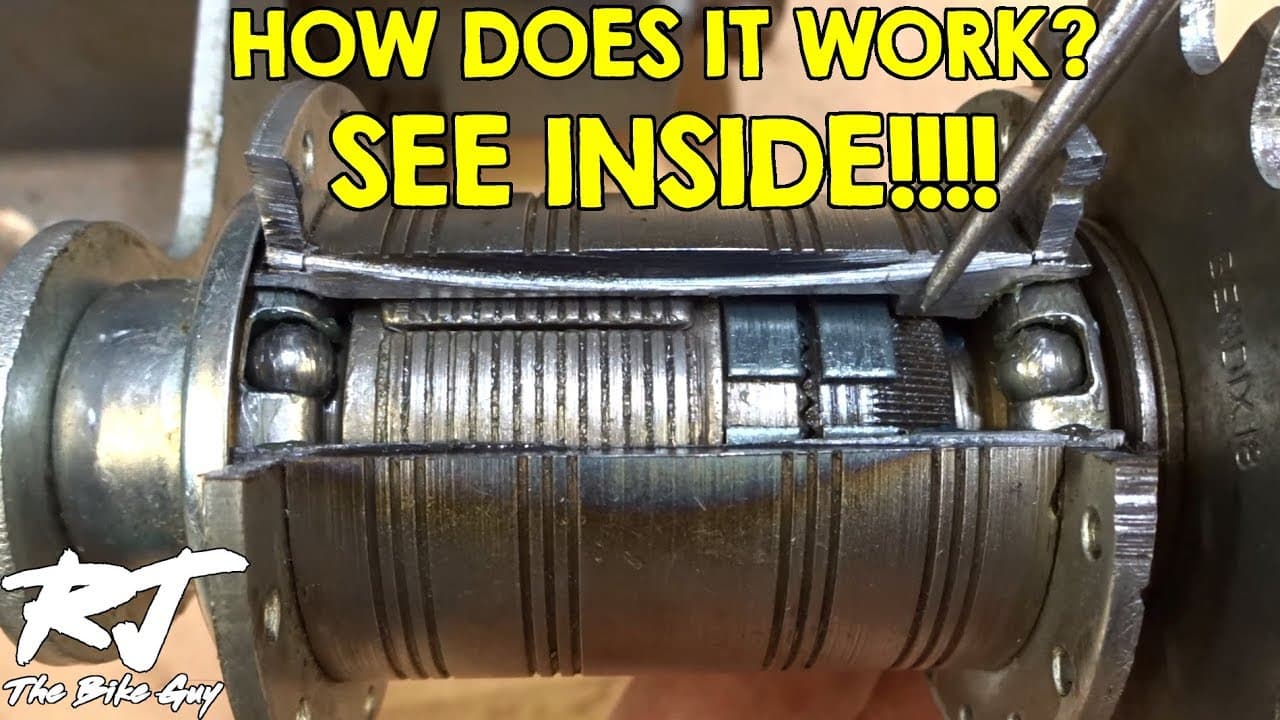
- 🛠️ The coaster brake mechanism consists of a driver, clutch, expander, and brake shoes. When pedaling forward, the clutch engages with the hub shell to turn the wheel. When coasting or backpedaling, the clutch disengages.
- 🔧 Different brands of coaster brakes may have slightly different clutch mechanisms, but the basic concepts remain the same. All coaster brakes will have brake shoes, expanders, clutches, and drivers.
- 🔄 The clutch and expander unit have teeth that mesh together to engage and disengage the clutch with the expander. A retarder spring helps control the movement of the clutch.
- 🔩 The clutch is threaded to match the driver unit, allowing it to be pushed or pulled by the driver as it turns.
- 🔒 When in brake mode, the clutch engages with the expander, pushing the brake shoes against the inside of the hub shell, creating friction and braking action.
- 🔍 A closer view of the clutch and expander unit reveals the teeth and how they mesh together, as well as the function of the retarder spring.
- 👍🏻 If you found this video useful or interesting, give it a thumbs up and consider subscribing to the channel for more content related to bikes and bicycle repair.
Install to Summarize YouTube Videos and Get Transcripts
Explore YouTube Video Summarizer or Get YouTube Transcript Extractor
Questions & Answers
Q: How does a coaster brake hub transition between pedaling forward, coasting, and braking?
A coaster brake hub utilizes a driver, clutch, and expander system to control the movement of the hub. When pedaling forward, the driver engages with the clutch and hub shell, allowing the wheel to turn freely. When back pedaling, the clutch disengages, causing the brake pads to engage with the inside of the hub, creating braking force.
Q: What are the main components of a coaster brake hub?
A coaster brake hub consists of a driver, clutch, expander, and brake shoes. The driver is threaded into the clutch, which is connected to the expander. The brake shoes are located inside the hub shell and are pushed against the brake drum when back pedaling.
Q: Are all coaster brake hubs the same, or do different brands have variations in their mechanisms?
While the specific design may vary, the fundamental concepts of a coaster brake hub remain the same. Different brands may have slight variations in the clutch mechanism, but they still utilize brake shoes, expanders, and drivers to control the hub's operation.
Q: How does the expander and clutch interact within the coaster brake hub?
The clutch is threaded onto the expander and uses teeth to engage with the expander's teeth. As the driver turns, it pushes or pulls the clutch in and out of a retarder spring connected to the expander, controlling the hub's movement.
Q: What are the three modes of a coaster brake hub?
The three modes of a coaster brake hub are: pedaling forward, coasting, and back pedaling to engage the brake. In the forward pedaling mode, the hub turns freely. When coasting, the hub shell is disengaged, allowing for a smooth ride. Back pedaling engages the clutch and brake shoes, creating braking force.
Summary & Key Takeaways
-
A coaster brake hub has three modes: pedaling forward, coasting, and back pedaling to engage the brake.
-
The hub consists of a driver, clutch, expander, and brake shoes that interact to control the movement of the hub.
-
When pedaling forward, the clutch engages with the hub shell, allowing the wheel to turn, while back pedaling pushes the brake pads against the inside of the hub, creating braking force.
Read in Other Languages (beta)
Share This Summary 📚
Summarize YouTube Videos and Get Video Transcripts with 1-Click
Try YouTube Summary with ChatGPT & Claude or YouTube Transcript Generator
Explore More Summaries from RJ The Bike Guy 📚
Summarize YouTube Videos and Get Video Transcripts with 1-Click
Try YouTube Summary with ChatGPT & Claude or YouTube Transcript Generator