A vision for the future of Sierra Leone | Julius Maada Bio
TL;DR
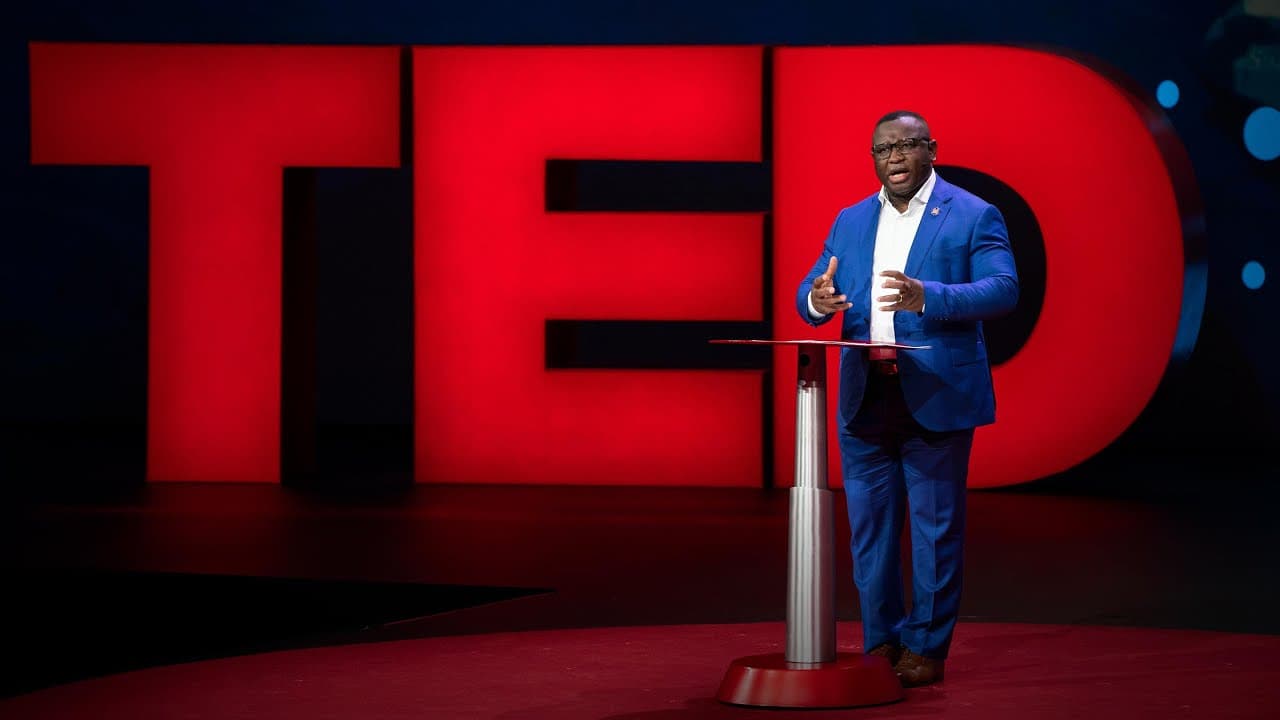
In this inspiring speech, the President of Sierra Leone shares his journey from a military coup to democratically elected president, and his efforts to transform the country through education and innovation.
Transcript
On Tuesday, January 16, 1996, I walked into the office of the president as head of state of the Republic of Sierra Leone. I had not been elected. Four years earlier, I was one of 30 heavily armed military officers, all in our 20s, who had driven from the war front into the capital city, Freetown. We had only one objective: to overthrow a corrupt, r... Read More
Key Insights
- 🌍 After overthrowing a dictatorship, the speaker initiated peace talks and organized democratic elections, emphasizing the importance of returning the country to civilian rule and securing a peaceful and just society.
- 📜 The speaker believes that leadership involves creating possibilities for the younger generation to believe in, own, and actively contribute to, emphasizing the importance of human capital development for national development.
- 💼 The speaker appointed young leaders to tackle corruption, resulting in a 100% conviction rate and the recovery of stolen money, leading to improved international reputation and increased trust from development partners.
- 💡 Innovation and technology play a crucial role in national development, as demonstrated by the efforts to engage a young inventor and establish a directorate for science, technology, and innovation to drive growth and participation in the digital economy.
- 📚 Recognizing the education crisis in Sierra Leone, the speaker implemented a free, quality education program, supported by a significant portion of the national budget, aiming to educate all children regardless of gender or ability.
- 🤝 Collaboration with development partners has been essential in providing teaching and learning materials, safe spaces for girls, and implementing school feeding programs, highlighting the importance of partnerships in achieving national development goals.
- 💪 The speaker believes in the potential of the younger generation and their ability to lead and drive national development, envisioning a future where a skilled and innovative workforce attracts investment and diversifies the economy.
- 👶 The speaker's ultimate goal is to create a future where children can grow up in good governance, quality education, healthcare, and infrastructure, challenging the younger generation to be active participants in building an inclusive and prosperous nation.
Install to Summarize YouTube Videos and Get Transcripts
Explore YouTube Video Summarizer or Get YouTube Transcript Extractor
Questions & Answers
Q: How did the speaker initially gain power as the head of state in Sierra Leone?
The speaker became the head of state of Sierra Leone after leading a bloodless coup against the corrupt and repressive single-party dictatorship that had been in power for over 25 years. This coup was supported by hundreds of thousands of citizens who took to the streets to welcome the military officers as liberators.
Q: What were the speaker's goals as part of the ruling military government?
The speaker's goal as part of the ruling military government was always to return the country to democratic civilian rule. However, after four years, democratic elections had still not taken place, leading to a loss of faith among the citizens. To uphold his promise, the speaker staged another bloodless coup, this time against the existing head of state, and became the new military head of state.
Q: How did the speaker contribute to peace and stability in Sierra Leone?
The speaker engaged in diplomatic activities and initiated peace talks with the rebel leaders, which were successful in bringing about peace for the first time. Additionally, the speaker organized the first multiparty democratic elections in nearly 30 years and peacefully handed over power to the newly elected president. These actions helped to restore stability and create a foundation for democratic governance in Sierra Leone.
Q: What is the speaker's approach to leadership and national development?
The speaker believes that leadership is about creating possibilities that all people, especially young people, can believe in and actively work towards. The speaker emphasizes the importance of human capital development and sees it as the key to national development in Sierra Leone. By investing in education, healthcare, and supporting the potential of the next generation, the speaker aims to transform the country and provide equal opportunities for all citizens.
Q: How did the speaker address the issue of corruption in Sierra Leone?
The speaker appointed a young attorney as the Commissioner for the Anti-Corruption Commission. Under his leadership, the commission achieved a 100% conviction rate and recovered over $1.5 million of stolen money. This money was then used as seed funding for building the country's first-ever national medical diagnostic center. The government's efforts to combat corruption have been recognized internationally and have led to the return of development partners to Sierra Leone.
Q: What measures did the speaker take to improve education in Sierra Leone?
Recognizing the high illiteracy rates and lack of access to education, the speaker implemented a free, quality education program for every Sierra Leonean child, regardless of gender or ethnicity. Despite initial financial constraints, the government clamped down on corruption and found the funding to support the program. Today, two million children are in school, and the education system is being equipped with teaching materials, safe spaces for girls, and school feeding programs.
Q: How does the speaker envision the future of Sierra Leone?
The speaker envisions a future where Sierra Leone is no longer defined by its past stigma, but rather offers hope and opportunity for all its citizens. The speaker wants young men and women throughout the country to imagine themselves as part of the nation's story and aims to create a nation with good governance, quality education, healthcare, and infrastructure. The speaker sees young people as the key to nourishing the seeds planted today and building a prosperous future for Sierra Leone.
Summary & Key Takeaways
-
In 1996, the speaker became the head of state of Sierra Leone after leading a bloodless coup to overthrow a corrupt dictatorship.
-
During his time in power, he prioritized peace talks, initiated democratic elections, and focused on national development and human capital.
-
As the current president, he has implemented free, quality education and focused on investing in human capital for a brighter future for Sierra Leone.
Read in Other Languages (beta)
Share This Summary 📚
Summarize YouTube Videos and Get Video Transcripts with 1-Click
Try YouTube Summary with ChatGPT & Claude or YouTube Transcript Generator
Explore More Summaries from TED 📚

Summarize YouTube Videos and Get Video Transcripts with 1-Click
Try YouTube Summary with ChatGPT & Claude or YouTube Transcript Generator