What Is the Market for Loanable Funds and Why It Matters
TL;DR
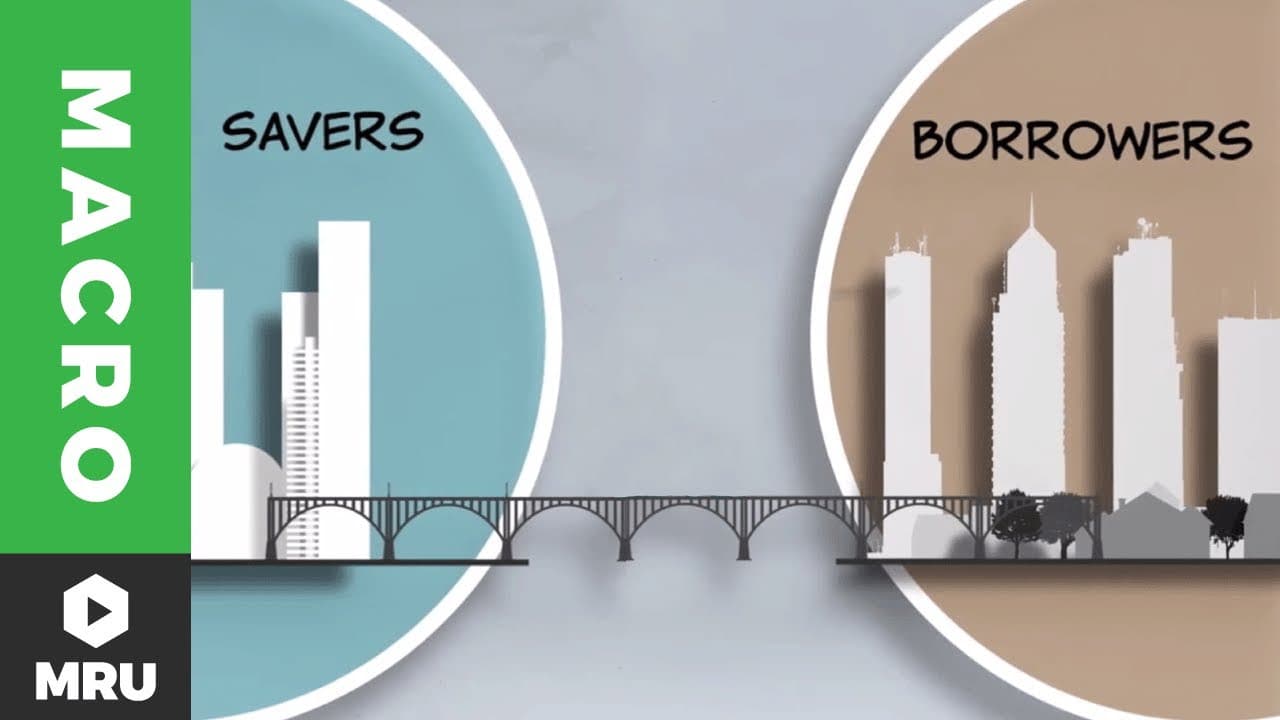
The market for loanable funds connects savers and borrowers, influenced by interest rates that affect the supply of savings and demand for borrowing. Understanding this market is crucial as it shapes individual financial behaviors and overall economic stability, especially highlighted by events like the 2008 financial crisis.
Transcript
♪ [music] ♪ [Alex] On September 15, 2008, the world's financial system was shaken to its core when the investment bank, Lehman Brothers, filed for bankruptcy. The impact was great, not simply because Lehman was big, but also because it was an important financial intermediary, an institution that helps bridge the gap between savers and borrowers. Th... Read More
Key Insights
- Lehman Brothers' bankruptcy in 2008 marked a significant failure of financial intermediaries, triggering the Great Recession.
- Financial intermediation is crucial as it connects savers with borrowers, facilitating economic stability and growth.
- The market for loanable funds is where savings supply meets borrowing demand, with interest rates acting as the price.
- Interest rates influence the quantity of savings supplied and the demand for borrowing, affecting overall economic activity.
- The life-cycle theory of savings suggests people borrow when young, save during working years, and dissave in retirement.
- Time preference impacts individual saving and borrowing behaviors, with some people more patient and others more impatient.
- Behavioral economics shows that automatic enrollment in savings plans increases saving rates through nudges.
- Financial intermediaries, like banks and stock markets, play a vital role in connecting savers and borrowers across various markets.
Install to Summarize YouTube Videos and Get Transcripts
Explore YouTube Video Summarizer or Get YouTube Transcript Extractor
Questions & Answers
Q: What was the significance of Lehman Brothers' bankruptcy?
Lehman Brothers' bankruptcy on September 15, 2008, was a pivotal event that marked the beginning of the Great Recession. It highlighted the failure of financial intermediaries, which are essential in linking savers to borrowers. The collapse of such a significant financial institution had widespread implications, shaking the global financial system and leading to a severe economic downturn.
Q: Why is financial intermediation important?
Financial intermediation is crucial because it connects savers with borrowers, facilitating the flow of funds in the economy. By efficiently allocating resources, intermediaries like banks and financial markets help maintain economic stability and growth. They enable individuals and businesses to invest in education, projects, and ventures, contributing to overall economic development.
Q: What is the market for loanable funds?
The market for loanable funds is where the supply of savings meets the demand for borrowing, with interest rates acting as the price. It is a conceptual framework used to analyze how savings and borrowing interact in the economy. Various factors, such as interest rates and economic conditions, influence the supply and demand in this market, impacting overall economic activity.
Q: How do interest rates affect savings and borrowing?
Interest rates play a crucial role in determining the quantity of savings supplied and the demand for borrowing. Higher interest rates incentivize savings, increasing the supply of funds, while lower rates encourage borrowing by reducing the cost of loans. Changes in interest rates can significantly impact economic activity, influencing investment decisions and consumer spending.
Q: What is the life-cycle theory of savings?
The life-cycle theory of savings suggests that individuals typically borrow when young, save during their working years, and dissave in retirement. This theory posits that people aim to smooth their consumption over their lifetime, borrowing to invest in education and saving for retirement to maintain their living standards when they are no longer working.
Q: How does time preference influence saving behavior?
Time preference refers to an individual's inclination to value present consumption over future consumption. People with a high time preference tend to be more impatient, spending more and saving less. Conversely, those with a low time preference are more patient, prioritizing saving and investing for future consumption. This behavioral trait significantly impacts personal financial decisions.
Q: What role does behavioral economics play in saving rates?
Behavioral economics demonstrates that saving is not solely about weighing costs and benefits. Nudges, such as automatic enrollment in retirement plans, can significantly increase saving rates. By setting high default contribution rates, employers can encourage employees to save more, even if opting in or changing the rate requires minimal effort. These behavioral insights help design policies to improve saving habits.
Q: What are financial intermediaries, and why are they important?
Financial intermediaries, such as banks, bond markets, and stock markets, are institutions that connect savers with borrowers. They play a vital role in the economy by facilitating the flow of funds, enabling investments, and supporting economic growth. By efficiently allocating resources, intermediaries help maintain financial stability and contribute to overall economic development.
Summary & Key Takeaways
-
The video discusses the importance of financial intermediation, highlighting the 2008 Lehman Brothers bankruptcy as a key event that exposed the vulnerabilities in the financial system. It introduces the market for loanable funds, where savers and borrowers interact, and explains how interest rates influence this market.
-
Exploring the life-cycle theory of savings, the video illustrates how individuals typically borrow when young, save during their working years, and use their savings in retirement. It emphasizes the role of time preference and behavioral economics in shaping saving and borrowing habits.
-
The video explains the complexities of the market for loanable funds, noting that it is not a single market but a collection of many smaller markets. Financial intermediaries, such as banks and stock markets, are crucial in linking savers and borrowers, affecting the overall economic landscape.
Read in Other Languages (beta)
Share This Summary 📚
Summarize YouTube Videos and Get Video Transcripts with 1-Click
Try YouTube Summary with ChatGPT & Claude or YouTube Transcript Generator
Explore More Summaries from Marginal Revolution University 📚


Summarize YouTube Videos and Get Video Transcripts with 1-Click
Try YouTube Summary with ChatGPT & Claude or YouTube Transcript Generator