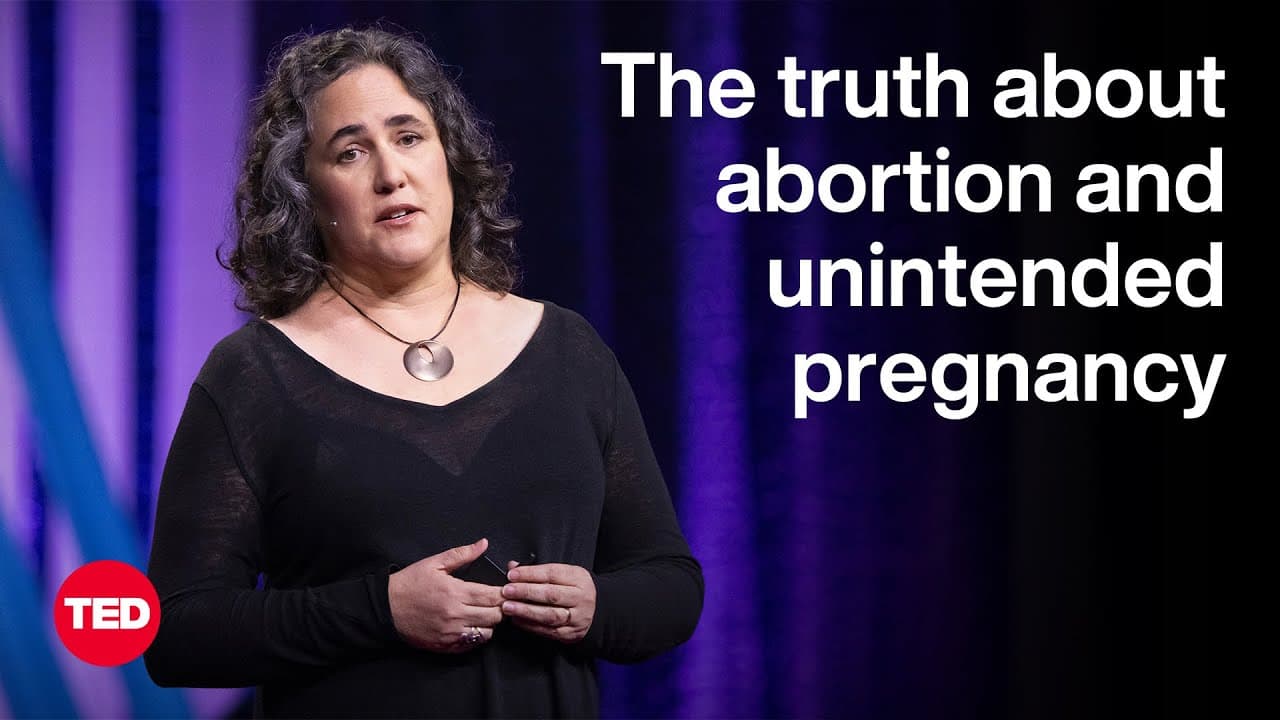
What Happens When We Deny People Abortions? | Diana Greene Foster | TED
TL;DR
The Turnaway Study reveals that denying access to abortion can lead to worse mental health, physical health, socioeconomic status, and life outcomes for women compared to those who receive abortions.
Transcript
I'd like to start by telling you the story of two women born early in the 20th century. They lived on different coasts, they had different religious backgrounds and they were in different stages of life when each experienced an unwanted pregnancy. Sally was newly married at the start of the Great Depression. She and her husband decided they couldn'... Read More
Key Insights
- 🌍 Access to safe and legal abortion is crucial for the well-being of families globally, and the trend internationally is towards liberalizing abortion laws.
- 💔 Abortion restrictions do not protect women's mental health. In fact, the study found that women who were denied abortions experienced higher anxiety, lower self-esteem, and lower life satisfaction.
- 🤝 People who were able to get their wanted abortion fared better in various aspects of life, including physical health, socioeconomic well-being, and achieving aspirational plans for the future.
- 🤰🏻 Women who carried the pregnancy to term and gave birth experienced worse physical health, including risks of complications such as hemorrhage and eclampsia.
- 💔 Those who were denied abortions faced more hardships, including increased public assistance, debt, lower credit scores, and a greater chance of eviction and bankruptcy.
- 💔 Women who placed children for adoption after giving birth had difficulty coping with their experience. Most people who gave birth decided to parent the child.
- 🌍 The United States needs to rejoin the rest of the world in liberalizing abortion laws and providing support for pregnant individuals, including income supports, healthcare coverage, child care, and parental leave.
- ⚠️ With limited access to legal abortion, those who can afford it travel or order medication abortion pills online, while those without resources experience numerous hardships as documented in the Turnaway Study. Control over childbearing is crucial for economic well-being and pursuing personal and educational goals.
Install to Summarize YouTube Videos and Get Transcripts
Explore YouTube Video Summarizer or Get YouTube Transcript Extractor
Questions & Answers
Q: What were the key findings of the Turnaway Study regarding the mental health consequences of denying abortions?
The Turnaway Study found no mental health harm from abortion but discovered that denial of abortion resulted in higher anxiety, lower self-esteem, and lower life satisfaction for the individuals. However, these negative effects did not persist over time, as symptoms of depression and anxiety improved for both groups.
Q: How did the physical health outcomes differ between women who received abortions and those who were denied?
The study revealed that women who carried pregnancies to term and gave birth experienced worse physical health outcomes than those who received abortions. The risks associated with childbirth, such as hemorrhage and eclampsia, were greater than those associated with abortion. Even years later, women who were denied abortions had higher chronic pain, hypertension, and overall worse physical health.
Q: Were there any differences in socioeconomic status between the two groups studied?
Yes, the study found significant socioeconomic differences. Women who were denied abortions faced more hardships than those who received them. They experienced an increase in public assistance, but it was insufficient to compensate for the loss of full-time employment. As a result, many of these women fell below the federal poverty level, leading to more debt, lower credit scores, and a higher chance of eviction and bankruptcy.
Q: Did the Turnaway Study reveal any differences in the chance and achievement of aspirational plans for the future?
Yes, there were notable differences in the chance and achievement of aspirational plans between the two groups. Women who received their wanted abortions were more likely to set and achieve aspirational plans, such as breaking ties with abusive partners, finding high-quality romantic relationships, obtaining advanced educational degrees, financially supporting older children, and having an intended pregnancy later. These differences highlight the positive impact of access to abortion on individuals' life prospects.
Q: What are some potential solutions to support individuals facing unintended pregnancies?
The speaker suggests implementing more generous and less punitive supports for low-income families, such as income supports, extended periods of healthcare coverage, child care, and parental leave. These measures can help prevent individuals from deciding to end a wanted pregnancy due to economic reasons. Additionally, providing information and resources for safe abortions is crucial for those who are unable to support a child or continue the pregnancy.
Q: How has the recent Supreme Court decision and the overturning of Roe v. Wade affected access to abortion?
The recent Supreme Court Dobbs decision has overturned Roe v. Wade and ended federal protections for abortion rights. This has led to a significant decrease in access to legal abortion, particularly in large parts of the Southern United States and Midwest. Women who can afford it are traveling long distances or ordering abortion pills online, while those without the necessary resources face hardships due to travel restrictions and limited options. The decision emphasizes the importance of ensuring accessible and safe abortion services for all individuals.
Q: What message does the speaker convey regarding the control over one's body and access to abortion?
The speaker emphasizes that access to abortion is about control over one's body, life, and destiny. Denying individuals the ability to make their own decisions about childbearing can have severe consequences for their economic well-being, educational goals, and ability to have children under the right circumstances. Trusting women to make decisions that are right for their lives and families is crucial.
Summary & Key Takeaways
-
Two women from the early 20th century with unwanted pregnancies highlight the consequences they faced due to limited abortion access.
-
The Turnaway Study, conducted by the University of California, San Francisco, compared women who received abortions with those who were denied. The study found that denial of abortion led to poorer mental health, physical health, socioeconomic status, and life outcomes.
-
Women who carried pregnancies to term experienced worse physical health, higher chronic pain, more hypertension, and faced difficulties in the socioeconomic aspects of their lives.
Read in Other Languages (beta)
Share This Summary 📚
Summarize YouTube Videos and Get Video Transcripts with 1-Click
Try YouTube Summary with ChatGPT & Claude or YouTube Transcript Generator
Explore More Summaries from TED 📚





Summarize YouTube Videos and Get Video Transcripts with 1-Click
Try YouTube Summary with ChatGPT & Claude or YouTube Transcript Generator