What Happens To Your Body During an Overdose?
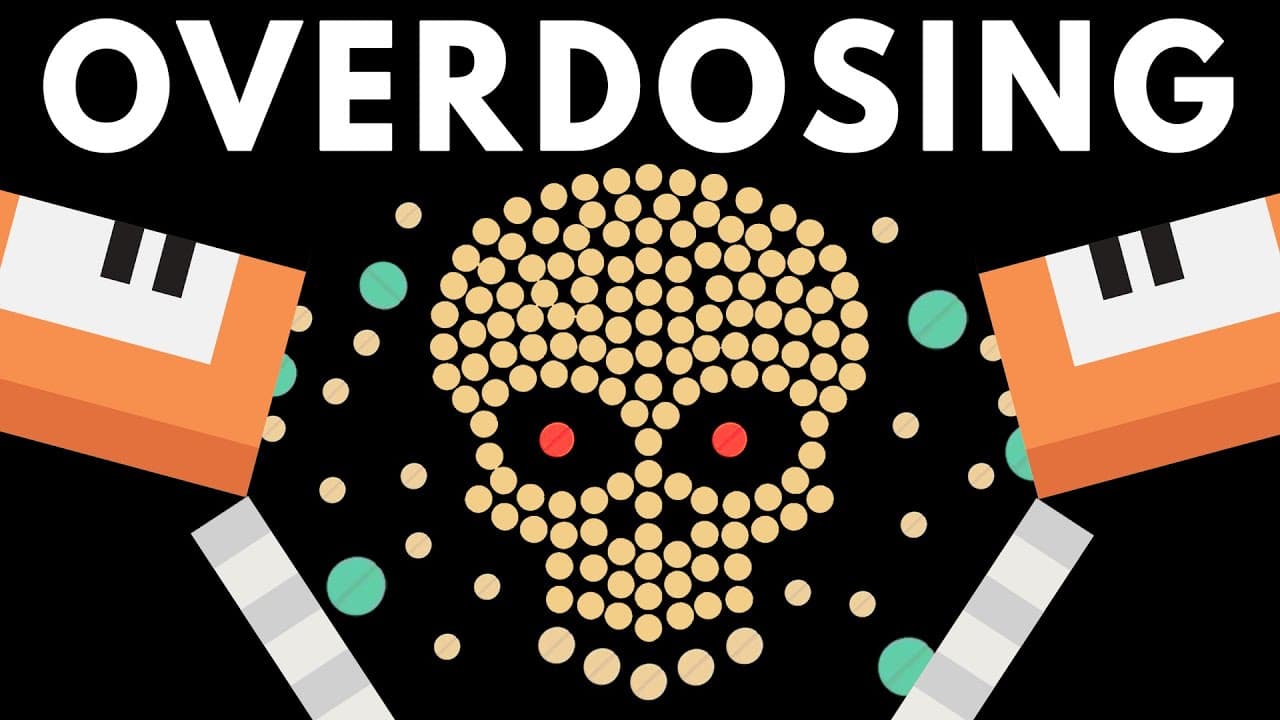
TL;DR
Opioid overdoses are a significant health crisis, but can be reversed with naloxone.
Transcript
Thank you to Hollywood Health and Society for sponsoring this video. Hey there! Welcome to Life Noggin. Drug overdoses are a serious problem. There were more than 67,000 drug overdose deaths in the United States in 2018 alone. Overdose is the top cause of death for people under 50 in U.S.—killing more people than car accidents or homicides—and is o... Read More
Key Insights
- 🥺 Opioid overdoses are a significant health crisis in the US, surpassing car accidents and homicides as a leading cause of death.
- ❓ Opioids, including prescription medications and illegal drugs like heroin, can cause fatal overdoses when misused.
- ◀️ Naloxone is a lifesaving medication that can reverse the effects of an opioid overdose by restoring normal respiration.
- ✳️ Combining opioids with alcohol or other depressants increases the risk of respiratory depression and overdose.
- ❓ Recognizing the symptoms of an opioid overdose, such as pinpoint pupils and respiratory depression, is crucial for prompt intervention.
- 🛟 Administering naloxone, either as a nasal spray or injection, can reverse the effects of an opioid overdose and save lives.
- ❓ Training on naloxone administration is essential for individuals who may encounter someone experiencing an opioid overdose.
Install to Summarize YouTube Videos and Get Transcripts
Explore YouTube Video Summarizer or Get YouTube Transcript Extractor
Questions & Answers
Q: What are opioids, and how do they contribute to drug overdoses?
Opioids are a class of pain-relieving drugs that can be legal, like prescription medications, or illegal, like heroin. They contribute to overdoses by depressing the central nervous system, leading to respiratory failure.
Q: How can combining alcohol with opioids increase the risk of overdose?
Combining alcohol with opioids can intensify the depressant effects on the central nervous system, including breathing. This can lead to respiratory depression, a common symptom of overdose.
Q: What are the symptoms of an opioid overdose?
Symptoms of an opioid overdose include pinpoint pupils, respiratory depression, decreased consciousness, weak pulse, clammy skin, bluish skin around the lips, small pupils, and low breathing.
Q: How does naloxone work to reverse opioid overdoses?
Naloxone is an opioid antagonist that binds to opioid receptors and blocks the effects of other opioids. It can restore normal respiration to someone experiencing an overdose by reversing the depression of the central nervous and respiratory systems.
Summary & Key Takeaways
-
Opioid overdoses are a major cause of death in the US, with opioids playing a role in nearly 70% of fatal overdoses.
-
Risk factors for overdose include taking higher doses than prescribed, combining opioids with other depressants, and certain medical conditions.
-
Naloxone is a medication that can reverse the effects of an opioid overdose and save lives when administered properly.
Read in Other Languages (beta)
Share This Summary 📚
Summarize YouTube Videos and Get Video Transcripts with 1-Click
Try YouTube Summary with ChatGPT & Claude or YouTube Transcript Generator
Explore More Summaries from Life Noggin 📚


Summarize YouTube Videos and Get Video Transcripts with 1-Click
Try YouTube Summary with ChatGPT & Claude or YouTube Transcript Generator