How to Improve Your Daily Habits by 1% Every Day
TL;DR
To enhance your daily habits, aim for a 1% improvement each day by focusing on small, manageable changes. Establish habits through a four-stage process: cue, craving, response, and reward, while designing your environment to minimize temptations and foster positive behaviors. Surround yourself with peers who embody the habits you wish to adopt for greater consistency and motivation.
Transcript
people who exhibit high willpower who appear on the surface to have great a great deal of willpower the primary thing that is different between them and people who appear to have low levels of willpower is that they are in environments where they are tempted less so their environment is primed for them to be high willpower and i think that alone sh... Read More
Key Insights
- High willpower individuals often thrive in environments where they face fewer temptations, highlighting the importance of designing spaces that promote desired behaviors.
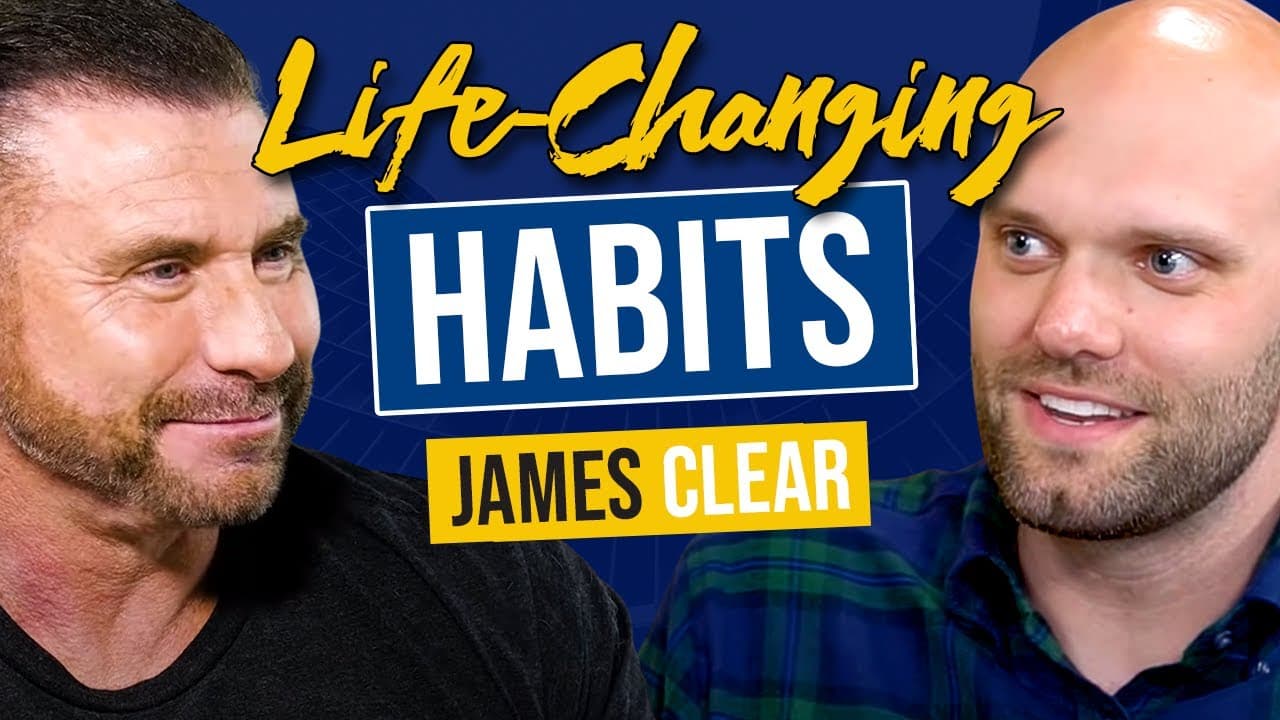
- James Clear's book 'Atomic Habits' emphasizes understanding how habits work and employing strategies to create good habits and eliminate bad ones.
- The concept of improving by 1% daily is more attainable for most people than taking massive actions, as it focuses on small, achievable goals.
- The British cycling team's success story illustrates the power of making small, continuous improvements, known as the 'aggregation of marginal gains.'
- Habits are formed through a four-stage process: cue, craving, response, and reward, which can be manipulated to build good habits or break bad ones.
- The 'Two-Minute Rule' suggests starting new habits with actions that take two minutes or less to establish consistency before scaling them.
- Social environments significantly influence habits as people tend to adopt behaviors that are normal within their peer groups.
- The ultimate productivity hack is learning to say 'no,' allowing individuals to focus on their priorities without being overwhelmed by external demands.
- More videos with James Clear:
Install to Summarize YouTube Videos and Get Transcripts
Explore YouTube Video Summarizer or Get YouTube Transcript Extractor
Questions & Answers
Q: What differentiates high willpower individuals from others?
High willpower individuals often find themselves in environments with fewer temptations. Their surroundings are structured to support their goals, which reduces the need for constant self-control. By designing spaces that promote the desired behaviors, they can maintain high willpower without extraordinary effort.
Q: What is the concept of '1% better every day'?
The '1% better every day' concept suggests that small, consistent improvements can lead to significant progress over time. Instead of taking massive actions, which might be overwhelming, focusing on minor daily improvements can compound and result in substantial changes, as illustrated by the British cycling team's success.
Q: How do habits form according to James Clear?
Habits form through a four-stage process: cue, craving, response, and reward. The cue triggers the habit, the craving is the desire for the reward, the response is the action taken, and the reward is the benefit gained. Understanding and manipulating these stages can help in building good habits or breaking bad ones.
Q: What is the 'Two-Minute Rule'?
The 'Two-Minute Rule' is a strategy for habit formation that suggests starting new habits with actions that take two minutes or less. This approach helps establish consistency and makes it easier to build a routine. Once the habit is established, it can be scaled up to achieve larger goals.
Q: How do social environments influence habits?
Social environments play a crucial role in habit formation as individuals often adopt behaviors that are considered normal within their peer groups. By joining groups where the desired behavior is the norm, individuals can find it easier to maintain those habits due to social reinforcement and expectations.
Q: Why is saying 'no' considered the ultimate productivity hack?
Saying 'no' is essential for maintaining focus on personal goals and priorities. By declining opportunities that do not align with one's objectives, individuals can avoid being overwhelmed by external demands and distractions, allowing them to concentrate on what truly matters and be more productive.
Q: What should you do when you slip away from your habits?
When slipping from habits, it's crucial to recognize the lapse quickly and return to the routine. High achievers tend to recover faster from mistakes, preventing them from becoming new habits. Focusing on maintaining consistency, even on bad days, helps in sustaining long-term progress.
Q: How can smartphones be managed to reduce distractions?
To manage smartphone distractions, James Clear suggests strategies like leaving the phone in another room until lunch to focus on personal agendas. Introducing friction, such as deleting apps after use, can reduce the urge to check them mindlessly. Curating social media feeds to include only valuable content can also enhance productivity.
Summary & Key Takeaways
-
James Clear discusses how environments can be structured to reduce temptations and promote high willpower, which is crucial for developing good habits. He emphasizes that habits are not about radical change but about consistent small improvements.
-
Clear's book 'Atomic Habits' has gained popularity for its unique approach to understanding and creating habits. The book outlines four stages of habit formation: cue, craving, response, and reward, providing actionable strategies to manipulate these stages.
-
The conversation explores the importance of social environments in habit formation and the need to say 'no' to maintain focus on personal goals. Clear also shares personal strategies for managing distractions like smartphones and social media.
Read in Other Languages (beta)
Share This Summary 📚
Summarize YouTube Videos and Get Video Transcripts with 1-Click
Try YouTube Summary with ChatGPT & Claude or YouTube Transcript Generator
Explore More Summaries from Ed Mylett 📚





Summarize YouTube Videos and Get Video Transcripts with 1-Click
Try YouTube Summary with ChatGPT & Claude or YouTube Transcript Generator