Nature's Mood Rings: How Chameleons Really Change Color | Deep Look
TL;DR
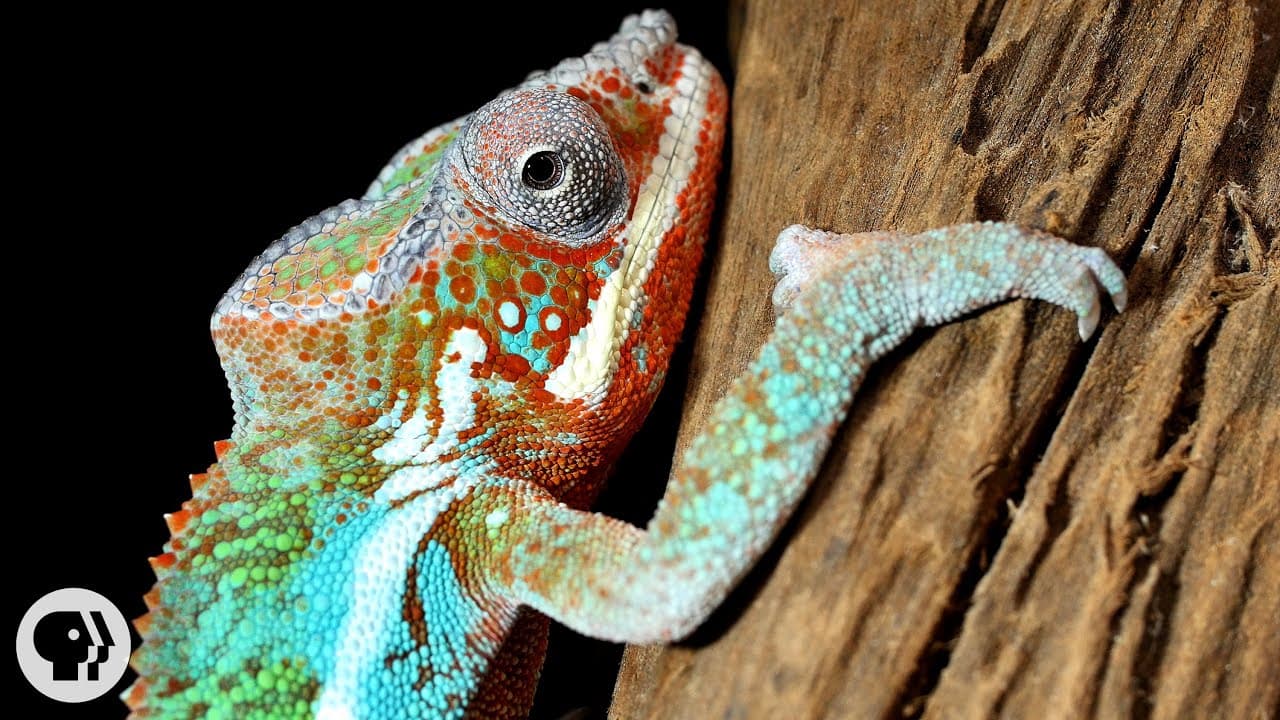
Chameleons change color through the movement of tiny salt crystals in their skin, creating a dramatic shift in color for various purposes.
Transcript
I don’t know about you, but I thought to be chameleon-like was to be someone who could fit in anywhere. Adapt. Blend in. Turns out that is all wrong. Chameleons don’t change color to match their environment. In fact, it’s just the opposite. Their baseline is camouflage. When chameleons are relaxed, they’re mostly green. They naturally blend into th... Read More
Key Insights
- 🦎 Chameleons change color to make a statement and express their emotions, not to blend in with their environment. They transform into living mood rings.
- 🔬 Scientists previously believed chameleons changed color by spreading out pigments, but it is actually due to iridophores - a layer of cells containing nano-scale salt crystals - that reflect different wavelengths of light.
- 🌈 Chameleons can stretch or contract the lattice of crystals in their skin, allowing them to create a dramatic shift in color. Their skin contains multiple layers of arrays, resulting in a complex and vibrant color display.
- 🔧 UC Berkeley engineers are working on creating synthetic materials that mimic a chameleon's structural color control. They use nano-scale silicon ribbons arranged on flexible plastic to reflect different wavelengths of light when stretched.
- 🐦 Chameleon skin's color language is as distinct and nuanced as the clicks of a dolphin or the rumble of an elephant. It is a visual language that is alien to humans and produces colors beyond our visible spectrum.
- 💡 Chameleons challenge our understanding of science and remind us of how much there is still to learn. Their ability to communicate through color is fascinating and beyond our current capabilities to fully imitate and comprehend.
- 🌳 Chameleons naturally blend into their forest canopy home, mimicking leaves and using their baseline green color to camouflage and relax.
- 🔄 The faster a chameleon's skin changes colors, the more excited it is, showcasing their ability to make a statement and express their emotions through their vibrant color displays.
Install to Summarize YouTube Videos and Get Transcripts
Explore YouTube Video Summarizer or Get YouTube Transcript Extractor
Questions & Answers
Q: How do chameleons change their colors?
Chameleons change color through the movement of tiny salt crystals called iridophores beneath their skin. When light hits these crystals, it shatters into different wavelengths, resulting in a dramatic shift in color.
Q: Why do chameleons change colors?
Chameleons change colors for various purposes such as to communicate their mood, show aggression, or attract a mate. The faster their skin changes colors, the more excited they are or the stronger the message they want to convey.
Q: What is the role of iridophores in chameleon's color-changing abilities?
Iridophores, the layer of cells beneath a chameleon's skin, contain nano-scale salt crystals arranged in a three-dimensional lattice. When the distance between these crystals changes, they reflect a different wavelength of light, resulting in a shift in color.
Q: How are scientists attempting to mimic chameleon color-changing abilities?
Electrical engineers at UC Berkeley are working on creating synthetic materials that can replicate the chameleon's structural color control. They have arranged nano-scale silicon ribbons on a flexible plastic sheet, which reflects different wavelengths of light when the plastic stretches.
Q: Can chameleons change into any color?
Chameleons can display a wide range of colors, including green, red, blue, and many more. Their specialized skin allows them to reflect a spectrum of wavelengths, producing colors that may not even be visible to human eyes.
Q: Is chameleon color change solely for camouflage purposes?
Contrary to popular belief, chameleons primarily change color to communicate and make statements rather than blend in with their surroundings. Camouflage is just one function of their color-changing abilities.
Q: Are all chameleon species capable of changing color?
Yes, all chameleon species have the ability to change color. However, the intensity and range of colors may vary among different species. Some chameleons can display more vibrant and diverse colors than others.
Summary & Key Takeaways
-
Chameleons change color to make a statement and not to blend in with their environment.
-
The color change is achieved through the movement of salt crystals called iridophores beneath their skin, reflecting different wavelengths of light.
-
Scientists are trying to mimic the chameleon's structural color control to create synthetic materials that can change color.
Read in Other Languages (beta)
Share This Summary 📚
Summarize YouTube Videos and Get Video Transcripts with 1-Click
Try YouTube Summary with ChatGPT & Claude or YouTube Transcript Generator
Explore More Summaries from Deep Look 📚


Summarize YouTube Videos and Get Video Transcripts with 1-Click
Try YouTube Summary with ChatGPT & Claude or YouTube Transcript Generator