How to Build a Road
TL;DR
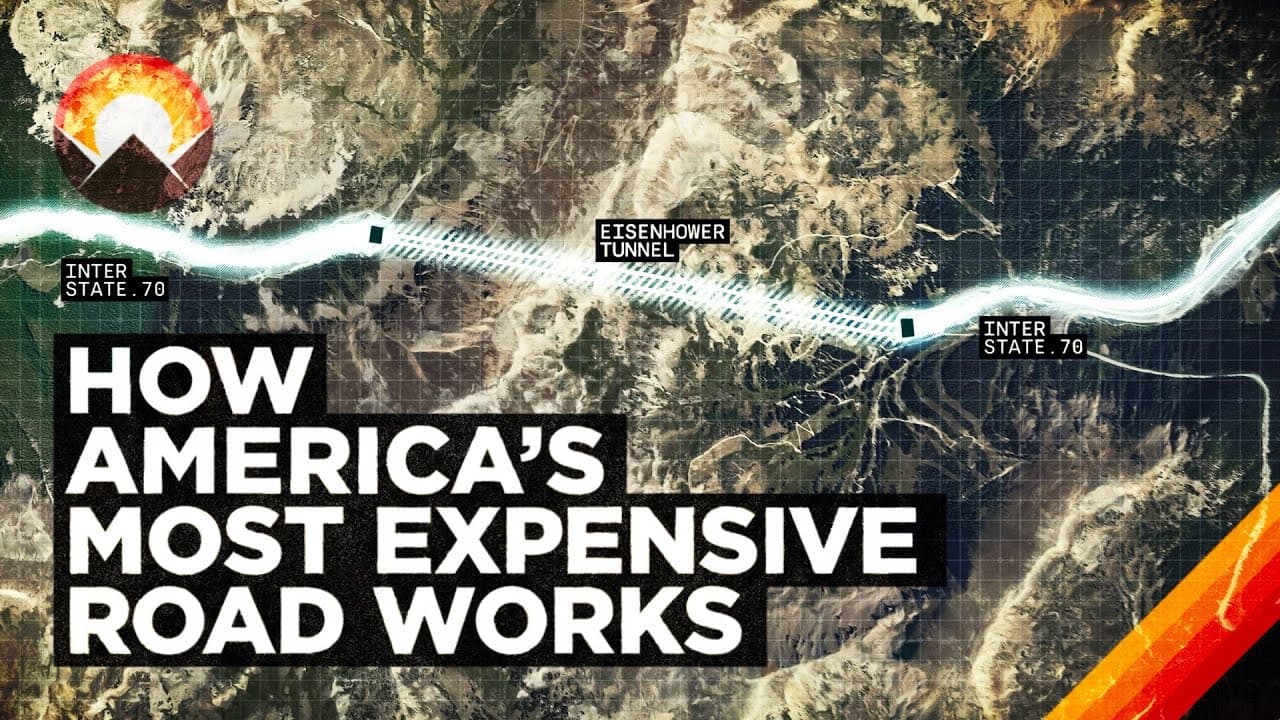
Building Interstate 70 through the Rocky Mountains presented numerous engineering challenges, including finding the flattest and most cost-effective route, managing steep gradients, dealing with environmental concerns, and adapting to changing weather conditions.
Transcript
so you want to build a road first is perhaps the most impossible feat finding a route that's because roads have a particular shape that Earth often does not both linearly and laterally they're fairly flat but not completely flat flat roads are dangerous a flat turn will increase the potential of a car skidding off so Road designers slope the corner... Read More
Key Insights
- 🛣️ Key Insight: Road designers slope corners inward to counteract centripetal force and give cars more friction during turns. The American Federal Highway Administration has a suggested slope formula, but experts debate its merits.
- 🏔️ Key Insight: Building a road over the Rocky Mountains was initially deemed impossible due to the challenging terrain. However, engineers found a cheaper and less complex route through the mountains, ultimately resulting in the construction of I-70.
- 🌊 Key Insight: Roads built near rivers are preferred by road builders because rivers usually center mountain valleys and have gradual slopes, making the construction of roads easier and less expensive.
- 🚧 Key Insight: The construction of roads involves a significant amount of cutting and filling of earth. This process requires careful calculations to determine where dirt should be added and removed to create a flat and wide enough path for the road.
- 🌿 Key Insight: Environmental factors play a crucial role in road construction. Considerations include the impact on watersheds, management of runoff and erosion, and landscaping techniques to mitigate potential damage to the surrounding environment.
- 🏞️ Key Insight: The design of I-70 across Vail Pass was purposefully engineered to fit the landscape and values of the area. Attention to details such as matching the local rock, revegetation, and retaining walls contributed to creating a road that blends seamlessly with the environment.
- ⛰️ Key Insight: Roads built in mountainous regions face unique challenges, including hazardous conditions, such as avalanches and mudslides. Continuous management and adaptation are necessary to ensure road safety and prevent disruptions.
- 🚗 Key Insight: I-70 is undergoing upgrades funded by a federal infrastructure package, highlighting the ongoing nature of road management and improvement. The project aims to address the changing demands and challenges faced by the road, ensuring its continued functionality and economic significance.
Install to Summarize YouTube Videos and Get Transcripts
Explore YouTube Video Summarizer or Get YouTube Transcript Extractor
Questions & Answers
Q: How do road designers determine the safest slope for a turn?
Road designers calculate the safest slope for a turn by considering the design speed, turn radius, and the need to counteract centripetal force. The American Federal Highway Administration has a formula that suggests the slope, but there is ongoing debate among experts regarding the ideal super elevation formula. Other factors, such as the higher centers of gravity of trucks and the impact of snow and ice, are also considered.
Q: Why was the northern route initially considered the best option for building Interstate 70 through Colorado's Rocky Mountains?
The northern route appeared to be the best option initially because it followed the tried and tested shortcut of using rivers as guides. Rivers typically run through mountain valleys with gradual slopes, making them ideal for road construction. The northern route was also cheaper on a per-mile basis and had relatively simple geography. However, it was ultimately not chosen due to its longer and less direct route.
Q: What were the challenges of building Interstate 70 through Vail Pass in the Rocky Mountains?
Building Interstate 70 through Vail Pass posed several challenges. The narrow confines of the pass required extensive cutting and filling of the landscape, and the proximity to Black Gore and 10 Mile Creek raised concerns about the impact on the watershed. Construction teams had to manage runoff, mitigate erosion, and build retaining walls to prevent road fill from contaminating the nearby water sources.
Q: How did road builders manage the risk of avalanches along Interstate 70 in Colorado?
To manage the risk of avalanches, the Colorado Department of Transportation (CDOT) triggers controlled avalanches at the start of each winter. Egg-shaped trigger devices are used to safely induce avalanches on slide paths above the road. CDOT also closes the interstate during low-traffic periods to minimize the risk of drivers being caught in unexpected avalanches. The goal is to prevent any single slide from burying the roadway and causing a prolonged closure.
Summary & Key Takeaways
-
When designing roads through the mountains, engineers must account for the shape of the land, including slopes, turns, and elevation changes.
-
Road designers prefer lateral slopes rather than linear slopes, and rivers are often used as a guide for flat and gradual paths through the mountains.
-
Interstate 70 through Colorado's Rocky Mountains required the construction of tunnels, bridges, retaining walls, and avalanche mitigation systems.
Q: How do road designers determine the safest slope for a turn?
Road designers calculate the safest slope for a turn by considering the design speed, turn radius, and the need to counteract centripetal force. The American Federal Highway Administration has a formula that suggests the slope, but there is ongoing debate among experts regarding the ideal super elevation formula. Other factors, such as the higher centers of gravity of trucks and the impact of snow and ice, are also considered.
Read in Other Languages (beta)
Share This Summary 📚
Summarize YouTube Videos and Get Video Transcripts with 1-Click
Try YouTube Summary with ChatGPT & Claude or YouTube Transcript Generator
Explore More Summaries from Wendover Productions 📚




Summarize YouTube Videos and Get Video Transcripts with 1-Click
Try YouTube Summary with ChatGPT & Claude or YouTube Transcript Generator