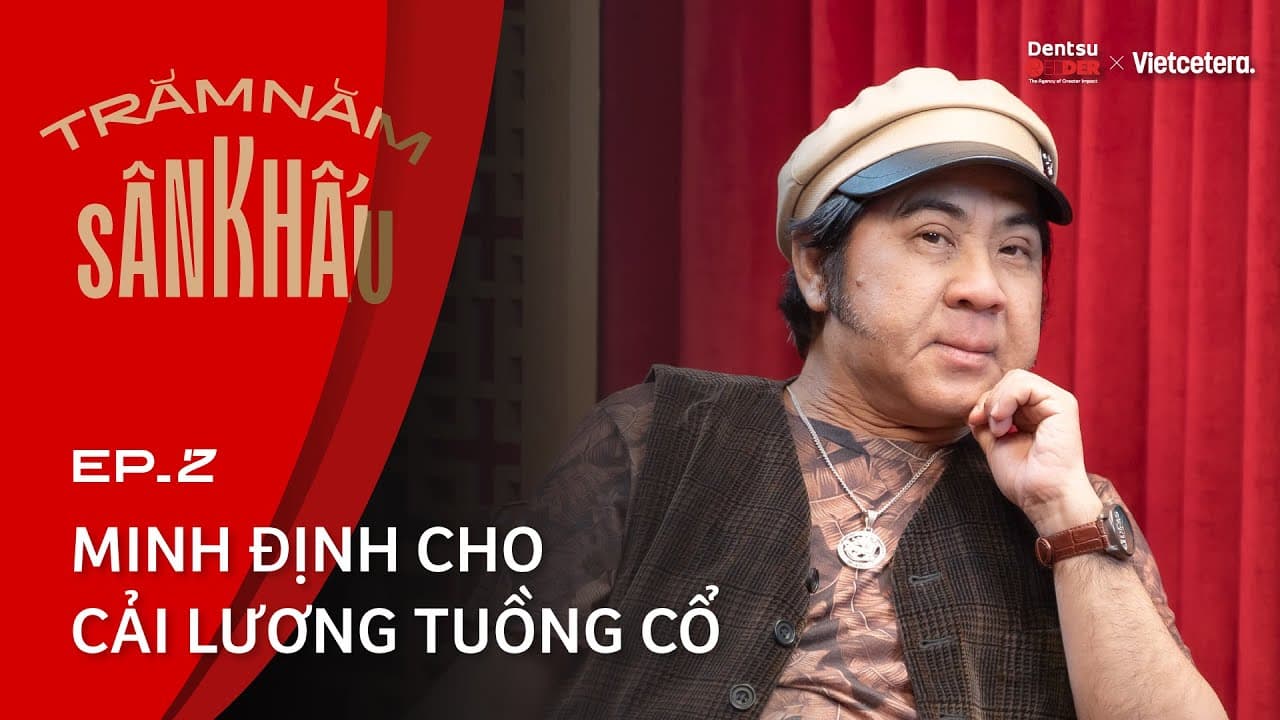
What Is Vietnamese Old-Folk Reformed Theater?
TL;DR
Vietnamese old-folk reformed theater, or cải lương tuồng cổ, is a traditional art form that evolved from borrowing Chinese and other cultural elements, but has been distinctly Vietnamized over time. It combines music, singing, and acting, and has its roots in both Vietnamese and foreign influences, creating a unique cultural expression.
Transcript
Because of them in the past, there's the theater stage now for you guys to perform, to sing and dance. You have to remember them. We are Vietnamese, we are not a branch of China. We do Vietnamese old-folk reformed theater. Welcome back to Trăm Năm Sân Khấu, a show nurturing our love for traditional forms of art. In today episode, we are honored to... Read More
Key Insights
- Vietnamese old-folk reformed theater is an art form that combines music, singing, and acting.
- The theater has its roots in both Vietnamese and foreign influences, including Chinese and Taiwanese elements.
- The term 'old-folk reformed theater' was adopted to emphasize its distinct Vietnamese identity.
- Musician Đức Phú played a significant role in creating Vietnamese music for the theater.
- The theater evolved from Đờn ca tài tử, Ca ra bộ, and Vọng cổ, adapting elements from various cultures.
- Guangdong music and instruments were initially used but later replaced with Vietnamese compositions.
- The theater has been shaped by historical and cultural exchanges, particularly with Guangdong dynasty opera.
- Efforts have been made to distinguish Vietnamese contributions to the theater from borrowed elements.
Install to Summarize YouTube Videos and Get Transcripts
Explore YouTube Video Summarizer or Get YouTube Transcript Extractor
Questions & Answers
Q: What is Vietnamese old-folk reformed theater?
Vietnamese old-folk reformed theater, known as cải lương tuồng cổ, is a traditional art form that combines elements of music, singing, and acting. It has evolved by integrating influences from both Vietnamese and foreign cultures, such as Chinese and Taiwanese, creating a unique cultural expression that is distinctly Vietnamese.
Q: How did Vietnamese old-folk reformed theater develop?
Vietnamese old-folk reformed theater developed through a process of cultural borrowing and adaptation. Initially influenced by Chinese and Taiwanese music and storylines, it gradually incorporated Vietnamese elements, such as Đờn ca tài tử and Vọng cổ. Over time, it evolved into a distinct art form with its own identity, thanks to contributions from musicians like Đức Phú.
Q: What role did musician Đức Phú play in the theater?
Musician Đức Phú was instrumental in developing the music for Vietnamese old-folk reformed theater. He created new compositions by blending Vietnamese melodies with foreign influences, particularly Taiwanese music. His work helped establish a distinctive Vietnamese sound within the theater, contributing to its unique cultural identity.
Q: Why was the term 'old-folk reformed theater' adopted?
The term 'old-folk reformed theater' was adopted to emphasize the theater's distinct Vietnamese identity and to move away from labels that suggested foreign dominance, such as 'Guangdong reformed theater.' This rebranding reflects a broader cultural effort to acknowledge and celebrate the theater's Vietnamese roots and contributions.
Q: How did the theater's music evolve over time?
The theater's music evolved by initially incorporating Chinese and Taiwanese melodies and instruments, such as the đàn tam thập lục and đàn tỳ bà. Over time, musicians like Đức Phú developed a distinctive Vietnamese sound by blending local melodies with foreign influences, eventually replacing foreign instruments with modern ones like saxophones and violins.
Q: What cultural influences shaped the theater?
Vietnamese old-folk reformed theater was shaped by a blend of cultural influences, particularly from China and Taiwan. It borrowed elements such as storylines and music from these cultures but gradually integrated Vietnamese elements to create a unique cultural expression. This process of adaptation and Vietnamization has been a key aspect of the theater's development.
Q: How is the theater distinct from Guangdong dynasty opera?
While Vietnamese old-folk reformed theater shares some historical and cultural exchanges with Guangdong dynasty opera, it has developed its own distinct identity. The theater has adapted foreign influences to create a unique Vietnamese sound and style, incorporating local music and instruments, and emphasizing its cultural independence from Chinese opera.
Q: What efforts have been made to distinguish Vietnamese contributions?
Efforts to distinguish Vietnamese contributions to the theater include rebranding it as 'old-folk reformed theater' to emphasize its Vietnamese identity. Musicians like Đức Phú have created original compositions that blend Vietnamese and foreign elements, and there has been a cultural push to acknowledge and celebrate the theater's unique Vietnamese roots and contributions.
Summary & Key Takeaways
-
Vietnamese old-folk reformed theater, or cải lương tuồng cổ, is a traditional art form that evolved from borrowing Chinese and other cultural elements, but has been distinctly Vietnamized over time. It combines music, singing, and acting, and has its roots in both Vietnamese and foreign influences, creating a unique cultural expression.
-
Musician Đức Phú and other pioneering artists played crucial roles in developing a distinctive Vietnamese sound within the theater, incorporating local instruments and melodies. The theater's evolution reflects a blend of cultural exchanges, particularly with Guangdong dynasty opera, while maintaining a unique Vietnamese identity.
-
The term 'old-folk reformed theater' was adopted to emphasize its distinct Vietnamese identity, moving away from labels that suggested foreign dominance. This rebranding reflects a broader cultural effort to acknowledge and celebrate the theater's Vietnamese roots and contributions.
Read in Other Languages (beta)
Share This Summary 📚
Summarize YouTube Videos and Get Video Transcripts with 1-Click
Try YouTube Summary with ChatGPT & Claude or YouTube Transcript Generator
Explore More Summaries from Vietcetera 📚
Summarize YouTube Videos and Get Video Transcripts with 1-Click
Try YouTube Summary with ChatGPT & Claude or YouTube Transcript Generator