Jet Engine, How it works?
TL;DR
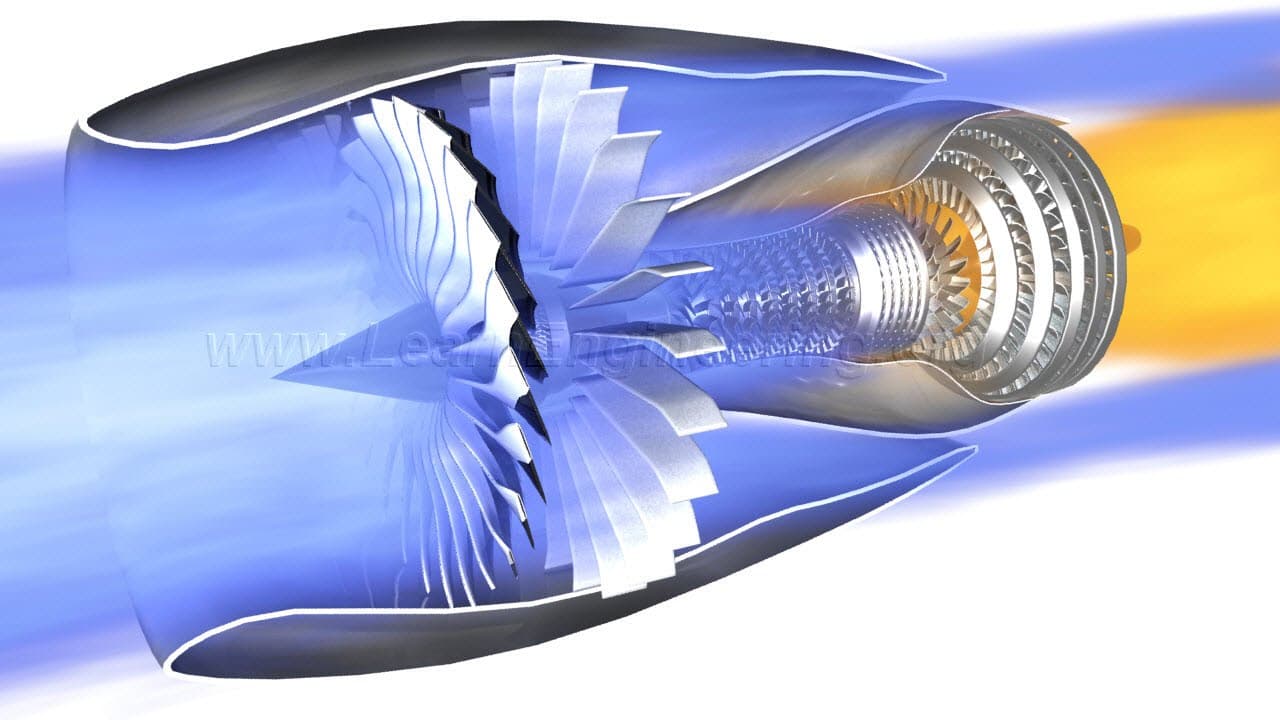
This video explains how jet engines work, including the principles of thrust and the components involved in creating high-speed air flow.
Transcript
jet engines have been the successful drivers of aircrafts for nearly a century now in This video we will explain the technology behind the jet engine in a logical step-By-step Manner a jet engine keeps an aircraft moving forward using a very simple principle The same that makes an air-filled balloon move Yes, Newton's third law of [motion] just [li... Read More
Key Insights
- 🔥 Jet engines have been the successful drivers of aircrafts for nearly a century, working on Newton's third law of motion - the reaction force produced by the high-speed jet at the tail of the jet engine makes it move forward.
- 🚀 To achieve high-speed exhaust, a combination of techniques is used, including heating the incoming air to a high temperature in a combustion chamber and using a set of compressor stages to bring the air to the required conditions for effective combustion.
- ✈️ The compressor and turbine in a jet engine are attached to the same shaft and work together to create a hot and high-speed air emitted from the engine's exit, resulting in greater jet velocity.
- ⚙️ Modern aircrafts use a slightly improved compressor turbine arrangement called a two-spool or three-spool engine, which increases efficiency and reduces centrifugal stress on the turbine blades.
- 🌬️ Turbofan engines, fitted with a large fan and bypass duct, are the preferred choice for commercial aircraft due to their fuel economy and quieter exhaust.
- 💨 The majority of the thrust force in a turbofan engine comes from the fan's reaction force, which greatly improves airflow by sucking in more air.
- 🛫 Turbofan engines overcome the noise problem by keeping the outlet velocity within a limit, as the bypassed cold air gets mixed with the hot air, resulting in quieter exhaust.
- 💰 Turbofan engines dominate aircraft propulsion systems due to their combination of quieter exhaust, better fuel economy, and high thrust creation with a slightly higher fuel expense.
Install to Summarize YouTube Videos and Get Transcripts
Explore YouTube Video Summarizer or Get YouTube Transcript Extractor
Questions & Answers
Q: How does a jet engine generate thrust?
A jet engine produces thrust by creating a high-speed jet at its exit. This is achieved by heating and expanding the incoming air in the combustion chamber, which is then accelerated by the compressor stages and released through the engine's nozzle.
Q: What is the purpose of the compressor and turbine in a jet engine?
The compressor is responsible for pressurizing and heating the incoming air, while the turbine extracts energy from the high-energy fluid leaving the combustion chamber to power the compressor. They are connected on the same shaft and operate in a synchronized manner.
Q: What is the difference between a turbojet and a turbofan engine?
A turbojet engine is a traditional design that primarily produces thrust solely from the high-speed jet at its exit. In contrast, a turbofan engine has a large fan that bypasses a portion of the air, generating additional thrust while reducing noise levels and improving fuel efficiency.
Q: How do turbofan engines improve fuel economy and reduce noise?
Turbofan engines achieve better fuel economy by using the fan to increase airflow, generating more thrust at a slightly higher fuel consumption rate. The mixing of hot and cold air in the bypass duct also helps to control the outlet jet velocity, leading to quieter exhaust and reduced noise levels.
Summary & Key Takeaways
-
Jet engines function based on Newton's third law of motion, where the reaction force produced by a high-speed jet moves the aircraft forward.
-
The combustion chamber and compressor stages work together to heat and pressurize the air, creating a high-speed jet at the engine's exit.
-
Turbofan engines, which use a large fan to improve airflow and fuel economy, are the preferred choice for commercial aircraft due to their lower noise levels and higher efficiency.
Read in Other Languages (beta)
Share This Summary 📚
Summarize YouTube Videos and Get Video Transcripts with 1-Click
Try YouTube Summary with ChatGPT & Claude or YouTube Transcript Generator
Explore More Summaries from Lesics 📚

Summarize YouTube Videos and Get Video Transcripts with 1-Click
Try YouTube Summary with ChatGPT & Claude or YouTube Transcript Generator