Here's How to Navigate the Choppy Web3 Waters (Amanda Cassatt, Abradat Kamalpour)
TL;DR
Exploring Web3's growth, regulatory hurdles, and future prospects.
Transcript
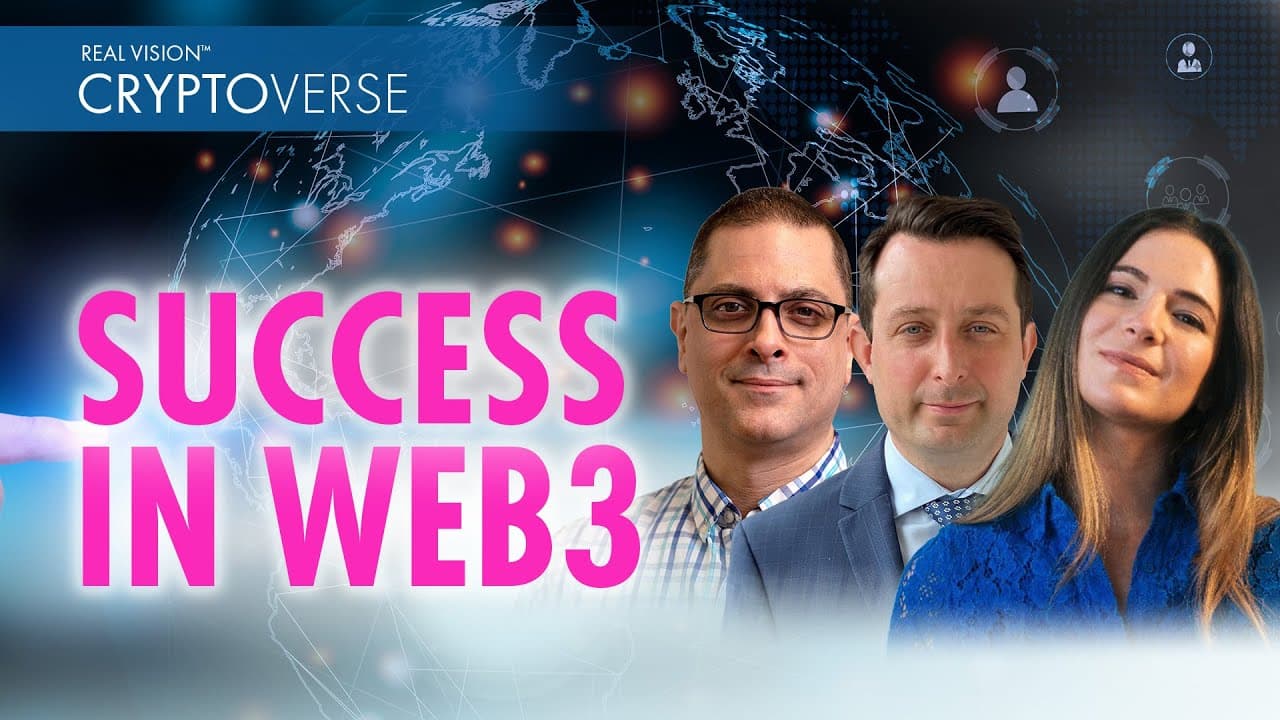
foreign how can you begin to understand the choppy Waters of web3 Welcome to crypto versus a new real Vision live show here we focus on the big interesting and promising developments in crypto I'm Ash Bennington I'm joined today by Amanda Cassatt the founder of web3 marketing firm serotonin she's also Chief former Chief marketing officer at consens... Read More
Key Insights
- Amanda Cassatt highlights Web3 as the evolution of the internet, focusing on decentralization and self-custody of assets.
- The original web architects intended for a native payment layer, which Web3 aims to restore with blockchain technology.
- Web3's growth in 2021 saw an explosion in NFTs, intersecting with industries like entertainment, fashion, and gaming.
- Regulatory scrutiny has increased following centralized exchange failures, emphasizing the need for consumer protection.
- Amanda argues for regulation based on platform centralization, focusing on protecting consumers while fostering industry growth.
- The potential of AI in auditing blockchain code could enhance security and reduce errors in smart contracts.
- Web3's user experience challenges stem from its self-custody nature, requiring users to manage their assets independently.
- Jones Day's FinAccelerate DeFi Challenge seeks to address regulatory concerns and promote compliant DeFi solutions.
Install to Summarize YouTube Videos and Get Transcripts
Explore YouTube Video Summarizer or Get YouTube Transcript Extractor
Questions & Answers
Q: How did Amanda Cassatt get into the Web3 space?
Amanda Cassatt began her career at HuffPost, where she identified issues with content creators receiving fair compensation due to the double spend problem. Her interest in payments led her to Ethereum meetups, where she met key figures in the Ethereum movement. This inspired her to join ConsenSys as Chief Marketing Officer in 2016.
Q: What is the significance of the 402 error in the original web source code?
The 402 error, 'payment missing,' in the original web source code indicates that the web's architects intended to include a native payment layer. However, this was never implemented, leading to the development of Web2's advertising-based business models. Web3 aims to restore this vision by integrating native payments through blockchain technology.
Q: What regulatory challenges does Web3 face today?
Web3 faces regulatory challenges due to increased scrutiny following centralized exchange failures. Regulators aim to protect consumers while fostering industry growth. Amanda Cassatt suggests regulation based on platform centralization, as decentralized platforms like DeFi have proven resilient in protecting consumer assets compared to centralized platforms.
Q: How can AI contribute to the security of blockchain technology?
AI can enhance blockchain security by providing advanced auditing tools to detect errors in smart contracts. This could reduce vulnerabilities and hacks, making the technology more reliable. AI's ability to generate and verify code could lead to safer, more efficient blockchain systems, benefiting both developers and users.
Q: What are the user experience challenges in Web3?
Web3's user experience challenges stem from its self-custody nature, requiring users to manage their assets independently. Unlike Web2, where intermediaries handle transactions, Web3 shifts responsibility to the individual. This trade-off for self-sovereignty means users must navigate complex interfaces and assume greater responsibility for their assets.
Q: What is the purpose of Jones Day's FinAccelerate DeFi Challenge?
The FinAccelerate DeFi Challenge by Jones Day aims to address regulatory concerns and promote compliant DeFi solutions. It seeks to develop frameworks that balance the benefits of decentralization with regulatory requirements, ensuring that DeFi platforms can operate legally and attract institutional investment while protecting consumers.
Q: How does Web3 intersect with various industries?
Web3 intersects with industries like entertainment, fashion, gaming, real estate, and luxury by introducing new use cases for blockchain technology. The 2021 NFT boom exemplifies this intersection, bringing non-financial assets on-chain. As Web3 evolves, it continues to integrate with diverse sectors, driving innovation and adoption across markets.
Q: What is Amanda Cassatt's outlook for Web3's future?
Amanda Cassatt is optimistic about Web3's future, anticipating continued growth and innovation. She expects more industries to adopt blockchain technology, increasing the diversity of use cases. Despite regulatory challenges, she believes that the industry's evolution will lead to more robust systems, fostering sustainable growth and adoption.
Summary & Key Takeaways
-
Amanda Cassatt discusses the transition from Web2 to Web3, emphasizing decentralization and the restoration of original internet values. She highlights the challenges and opportunities in the current Web3 ecosystem, particularly in terms of regulatory scrutiny and consumer protection.
-
The conversation touches on the impact of centralized exchange failures, like FTX, on the industry and the importance of self-custody in protecting consumers. Amanda argues for regulation that considers platform centralization to foster growth while ensuring consumer safety.
-
Abradat Kamalpour from Jones Day introduces the FinAccelerate DeFi Challenge, aiming to develop compliant DeFi solutions. He emphasizes the need for tailored regulation to address the unique challenges of digital assets, ensuring the industry's sustainable growth.
Read in Other Languages (beta)
Share This Summary 📚
Summarize YouTube Videos and Get Video Transcripts with 1-Click
Try YouTube Summary with ChatGPT & Claude or YouTube Transcript Generator
Explore More Summaries from Real Vision 📚




Summarize YouTube Videos and Get Video Transcripts with 1-Click
Try YouTube Summary with ChatGPT & Claude or YouTube Transcript Generator