How to Overcome Fear and Embrace Failure

TL;DR
Fear is the true enemy, not failure. Embracing failure as a learning tool can transform your life. The key is to not let fear control your actions or define your worth. By using failure as a stepping stone, you can innovate and improve, making each choice count in the unwritten script of life.
Transcript
Life is a play. Let me tell you what I know. You can't go back to a scene to redo your lines. You can't jump straight to the ending, the part where everything finally feels good and happy. You will mess up. You might forget your lines. You might have the wrong timing. You might even freeze up on the stage. But as the saying goes, the show must go o... Read More
Key Insights
- Fear is the true enemy, not failure. Overcoming fear is essential for personal growth.
- Failure teaches and strengthens us, preparing us for future challenges.
- Life is unscripted; every choice you make writes your next scene.
- Success is earned, not given, and requires effort and resilience.
- Fear affects everyone, regardless of age or status, including entrepreneurs and adults.
- Failure should be used as a stepping stone, not a reason to give up.
- Innovation and improvement come from facing mistakes and challenges.
- Resilience, built from failure, acts as personal 'plot armor' against life's challenges.
Install to Summarize YouTube Videos and Get Transcripts
Explore YouTube Video Summarizer or Get YouTube Transcript Extractor
Questions & Answers
Q: How can I overcome the fear of failure?
Overcoming the fear of failure involves changing your mindset. Recognize that failure is not the enemy but a learning opportunity. Use failure as a stepping stone to innovate and improve. Focus on personal growth rather than the opinions of others. Embrace challenges as opportunities to build resilience and strengthen your character.
Q: Why is fear considered the real enemy?
Fear is considered the real enemy because it can paralyze you and prevent you from taking action or trying new things. It limits your potential by holding you back from opportunities for growth and success. Unlike failure, which can teach and strengthen you, fear keeps you stagnant and stops you from progressing.
Q: How does failure contribute to personal growth?
Failure contributes to personal growth by providing valuable lessons and experiences that prepare you for future challenges. It helps build resilience and encourages innovation and improvement. By viewing failure as a stepping stone rather than a setback, you can learn from mistakes and become stronger and more capable.
Q: What does it mean to use failure as a stepping stone?
Using failure as a stepping stone means leveraging the lessons learned from mistakes to propel yourself forward. Instead of seeing failure as an endpoint, view it as a part of the journey that offers insights and opportunities for improvement. This approach fosters resilience and helps turn setbacks into catalysts for growth.
Q: How can one innovate and improve after facing challenges?
Innovation and improvement after facing challenges come from analyzing what went wrong and finding creative solutions. Embrace a growth mindset, where you see challenges as opportunities to learn and develop new skills. By remaining positive and open to change, you can adapt and enhance your abilities for future success.
Q: What role does resilience play in overcoming life's challenges?
Resilience plays a crucial role in overcoming life's challenges by providing the strength and determination to keep going despite setbacks. It allows you to recover from difficulties and adapt to new situations. Building resilience involves learning from failures, maintaining a positive outlook, and continually working towards personal and professional growth.
Q: Why is it important to not let others' opinions define your worth?
Not letting others' opinions define your worth is important because it empowers you to pursue your goals and dreams authentically. External validation can be fleeting and unreliable, while self-worth should be rooted in your values, achievements, and growth. By focusing on your own path, you can make choices that align with your true self.
Q: How can one shift their mindset from 'what if I fail' to 'what if I succeed'?
Shifting your mindset from 'what if I fail' to 'what if I succeed' involves focusing on the potential positive outcomes rather than the fear of negative ones. Visualize success and set achievable goals that motivate you. Embrace a growth mindset, where challenges are seen as opportunities for learning and improvement, and celebrate small victories along the way.
Summary & Key Takeaways
-
Fear, not failure, is the real enemy. Embracing failure as a stepping stone allows for personal growth and innovation. Life is not scripted, and each choice you make contributes to your story. Success requires effort and resilience, and fear should not dictate your actions or self-worth.
-
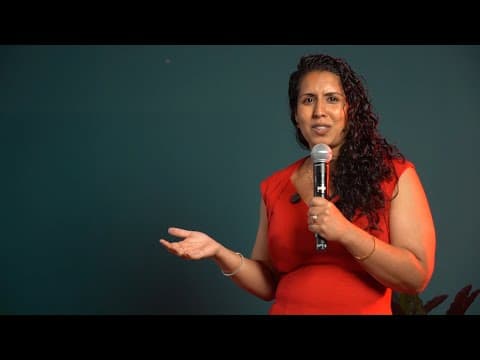
The speaker shares a personal journey of overcoming fear and embracing failure. By shifting the mindset from 'what if I fail' to 'what if I succeed,' individuals can break free from the fear of others' opinions and find their own identity. Failure is a tool for learning and strengthening, not a barrier.
-
Life's challenges provide opportunities for growth. By facing fear and using failure constructively, individuals can innovate and improve. The speaker encourages not just dreaming but taking action, as every choice contributes to the unwritten script of life. Resilience, developed through failure, serves as a protective 'plot armor'.
Read in Other Languages (beta)
Share This Summary 📚
Summarize YouTube Videos and Get Video Transcripts with 1-Click
Try YouTube Summary with ChatGPT & Claude or YouTube Transcript Generator
Explore More Summaries from TEDx Talks 📚




Summarize YouTube Videos and Get Video Transcripts with 1-Click
Try YouTube Summary with ChatGPT & Claude or YouTube Transcript Generator