Electron Affinity Trend, Basic Introduction, Chemistry
TL;DR
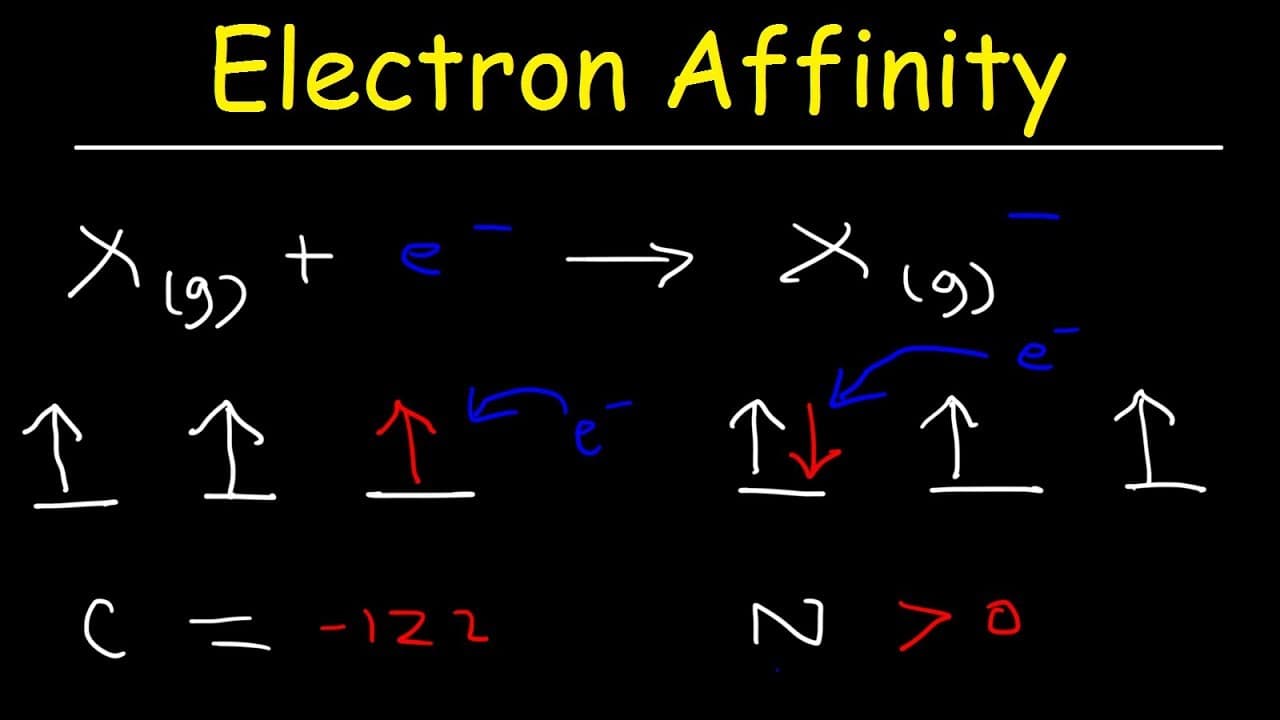
Electron affinity is the energy change when an electron is added to a gaseous atom. The trends show that as you go towards the right, it becomes more exothermic, while going down makes it less exothermic.
Transcript
in this video i'm going to talk about electron affinity now what exactly is electron affinity electron affinity tells you the energy change that occurs when an electron is added to a gaseous atom it's basically the opposite of ionization energy which tells you the energy that's needed to basically ionize a gaseous atom to remove an electron from it... Read More
Key Insights
- 🫀 Electron affinity measures the energy change when an electron is added to a gaseous atom.
- 🗯️ Trends in electron affinity generally show increasing exothermicity towards the right on the periodic table.
- ✋ Group 7 (halogens) has the highest exothermic electron affinity, followed by groups 6, 4, and 5.
- 📈 Nitrogen is an exception to the trend and has endothermic electron affinity.
- 🫀 Factors like nuclear charge and atomic size affect electron affinity.
- 🫢 Alkaline earth metals and noble gases have endothermic electron affinity due to placing electrons in higher energy levels.
- 💼 Carbon and nitrogen have different electron affinity due to electron repulsion in nitrogen's case.
Install to Summarize YouTube Videos and Get Transcripts
Explore YouTube Video Summarizer or Get YouTube Transcript Extractor
Questions & Answers
Q: What is electron affinity?
Electron affinity is a measure of the energy change when adding an electron to a gaseous atom. It is the opposite of ionization energy.
Q: How do trends in electron affinity vary?
Generally, as you move towards the right on the periodic table, electron affinity becomes more exothermic. However, going down the table tends to make it less exothermic.
Q: Which group has the most exothermic electron affinity?
Group 7, which consists of the halogens, has the highest exothermic electron affinity. It releases a lot of energy when receiving an electron.
Q: Why are the noble gases endothermic in electron affinity?
Noble gases, such as neon, have endothermic electron affinity because adding an electron requires placing it in a higher energy level, which demands energy input.
Summary & Key Takeaways
-
Electron affinity measures the energy change when adding an electron to a gaseous atom, opposite to ionization energy.
-
Trends in electron affinity generally show that going towards the right on the periodic table increases exothermicity, while going down decreases it.
-
Group 7 (halogens) has the most exothermic electron affinity, while the noble gases and some alkaline earth metals are endothermic.
Read in Other Languages (beta)
Share This Summary 📚
Summarize YouTube Videos and Get Video Transcripts with 1-Click
Try YouTube Summary with ChatGPT & Claude or YouTube Transcript Generator
Explore More Summaries from The Organic Chemistry Tutor 📚






Summarize YouTube Videos and Get Video Transcripts with 1-Click
Try YouTube Summary with ChatGPT & Claude or YouTube Transcript Generator