4 Ways CRISPR Is More Than Just Gene Editing
TL;DR
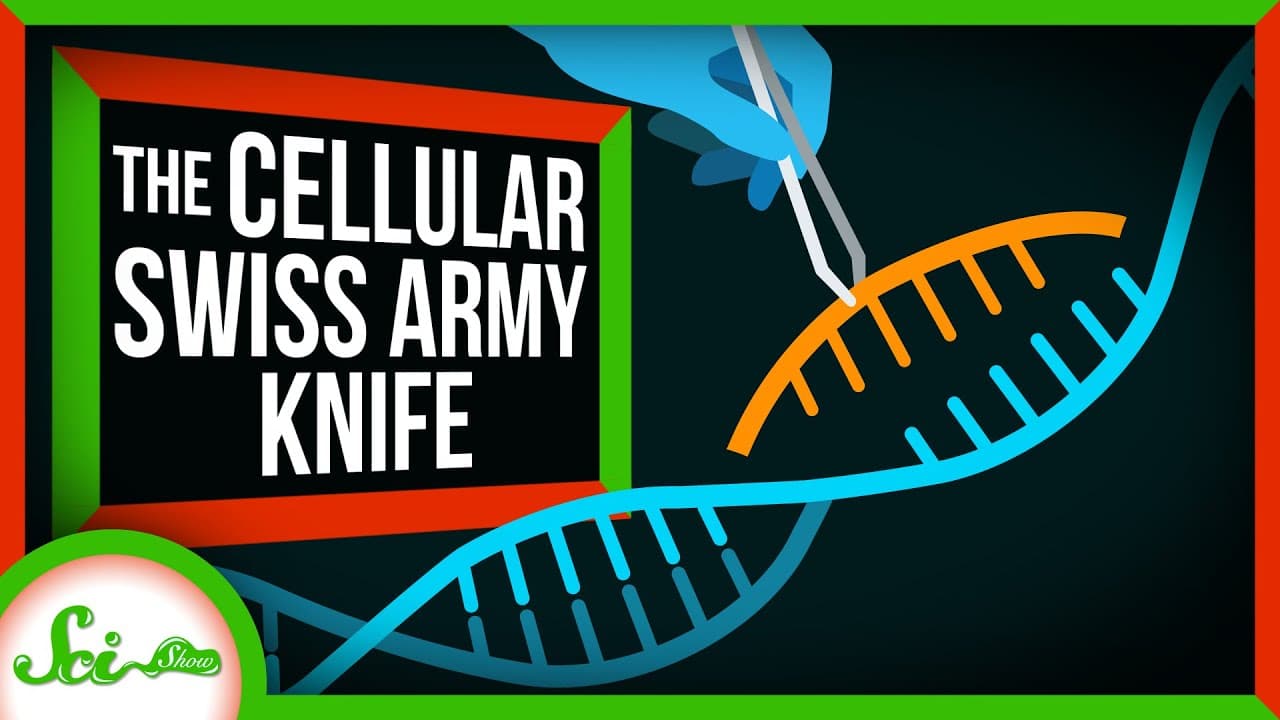
CRISPR, the gene-editing tool, has various applications beyond gene editing, including the creation of antibiotics, rapid infection testing, xenotransplantation, and controlling the spread of diseases.
Transcript
[♪ INTRO] One of the biggest scientific developments of this century has been the gene-editing tool CRISPR. It’s a technology that makes it possible to find and edit a specific piece of a cell’s DNA. This is huge. In fact, the 2020 Nobel Prize in Chemistry went to the scientists who did breakthrough research in this field. Now, CRISPR is actual... Read More
Key Insights
- ❓ CRISPR can potentially revolutionize the development of antibiotics, combating antibiotic-resistant bacteria.
- ❓ Rapid infection testing using CRISPR has the potential to provide quick and accurate results, improving healthcare diagnostics.
- 🖐️ Xenotransplantation could address the shortage of human organ donors, and CRISPR plays a crucial role in making animal organs suitable for transplantation.
Install to Summarize YouTube Videos and Get Transcripts
Explore YouTube Video Summarizer or Get YouTube Transcript Extractor
Questions & Answers
Q: How does CRISPR help in creating antibiotics?
Scientists modify bacteria's natural defense systems using CRISPR to target and cut infectious bacteria's DNA, potentially creating new antibiotics.
Q: How can CRISPR enable rapid infection testing?
CRISPR systems with special Cas proteins can identify the presence of specific disease-causing DNA sequences, leading to the production of a fluorescence signal in the test sample.
Q: What is xenotransplantation, and how does CRISPR contribute to it?
Xenotransplantation is the transplantation of organs from one species to another. CRISPR allows scientists to modify pig genomes, making their organs safer for transplantation into humans.
Q: How can CRISPR control the spread of diseases?
Scientists are using CRISPR to modify the genomes of mice, making them immune to Lyme disease. By reducing the number of disease-carrying ticks, the spread of the disease can be controlled.
Summary & Key Takeaways
-
CRISPR can be used to create antibiotics by modifying bacteria's natural defense systems to target and cut infectious bacteria.
-
It has the potential to enable rapid infection testing by using special Cas proteins that can cut target DNA and produce a fluorescence signal.
-
CRISPR allows scientists to modify pig genomes, making xenotransplantation of their organs into humans a safer possibility.
-
The technology can also be used to control the spread of diseases by making mice immune to Lyme disease and reducing tick populations.
Read in Other Languages (beta)
Share This Summary 📚
Summarize YouTube Videos and Get Video Transcripts with 1-Click
Try YouTube Summary with ChatGPT & Claude or YouTube Transcript Generator
Explore More Summaries from SciShow 📚


Summarize YouTube Videos and Get Video Transcripts with 1-Click
Try YouTube Summary with ChatGPT & Claude or YouTube Transcript Generator