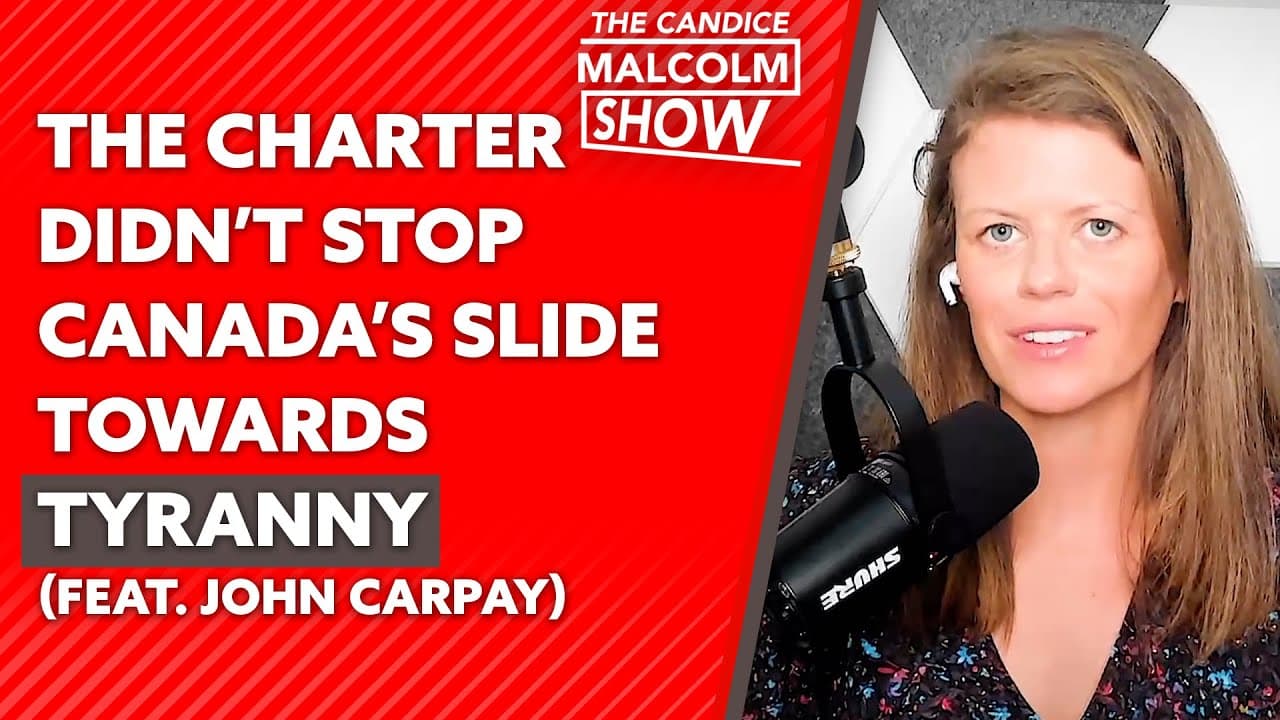
The Charter didn’t stop Canada’s Covid slide towards tyranny
TL;DR
The Charter of Rights and Freedoms has failed to protect Canadians' rights during COVID-19, raising concerns about its effectiveness.
Transcript
as liberals celebrate the 40th anniversary of the charter of rights and freedoms many canadians are wondering if the charter couldn't protect our freedoms during covid then what is it good for i'm candice malcolm and this is the kenneth welcome show everyone thank you so much for tuning in to the podcast so as you probably saw there's a lot in the ... Read More
Key Insights
- 🤨 The Charter of Rights and Freedoms is viewed as ineffective in protecting individual rights during the COVID-19 pandemic, raising doubts about its significance.
- 💨 Faster judicial processes in other countries contrast sharply with Canada's slow court rulings, exacerbating issues of rights violations during emergencies.
- 🥺 Section 1 of the Charter presents a major loophole that allows for government justification of rights infringements, leading to potential abuses of power by the judiciary.
- 🗽 Engaging with undecided members of the public is crucial for changing perceptions and fostering an environment protective of civil liberties.
- 👮 Instances of perceived double standards in governmental responses to protests highlight the troubling impact of bias on the rule of law.
- 🗯️ The Justice Center for Constitutional Freedoms advocates for rights through litigation and public awareness campaigns, aiming to educate Canadians on their Charter rights.
- 🧑🏭 The media's role during the pandemic has influenced public opinion, often acting as a government ally rather than an independent commentator on civil liberties.
Install to Summarize YouTube Videos and Get Transcripts
Explore YouTube Video Summarizer or Get YouTube Transcript Extractor
Questions & Answers
Q: What are the key criticisms of the Charter of Rights and Freedoms during the COVID-19 pandemic?
Critics argue that the Charter has failed to uphold individual rights during the pandemic, pointing to instances where freedoms of assembly, religious practice, and personal mobility were curtailed by government actions. Many Canadians felt that their Charter rights were not protected adequately when heavy-handed measures became the norm, leading to the perception that the Charter is ineffective in times of crisis.
Q: Why does the timing of court rulings in Canada pose a problem for civil rights?
In Canada, the judicial system often takes years to resolve significant cases, compared to countries like the United States where rulings can occur much faster. This sluggish pace means that rights violations can continue for extended periods before they are addressed in court, leaving citizens without immediate recourse against government overreach during crises such as the COVID-19 pandemic.
Q: How does Section 1 of the Charter allow for the potential violation of rights?
Section 1 of the Charter allows governments to justify infringements on rights as long as they can demonstrate that such actions are reasonable and justifiable in a free and democratic society. This opens the door for subjective interpretations by judges, potentially allowing for government overreach under the guise of maintaining public safety or order.
Q: What role does public opinion play in changing government policy and protecting rights?
John Carpe emphasizes that winning in the court of public opinion is crucial for instigating legal and political change. Engaging with the public, especially those who are undecided, is essential in shifting perceptions about government actions during emergencies. If more individuals recognize the harmful effects of overreach, it could lead to stronger protections of civil liberties.
Q: What steps is the Justice Center for Constitutional Freedoms taking to defend rights?
The Justice Center is actively involved in litigation against governmental overreach related to lockdowns and vaccine mandates across multiple provinces. Additionally, they are prioritizing public education, distributing brochures, and leveraging community engagement to inform Canadians about their rights under the Charter and mobilize public sentiment against unjust measures.
Q: Why is there a perceived double standard in the government’s response to different protests?
The government response appears inconsistent, as peaceful protests aligned with the government’s agenda were treated leniently, whereas protests against government policies faced harsh crackdowns. This discrepancy undermines the rule of law and illustrates a troubling trend where governmental support influences the treatment of citizens' rights.
Q: What can Canadians do to ensure their rights are protected in the future?
Canadians can take proactive steps, such as remaining informed, engaging in discussions with neighbors, and participating in grassroots advocacy efforts. By raising awareness about the implications of government policies and pushing back against overreach, individuals can contribute to a collective movement to protect civil liberties and ensure accountability.
Q: What was the role of the media during the pandemic in shaping public opinion?
The media has played a significant role in shaping public perceptions by often aligning with government narratives, promoting fear regarding COVID-19, and downplaying the importance of civil liberties. As public trust in traditional media declines, there is a shift toward alternative sources of news, which could support a more balanced discourse on rights and freedoms.
Summary & Key Takeaways
-
The Charter of Rights and Freedoms, celebrated for its 40th anniversary, faced criticism for failing to protect individual liberties during the COVID-19 pandemic, particularly concerning religious freedom and mobility rights.
-
John Carpe from the Justice Center for Constitutional Freedoms highlights the lack of timely court rulings and the problematic Section 1, which allows governments to justify the violation of rights if deemed “reasonable” by judges.
-
The discussion reveals a perceived disconnect between the principles of the Charter and the actions of the current government, emphasizing a troubling trend of government overreach and the need for public engagement to safeguard freedoms.
Read in Other Languages (beta)
Share This Summary 📚
Summarize YouTube Videos and Get Video Transcripts with 1-Click
Try YouTube Summary with ChatGPT & Claude or YouTube Transcript Generator
Explore More Summaries from True North 📚
Summarize YouTube Videos and Get Video Transcripts with 1-Click
Try YouTube Summary with ChatGPT & Claude or YouTube Transcript Generator